We are looking for an independent senior editor
Apply Now





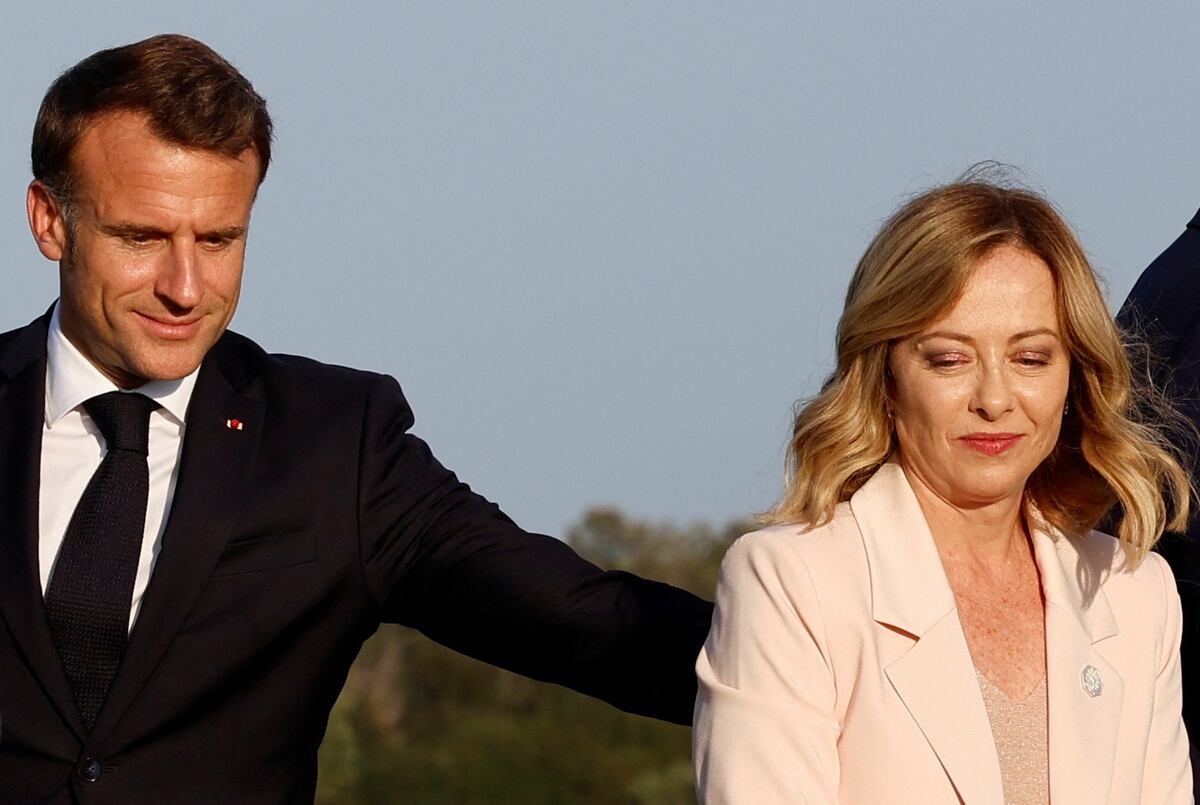
The relationship between Italy's Prime Minister Giorgia Meloni and France's President Emmanuel Macron has been fraught with challenges since Meloni's electoral triumph in September 2022. Meloni has often perceived Macron’s demeanor as arrogant, contrasting with Macron's typical diplomatic charm aimed at pleasing international partners. This diplomatic chill reached a critical juncture at a European leaders' summit in Albania on May 16, threatening the stability of bilateral relations between these foundational EU members.
The summit saw Macron join forces with leaders like Friedrich Merz, Keir Starmer, Donald Tusk, and Volodymyr Zelensky, culminating in a joint call to U.S. President Donald Trump—a move that notably excluded Meloni, despite her claims of a strong rapport with the current U.S. administration. This exclusion stirred rumors within Italy, suggesting Meloni's diminishing influence in international peace dialogues.
Responding to criticisms, Meloni defended Italy's stance against deploying troops to Ukraine, arguing that participating in incompatible diplomatic formats was illogical. However, Macron countered her narrative, accusing her of spreading fake news and clarifying that discussions centered on ceasefire agreements, not military deployment, dismissing her absence as non-invitation.
Meloni frequently criticizes these diplomatic "formats" as unorthodox initiatives driven by Macron and Trump, advocating for an abandonment of personal interests in favor of Western unity. Ideological differences also play a role, with Meloni representing a rising sovereignist far-right in Europe. This friction extended to suspicions of Macron’s influence over the Vatican's papal conclave, further fueled by his interactions with French cardinals—claims dismissed by the Élysée as fake news.
In response to the Albanian summit fallout, diplomatic teams from both nations have been working to mitigate tensions, recognizing the importance of unity as the EU faces a globally unilateral landscape. Paris stresses that Meloni faces no exclusion and has initiated the upcoming meeting, decidedly focused on restoring rapport, without Macron visiting other Italian officials or religious leaders.
Both administrations have actively sought to dispel notions of personal animosity, which has grown unchecked over recent months. Meloni herself emphasized the naturalness of their alliance, urging a move away from personal interpretations, as nations often share convergent and divergent positions without personal discord.
The meeting, proposed by Paris, notably omits a joint press conference, followed by a private dinner. Key discussion points include the divergent views on military involvement in Ukraine and the Israeli offensive in Gaza. While Macron anticipates Italy's eventual shift in military stance, Meloni remains firmly opposed, especially concerning NATO Article 5, given Ukraine's non-membership status.
Macron aims to integrate Italy into a coalition alongside the UK, Germany, and Poland, but Meloni resists any deviation from U.S. alignment—a stance she demonstrated by arriving late to the group's February meeting. This hesitance culminated in her exclusion at the Tirana summit.
In the Middle East, Macron plans to acknowledge Palestinian statehood at the upcoming UN summit, co-hosted with Saudi Arabia and Indonesia, seeking Italy’s support—though Rome remains opposed, having recently rejected a review of the EU-Israel association agreement. Italy intends to address Libya's instability, a concern for Meloni due to potential migration impacts.
Since the populist surge in March 2018, Macron has been a favored target for Italy’s right-wing factions, exacerbated by disputes over naval acquisitions and Libya’s geopolitical dossier. These tensions peaked with the diplomatic crisis of 2019, following Luigi Di Maio’s controversial visit to French protestors.
A reconciliation phase under Conte II and Draghi led to the Quirinal Treaty in 2021, yet Meloni's ascension in 2022 has complicated relations anew. Paris now emphasizes agreement on essential matters and focuses on fundamental issues, like unwavering support for Ukraine, which is jointly upheld by both nations. This commitment will be reassessed in light of upcoming negotiations between Kiev and Moscow in Istanbul.
We are looking for an independent senior editor

LEAVE A COMMENT