We are looking for an independent senior editor
Apply Now





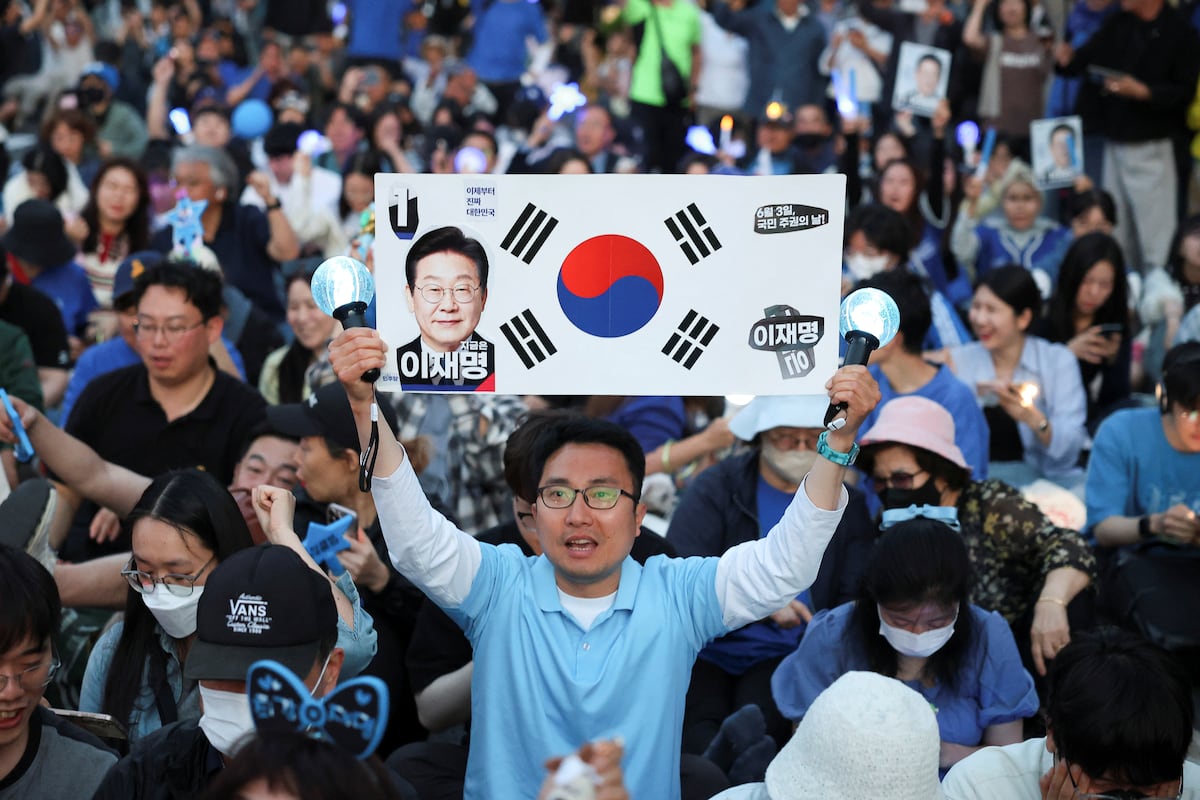
In a significant political shift, South Korean citizens have seemingly rejected the imposition of martial law, opting instead to support Lee Jae-myung, the liberal candidate advocating change. Exactly half a year after the former president, Yoon Suk-yeol, initiated emergency measures by deploying military forces to the Parliament, voters have predominantly favored Lee from the Democratic Party in the presidential elections held this Tuesday.
Lee, instrumental in Yoon's impeachment and focused on combating the so-called "insurrection," reportedly secured approximately 51.7% of the vote, according to early surveys conducted by KBS, MBC, and SBS following the closure of voting stations at 8 PM local time. "The vote is mightier than bullets," Lee declared the previous night during a campaign rally in Seoul, addressing a massive crowd.
Conversely, conservative candidate Kim Moon-soo, from the People Power Party, trailed with about 39.3% of the votes, according to the same surveys referenced by Yonhap News Agency. Despite a contentious campaign filled with corruption allegations against his opponent, Kim hesitated to denounce the former president, who is currently facing insurrection charges. Kim argued that Lee's presidency could jeopardize democracy. The remaining votes were distributed among other candidates.
Beyond the verbal skirmishes, mirroring a global trend of political polarization dividing democratic societies, both leading candidates underscored the urgent need for economic reforms in their agendas. The brief imposition of martial law not only triggered a significant institutional crisis, reviving memories of past dictatorships, but also contributed to economic stagnation, with GDP declining in the first quarter. This situation was exacerbated by the tariff policies of US President Donald Trump.
The election winner, set to be inaugurated immediately this Wednesday, faces the crucial task of negotiating a favorable trade deal with the US, vital for South Korea's export-driven economy. Lee has pledged to increase spending and invest in advanced manufacturing if elected.
Park Chong-an, a 70-year-old retiree, cast his vote for Lee in a suburban polling station outside Seoul. He expressed his desire for a leader who would "boost the economy, enhance international relations, and create a peaceful society where people can live without governmental worries." Among his chief concerns is North Korea, a perpetual issue in the region. Park supports the diplomatic approach promised by the likely new president.
During his campaign, Lee vowed to ease tensions with North Korea by restoring communication lines damaged during the previous administration. Simultaneously, he discussed strengthening defense measures against Pyongyang's asymmetric threats in coordination with the United States, which maintains over 28,000 troops in South Korea. The North Korean issue could dominate the agenda if Trump resumes negotiations with the country's leader, Kim Jong-un.
South Korea, a nation navigating the rivalry between global superpowers, has faced increasing pressure in recent years. The Trump administration conveyed to its Asian allies the same messages as to Brussels: contributing to deterrence against China's threat is essential. Lee stated that he would pursue a "pragmatic" diplomatic policy with China, South Korea's primary trade partner.
Voter turnout was high: by 4 PM, four hours before polls closed, 71.5% of the over 44 million eligible voters had cast their ballots. The electoral process unfolded peacefully, considering the country's polarization and the associated risks. Lee, who survived a neck injury from a knife attack in 2024, campaigned behind bulletproof glass, wearing a bulletproof vest and under heavy security.
Lee's life story has garnered him a substantial following among the working class. Of humble origins, he experienced the harsh realities of South Korea's industrialization during his childhood, with his parents working as garbage collectors and public restroom cleaners. After finishing elementary school, he worked in manufacturing workshops and sustained a permanent injury at 13 when his arm was caught in a press.
He managed to continue his education, earned a law degree with a scholarship, and worked as a human rights lawyer for two decades before entering politics in 2005. He joined the Uri Party, a precursor to the Democratic Party, and became the mayor of Seongnam, a city with a significant industrial workforce, in 2010. In 2018, he was elected Governor of Gyeonggi Province. Married with two children, Lee narrowly lost the 2022 presidential election against the now-ousted Yoon.
The martial law episode provided Lee with a platform to counter Yoon. During the crisis, Lee called for citizens to rally at the National Assembly, where his party was reversing the emergency law. Throughout his political career, Lee has faced various legal challenges, providing ammunition to his opponents and fueling polarization. "Voters must choose between a totalitarian regime under Lee or a democracy ready for progress," Kim stated last week. He also accused Lee of being a "crime boss" due to his pending legal issues, including embezzlement, false statements during a campaign, and alleged involvement in a scheme to divert funds to North Korea. Lee denies all allegations.
We are looking for an independent senior editor

LEAVE A COMMENT