We are looking for an independent senior editor
Apply Now





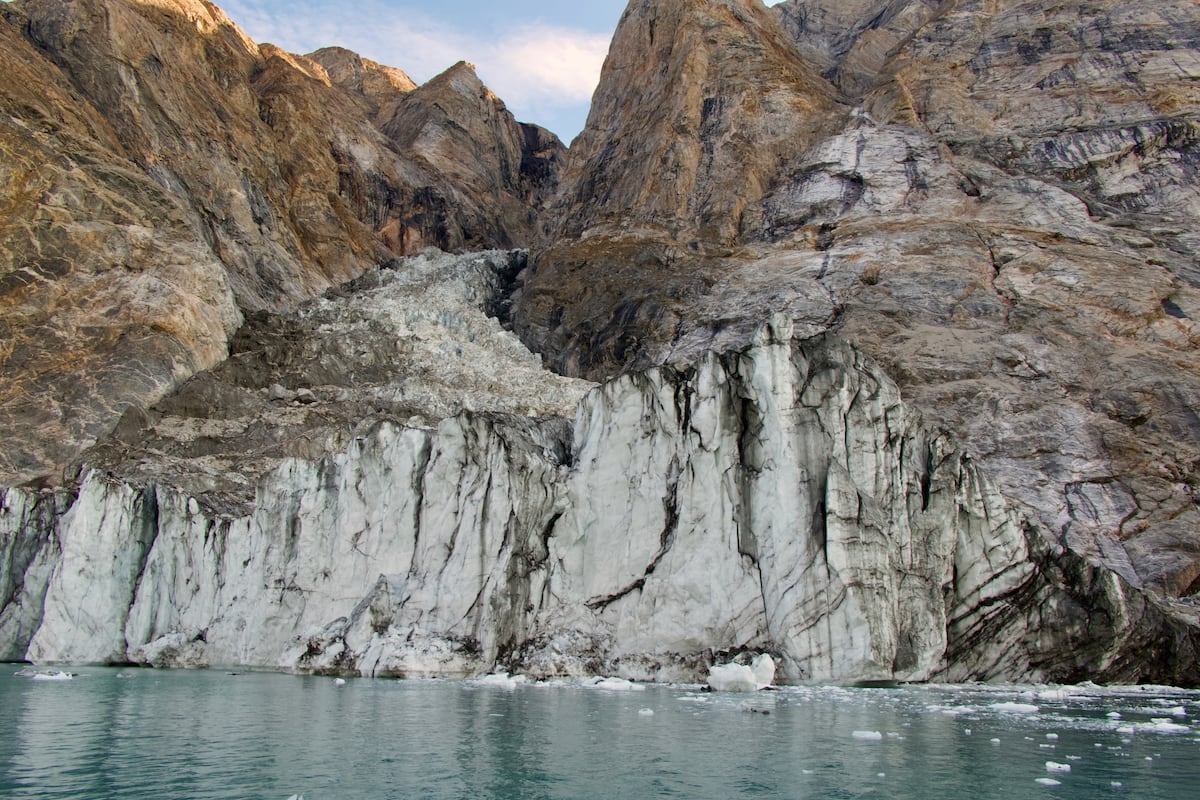
On September 16, 2023, geologists worldwide were startled by an anomalous seismic signal that defied typical earthquake patterns. Unlike the brief tremors of an earthquake, this oscillation repeated every 90 seconds, persisting for nine consecutive days. Danish naval forces traced the origins to an eastern Greenland fjord, uncovering a massive tsunami triggered by the colossal slide of rocks and ice. Satellite data, corroborated by a Nature Communications study, confirmed the enduring presence of this wave until its dissipation.
Thomas Monahan, a researcher at the University of Oxford, highlighted two anomalies: the occurrence of a 200-meter-high megatsunami in September and October 2023, and its prolonged duration. Remarkably, the tsunami stabilized into a stationary wave, a phenomenon known as a seiche, which lingered in the fjord for over a week. Historical observations of seiches date back to the late 19th century, noted by Swiss hydrologists in Alpine lakes primarily due to strong winds. Monahan's study revealed that this wave achieved a remarkable height of 7.9 meters.
The researchers employed the SWOT mission launched by SpaceX in 2022, a collaborative effort involving NASA, UK and Canadian space agencies, and France's Centre National D’Etudes Spatiales. The satellite's radar interferometry system provided high-resolution measurements of global water height changes. By utilizing SWOT data, scientists mapped the elevation of the Dickson Fjord before and after the tsunamis, revealing clear slopes throughout the channel with height differences of up to two meters. These maps displayed opposing directions, indicating water movement akin to a seiche in Alpine lakes. Further analysis linked the fjord's tsunami to minor crustal movements detected thousands of kilometers away, allowing reconstruction of wave characteristics even during unobserved satellite periods.
Professor Thomas Adcock from the University of Oxford explained that the seismic event was driven by a wave in a narrow channel, itself propelled by a landslide. The prolonged signal resulted from minimal energy dissipation. Regarding the subsequent event on October 11, which lasted a week but at half the magnitude, Adcock speculated it too arose from a landslide, although its connection remains uncertain.
This research builds on a prior Science publication from the year following the event, involving numerous scientists who traced the tsunami's origin to material detachment, potentially a mix of ice and glacial moraine. The impact in a narrow basin, such as a fjord or a confined bay, abruptly displaced water. Manuel J. Castro, a geophysical fluids expert from the University of Málaga, emphasized the local nature of this devastating yet contained tsunami, contrasting it with the expansive 2004 event.
Contrary to initial assumptions, the glacier did not collapse, sending vast ice masses into the sea. Instead, mathematical modeling revealed the glacier's retreat had destabilized the region, causing the avalanche. Approximately 25 million cubic meters of rock and earth were displaced into the water. Castro noted the ice had previously stabilized this material, and its removal created unstable zones prone to avalanches.
The study's authors attributed the ultimate cause to climate change, acknowledging the difficulty in predicting future seismic events due to unique circumstances. However, the Arctic's rapid transformation due to climate change is fostering new extreme occurrences. Monahan noted the megatsunami was induced by a glacier's collapse amid warming, a pattern likely mirrored in other Arctic glaciers.
We are looking for an independent senior editor

LEAVE A COMMENT