We are looking for an independent senior editor
Apply Now





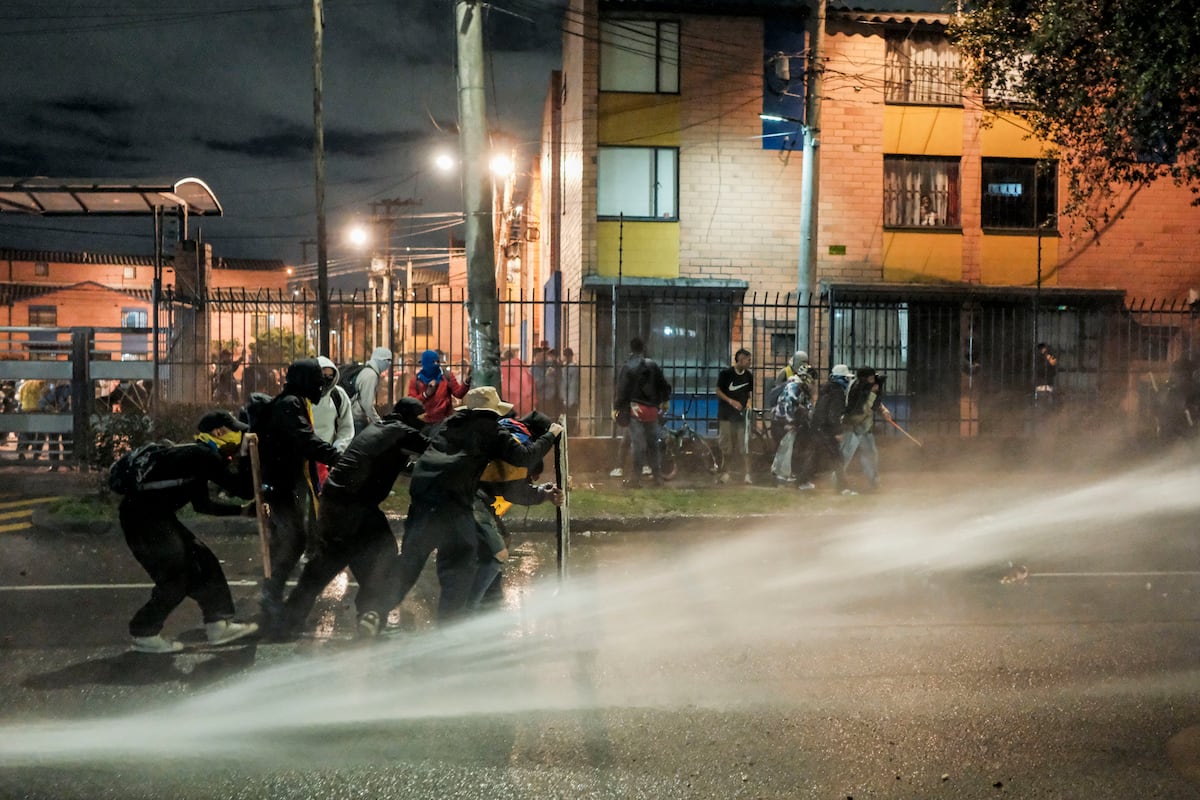
Bernard Crick's seminal work, In Defense of Politics, argues that the primary goal of politics is to reach agreements through dialogue, grounded in an ethical commitment to listening and understanding others. Written in the 1960s, Crick's book became a classic, serving as a fundamental guide to political engagement. From this viewpoint, politics is seen as a peaceful alternative to war, which Clausewitz famously described as politics by other means, aimed at imposing a singular truth.
However, had Crick been familiar with Colombia, his perspective might have shifted. In Colombia, politics often centers on seeking disagreement rather than consensus. The focus is more on dominance than on reaching agreements—a sentiment that pervades both the government and the opposition. This has been a longstanding tradition, not a recent development.
Historically, political discord, and even war, have been the norm in Colombia, while agreements and peace have been exceptions. Following the early independence movements, a chaotic period of internal conflict ensued, when unity against Spain was needed. In the early 19th century, figures like Antonio Nariño, who supported centralism, and the United Provinces of New Granada, who advocated for federalism, were embroiled in the first civil war (1812-15). This division led to the loss of the first Republic, a period famously dubbed the "Foolish Fatherland" by Nariño himself. This disunity allowed Spain to reconquer, leading to the execution of prominent New Granadan intellectuals, including members of the Royal Botanical Expedition.
The lesson of the Reconquest went unheeded. The 19th century saw Colombia engulfed in nine civil wars, the last being the Thousand Days' War (1899-1902), which resulted in the loss of Panama in 1903. Even after a century of conflict, the 20th century was marked by ongoing violence and armed confrontations, so intertwined that it is difficult to determine where one ended and another began. Peace and coexistence were rare commodities. Bolívar's assertion that "every Colombian is an enemy country" rings true.
The peace process initiated by Juan Manuel Santos (2010-18) and the FARC to end decades of armed conflict and build lasting peace is telling. The opposition, led by Álvaro Uribe, was uninterested in ending sixty years of bloodshed and suffering, instead focusing on accusing Santos of betrayal. They used the pretext of handing the country over to the FARC and Castro-Chavism, employing lies and media tricks to win a notorious plebiscite, leaving the world, which had rallied for peace, baffled by how, after six decades of violence, half of Colombia wanted to maintain the status quo.
The current spectacle between the government and the opposition is disgraceful. The political and economic establishment failed to grasp the message of the 2022 elections. They did not understand that the two candidates who advanced to the second round—President Petro and Rodolfo Hernández—each represented a desire for change and a frustration with privilege and corruption. Interparty consultations served as a barometer. Francia Márquez, the vice president, despite lacking political experience or machinery, secured 785,215 votes, surpassing all others in the various consultations, except Gustavo Petro and Federico Gutiérrez, demonstrating a thirst for change. Petro won by forming a broad coalition advocating for reforms historically postponed by the country, which seems destined to continue delaying.
We find ourselves in a negative deadlock. The opposition appears content with Petro's failure, lacking any inspiring vision or national proposal. Maintaining the inequitable and outdated status quo suffices. Petro, in turn, seems satisfied with being remembered as the president who attempted reforms but was thwarted. Both outcomes are Pyrrhic victories, representing a zero-sum game.
The debates on labor reform and popular consultation reflect the political pettiness embedded in Colombia's soul. The Seventh Commission of the Senate blocked its discussion in plenary and pushed Petro to propose a consultation. Our institutional framework lacks mechanisms to resolve political crises; unlike parliamentary regimes, the president cannot dissolve Congress (as illegally done by Ospina Pérez in 1949) and call for elections. The consultation was a democratic and institutional way to overcome the crisis. However, the opposition, realizing it had unwisely led Petro onto favorable ground (the public square), retreated; they decided to deny the consultation and revive the reform: a shrewd and cunning move. The legality of this action remains uncertain and will be determined by the Council of State, where a lawsuit is pending. Meanwhile, instead of celebrating the revival of his labor proposal, the President risked his political capital by calling for a strike, furthering the opposition's narrative that he values campaign rhetoric over workers' rights.
The bridges of understanding are broken. The politics of disagreement has prevailed. Some rub their hands, thinking "this is how it is now" and simply await August 7, 2026. Vain illusion. Petro will leave the presidency—like Uribe—but, just as Uribe during Santos' tenure, he can render the republic ungovernable and perpetuate discord, precisely when unity is most needed, in a rapidly changing world.
Are there sensible minds willing to engage in dialogue, to understand politics in Bernard Crick's terms, and to seek agreements?
We are looking for an independent senior editor

LEAVE A COMMENT