We are looking for an independent senior editor
Apply Now





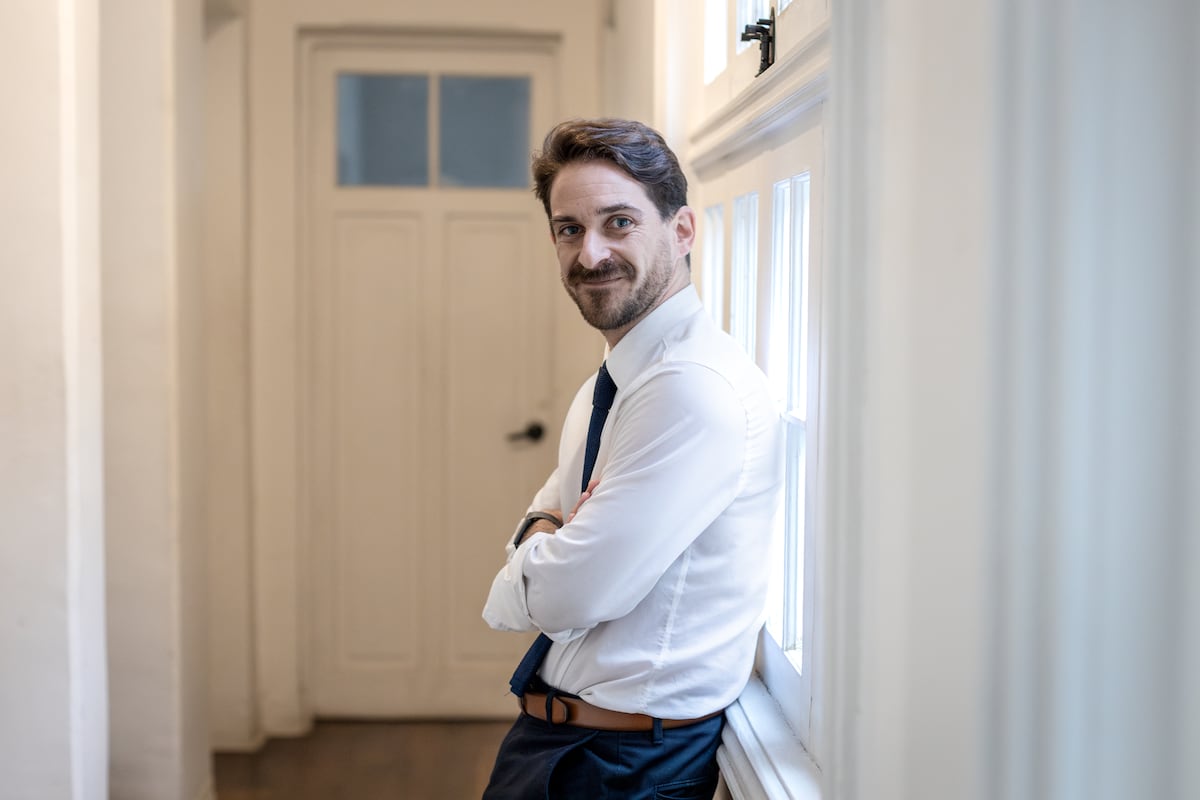
In a recent interview with El País, Gonzalo Winter, the presidential hopeful from the Frente Amplio, expressed his vision for Chile to evolve into a society devoid of social classes. He believes this ambition aligns with the legacy of Allende and could lead to enhanced efficiency and development. Unfortunately, his proposal lacks precise definitions and clear foundations, leaving much to be desired in understanding the exact nature of the transformation he envisions. Nonetheless, Winter's persistent emphasis on this aspiration indicates that it warrants closer examination.
To evaluate Winter's proposition, it is crucial to clarify what is meant by social classes. In Marxist tradition, classes are seen as distinct positions within production relations, linked to objective interests. This foundational idea has been enriched by Weberian tradition, introducing status and power as relatively autonomous vectors of class; Pierre Bourdieu, who highlights the symbolic reproduction and internalization of social classes; and Erik Olin Wright, who examines the contradictory nature of middle-class interests. Rather than offering closed or univocal definitions, these perspectives reveal the complexity of the social class concept, which, when oversimplified, diminishes public debate.
Historically, classes have not been the only form of inequality structuring human societies. From the simplest social organizations, humans have operated based on some hierarchical principle. Initially, it was the clan leader; later, the distinction between nobility and commoners; and finally, social classes, whose novelty lies in the fact that their legitimizing principle no longer rests directly on ascribed traits like genealogy, ethnicity, or gender. However, social mobility remains strongly conditioned by these attributes and intergenerational transmission mechanisms of various forms of capital—economic, educational, cultural, among others.
In response to this persistence, the left has developed two strategies to diminish the centrality of class in the distribution of goods, services, and privileges. The first, reformist approach has sought to achieve this goal through heavy taxation and progressive spending within democratic-liberal regimes. The experiences of Nordic countries stand out as prominent examples of this path. However, it is important to note that none of these countries have aimed to abolish classes, but rather to mitigate their most corrosive effects. Conversely, the second, revolutionary strategy has aimed to eliminate them through radical transformations, such as the massive expropriation of the means of production. Paradoxically, these experiments have led to new forms of stratification, where bureaucratic power replaces capital as a differentiation mechanism, consolidating political-administrative elites that monopolize access to strategic resources.
This situation becomes even more complex in contemporary, functionally differentiated societies, as described by Niklas Luhmann. In such societies, social organization revolves around autonomous subsystems—like politics, economy, or science—that operate under their own logic and legitimacy criteria. In this context, classes do not disappear, but their structuring function diminishes as each system produces its own hierarchies. Thus, although formally any individual can aspire to an academic or political position, access to the top of these fields is mediated by networks of influence and symbolic capital, as well as the ability to internalize the specific rules of each functional area.
With some clarity on the fundamental aspects of this discussion, it is pertinent to question the notion of class underlying Winter's proposal. If his interpretation aligns with the Marxist tradition, it is worth asking how he plans to transform production relations within a four-year horizon without triggering a profound economic crisis. If, instead, his emphasis lies on symbolic and cultural dimensions, it is reasonable to observe the trajectories of those embodying the Frente Amplio project, as they also reproduce lifestyles and practices that perpetuate social hierarchies. Finally, if his goal is to resolve the contradictions inherent in the middle classes, it is worth recalling that the strategy promoted by his sector during the 2022 constitutional process deepened those fractures and contributed to their electoral defeat.
Additionally, it is necessary to examine the efficiency promises Winter associates with the dissolution of social classes. If his reference is real socialism, a discussion on the authoritarian consequences historically accompanying power centralization invoking equality is imperative. If, on the contrary, his inspiration stems from the Scandinavian model—which Winter seems to invoke—then the aspiration is not to eliminate classes, but to build a state capable of containing their most disruptive effects and dismantling hierarchies that risk the legitimacy of a functionally differentiated social order, which is at the base of its development and efficiency. Even in the paradigmatic case of China, its rapid development coincides with a process of restoring the status of many pre-revolutionary elites, undermining any pretense of structural equality.
The trivialization of this discussion not only erodes the quality of public debate but also feeds unclear expectations. It drags us into a quixotic struggle against a concept that is only one face of inequality in a functionally differentiated society. If his yearning for greater equality is genuine, he should clarify the conditions that would make a horizon of greater equality viable without falling into simplifications that, far from inviting, bewilder even those who see inequality as a relevant problem. It would be unfortunate if, due to ignorance or electoral calculation, he ends up renouncing his dreams with the same ease with which he linked the arrival of "electric trains, better jobs, and lithium batteries" to the end of social classes. Because we've had enough of that kind of rhetorical gymnastics.
We are looking for an independent senior editor

LEAVE A COMMENT