We are looking for an independent senior editor
Apply Now





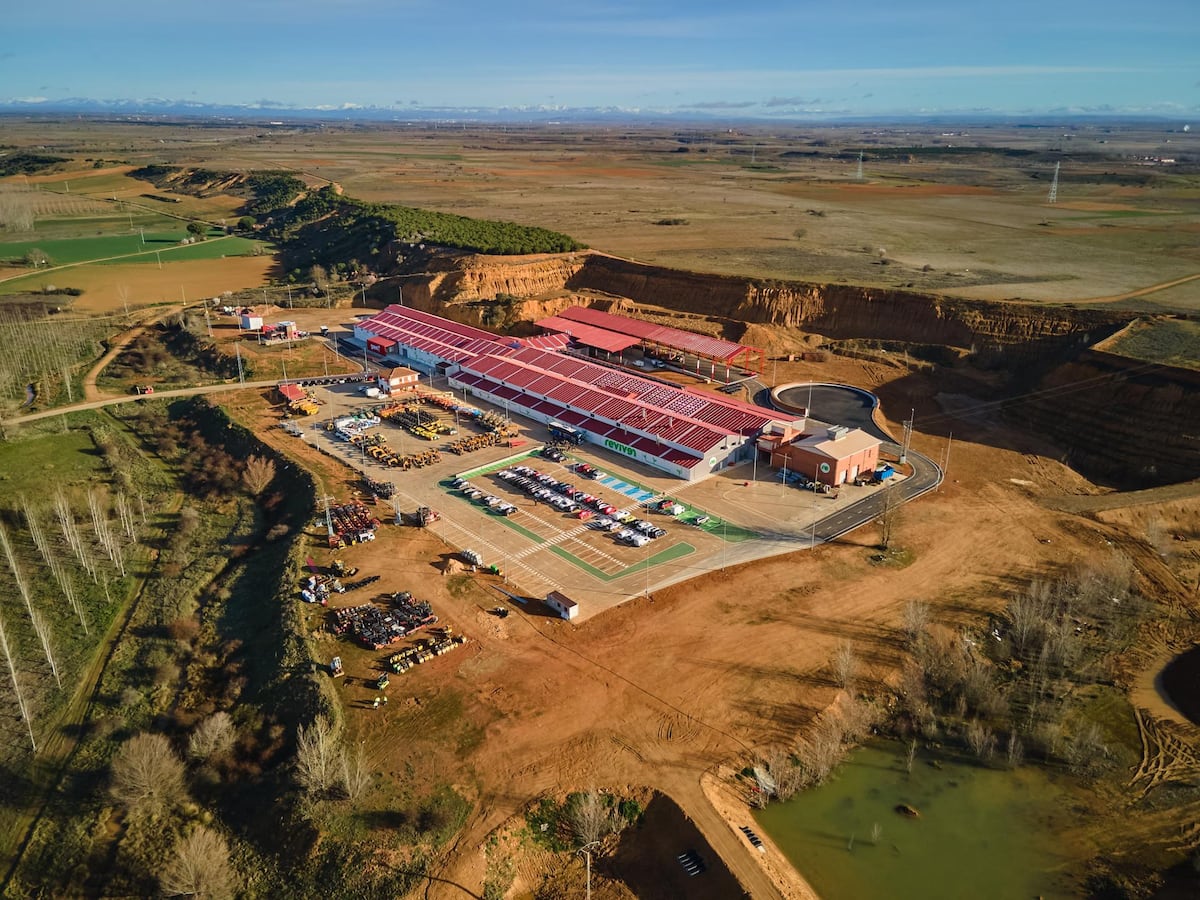
Amidst the quiet streets of Villamañán and Villacé in León, signs of life are scarce. Closed shops, abandoned workshops, and dilapidated roadside inns paint a picture of a region in decline. Yet, a beacon of change has emerged near these silent towns. The Asturian company GAM, renowned for its machinery, has inaugurated Reviver, Europe's largest circular economy plant for machinery—a move poised to transform the area and its dwindling population of less than 100.
Two weeks ago, GAM unveiled this ambitious project to an audience of over a thousand, including senior officers from the Army and Air and Space Forces, alongside notable guests such as EL PAÍS. The Armed Forces are actively pursuing greater efficiency, reduced waste, and minimized CO₂ emissions, aligning with the United Nations' Agenda 2030 sustainability goals. Increasingly, defense ecosystem players—from public institutions to private enterprises—are integrating stringent environmental criteria into their operations, as evidenced by Feindef, the international defense fair held in Madrid, which saw record attendance of over 40,000.
Despite these efforts, transparency around the military industry's harmful emissions remains limited, due to exemptions from the UN Framework Convention on Climate Change intended to safeguard military operational secrets. Consequently, CO₂ emission reporting is voluntary, as highlighted by researchers Fernando Valladares (CSIC), Xiomara Cantera (Museo de Ciencias Naturales-CSIC), and Lucía Camacho (Universidad Carlos III de Madrid).
Understanding the critical role of sustainability, Brigadier General Enrique Luis Alonso of the Army's Base Logística in Córdoba—and due to be operational by 2027—emphasizes the importance of circular economy principles. "Sustainability and circular economy are priorities. We're here at Reviver to learn," he states, noting the facility's potential for energy independence through photovoltaic panels, similar to bases in the United States, United Kingdom, and Norway.
With substantial investments in the defense sector, "it's imperative to do things right," the general asserts after visiting the circular economy plant. The military sees potential in adopting or emulating Reviver's practices, where vehicles—from auxiliary types to combat tanks—are given new life. Current pilot projects, such as Repsol's initiative with the Army to substitute fossil fuels with biofuels, focus on lighter vehicles, while the Navy, through Navantia, explores synthetic fuels for shipyards and fleets. Airbus is innovating more efficient military aircraft with reduced consumption for the Air and Space Forces.
Historically, GAM has partnered with the Armed Forces, supplying forklifts and auxiliary vehicles. A small portion of its revenue last year, amounting to €304 million, derived from defense contracts. "We're negotiating to bring auxiliary machinery and motorized vehicles here," explains GAM's president, Pedro Luis Fernández, amid Reviver's operations. Although financial resources are abundant, the Armed Forces lack the capability for efficient mass production. Thus, collaboration with GAM to refurbish aged vehicles into modern units presents an "exciting opportunity" for both parties.
"There's a lot of idle equipment that can be repurposed," Fernández notes, having invested €25 million in a project leveraging the former ceramics factory's facilities—shuttered in 2016—to forge a future grounded in sustainability.
Situated in a vast landscape bordered by a 13,500-square-meter lake and a 40,000-square-meter poplar plantation, Reviver occupies more space than Villacé itself. The plant is dedicated to restoring and rejuvenating deteriorating machinery. It focuses on reusing, not recycling; refabricating, not just refurbishing; and granting products a second life rather than merely extending their original lifespan. The transformation process ensures that outdated forklifts or vehicles emerge modernized and compliant with current safety standards.
"Here lies innovation, future, and territorial commitment. The rural environment is alive," declares José Marcos Fernández Suárez, mayor of Villamañán. The project has directly and indirectly employed over 700 locals, 20% of whom possess special abilities. "This plant represents a transformative shift, creating value and livelihood for many families. It's sustainability writ large," affirms César Alonso from GAM's financial partners, DLL.
Such sustainability—evident in Reviver's photovoltaic energy self-sufficiency and electric scooters for employee mobility—is what General Ruiz Alonso and colleagues sought during their May visit to León, aiming to transfer these concepts to the Armed Forces sector. "It's about prolonging life, repairing, and reducing emissions and waste," explains Castilla y León Government Delegate Nicanor Jorge Sen Vélez, reiterating the government's commitment to this industrial approach in Spain, particularly in sparsely populated areas.
We are looking for an independent senior editor

LEAVE A COMMENT