We are looking for an independent senior editor
Apply Now





The phone rings in a household in Quintanar de la Orden, a town in Toledo province. A woman answers, unaware of the disappointment on the faces in the studio of ‘En compañía’, a popular Spanish TV program. The viewers know the magic phrase to win a prize is “Ramón, will you give me the ham?” The show's hosts, Ramón García and Gloria Santoro, greet the woman and ask her name. Though she's called María Josefa, she's locally known as "La Roscas." Her response elicits laughter from the audience, who are familiar with her as a local personality. An attendee even claims to be her daughter's neighbor.
Despite not winning the ham, María Josefa is invited to the show. She declines due to her need to cook for her 38-year-old son, sparking more laughter. García jokingly asks why her son can't cook for himself. Although she misses the ham, María Josefa receives a box of local goods and the audience's affection.
García and Santoro have been hosting ‘En compañía’ for nine years on CMM, the public television of Castilla-La Mancha. The show draws guests seeking relief from unwanted loneliness, not romantic connections. As director Noelia Alcántara explains, the program is about “entertaining while helping.” Despite its focus, the show has facilitated the formation of 1,764 couples and gifted 418 hams. It has also inspired the regional food bank to collect 160 tons of donations, thanks to the generous daily audience who even brings treats for the crew.
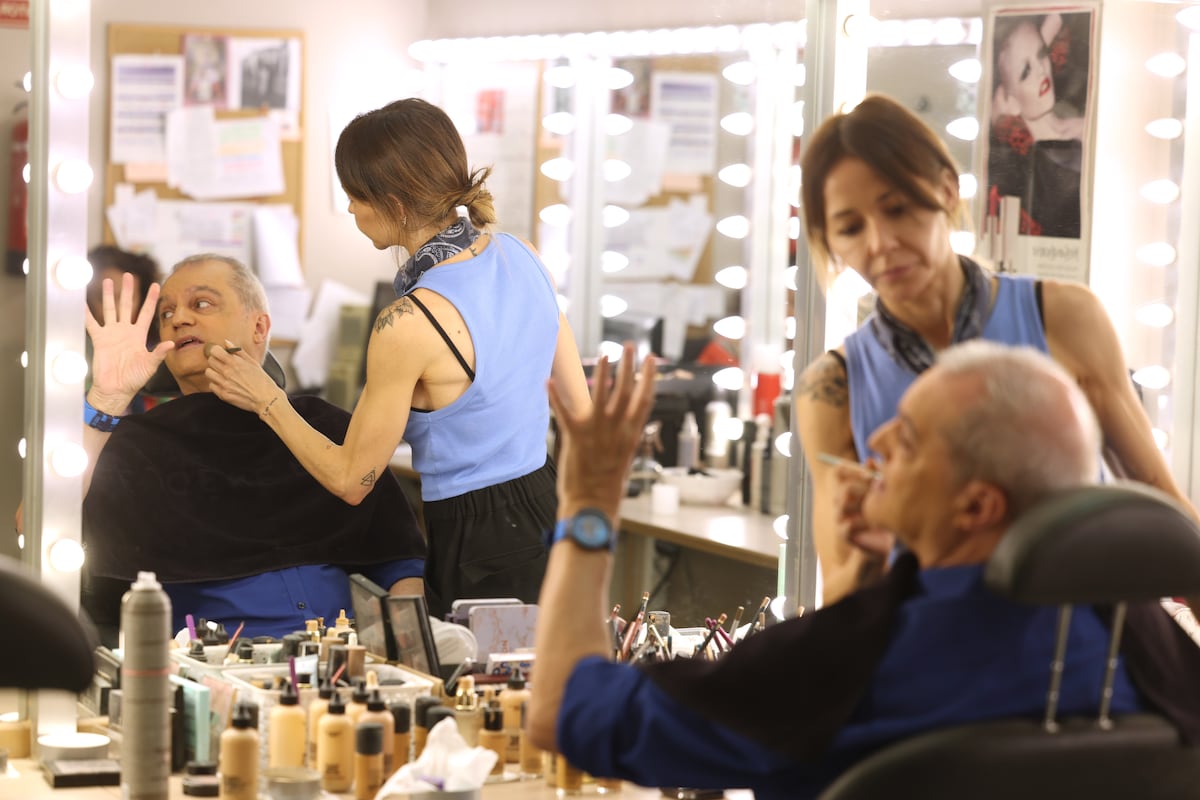
Pictures of some of these couples adorn a mural in the studio, proudly displayed by 63-year-old García, affectionately known as Ramontxu in Spain. He personally greets afternoon guests, easing their nerves with his familiar charm. In the makeup room, García shares his knack for matching his shirt with his watch strap, a detail as meticulous as his dedication to the show.
García has become a fixture in Spanish households and has no intention of stopping. “I'm at a peak in my career, working on ‘En compañía’ and preparing for the new season of Grand Prix. My schedule is tight, but at 63, I'm feeling great. No complaints,” he says. This program has profoundly affected his life, challenging initial doubts when Juan y Medio offered him the role. “I wasn't sure I could do it, but Juan assured me people trust me. That was flattering.”
Over the years, García has engaged with countless people and their problems, grounding him in reality. His sociable nature, honed in his parents’ nightclubs, proves invaluable. Through personal trials, including losing his parents and divorcing, García's life has intertwined with those of his guests. “I buried my mother on a Friday and was back on the show by Monday. The first guest that day had also lost his mother. As I read his story, I realized it was mine. I told him, ‘I don't know how we'll do this, but we can either cry or help each other. Please help me.’”
Pausing, García admits, “I'm very emotional and invest myself in each case. Returning home is decompressing because the show exhausts me. A shower helps wash away the day's emotions.” He recalls the guest's response: “We'll do great.” It was a moving conversation.
Guests arrive at ‘En compañía’ carrying emotional burdens, primarily unwanted loneliness, which García notes transcends borders and social divides. “A shepherd from a village and a widow from a city can share a sofa, united by loneliness. It equalizes us all. It's powerful,” he explains.
Other issues, like domestic violence, also surface. García points out, “What we hear from mothers and grandmothers is just the tip of the iceberg.” Often, even their children are unaware of their struggles. “Now, women over 70 stand up and declare, ‘I can't stand my husband anymore.’ Some may question why a grandmother divorces at her age. But, damn it, she's had enough. Why shouldn't she?”
García remains enthusiastic about his work, proclaiming, “Every day is a new challenge.” He proudly notes, “Doctors here sometimes tell patients sharing their problems, ‘Go see Ramón.’ Parents say to their kids, ‘I'm off to see Ramón.’ Isn't that wonderful?”
We are looking for an independent senior editor

LEAVE A COMMENT