We are looking for an independent senior editor
Apply Now





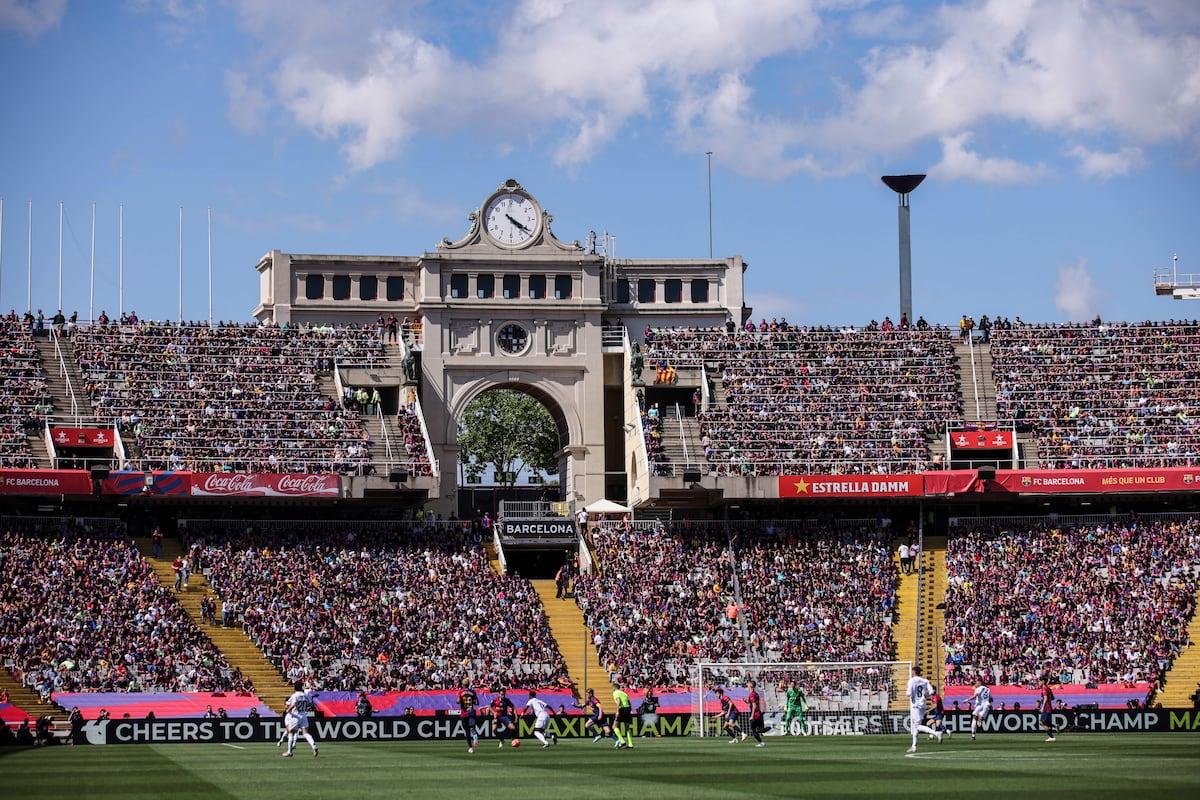
In a striking departure from tradition, the FC Barcelona team's saga during their temporary relocation to Montjuïc has unfolded into a narrative of transformation and adaptation. The journey was marked by the debut of young talents like Lamine Yamal, who graced the Camp Nou for a mere seven minutes at the age of 15, and the rise of a new generation that experienced the Montjuïc terrain. Despite the absence of seasoned players like Pau Cubarsí and Dani Olmo on this field, the club's social identity flourished at Montjuïc, driving the team to clinch the League, Cup, and Super Cup titles.
Initially perceived as an exile, the move to Montjuïc, an area intertwined with the legacy of Barcelona 92, was not the monumental challenge it seemed. The club's executives reflected, "It wasn't the Everest it was made out to be," acknowledging the unexpected benefits of this temporary relocation. The August debut of the Spotify Camp Nou is highly anticipated, highlighting how the Montjuïc experience has been instrumental in creating what can now be termed the "Montjuïc Generation."
This period has not only crowned a champion team but also cultivated a diverse fan base. Montjuïc's spectator dynamics showcased a blend of tourist-spectators, youthful enthusiasts, and fervent supporters who were previously unable to attend matches regularly due to the seating limitations at the Camp Nou. Out of 80,000 subscribers, 58,000 opted for a leave of absence during the Montjuïc phase, allowing many without season tickets to witness the games at Estadi Olímpic Lluís Companys, thanks to Barcelona's strategy of maximizing attendance and revenue per match.
The Montjuïc era also saw a shift in fan engagement, with many experiencing live matches for the first time, while others abstained until the team's return to Camp Nou. Amidst this transition, unresolved issues linger, such as the closure of the Grada d’Animació, where management refused to pay fines for certain fans' behavior. Montjuïc, distinct from Camp Nou, didn't exert the same environmental influence or social pressure on the board, with no one turning to the box during challenging moments of Laporta's tenure.
The previous season posed challenges, marred by poor results and uncertainty over Xavi's continuation. Complications arose until Olmo and Pau Víctor were finally registered, amidst rumors of a censure motion led by Víctor Font's growing opposition. Tensions didn't reach Montjuïc's box until an incident involving a frustrated Laporta tossing a tray of canapés during a match against Granada. However, the mood shifted positively with Flick's arrival, with the team achieving remarkable feats, notably in a thrilling 4-3 victory against Madrid and drawing 3-3 in the Champions League semis against Inter.
Record-breaking financial gains were achieved during the Madrid clash, with revenues surpassing €13 million and attendance peaking at 50,318 spectators. Despite having 13% fewer tickets due to increased passes and subscriptions, overall revenue increased by 57%, and average match attendance rose to 45,962 spectators. The only match with less than 40,000 attendees was against Leganés. Enhanced metrics showed that 56% of attendees were subscribers, members, or Barça companions, with the number of fans climbing Montjuïc rising from 983,616 last season to 1,291,771.
League records reveal Barça gained more points away (45) than at home (43), with defeats against Las Palmas, Leganés, Atlético, Villarreal, and a draw with Betis. Victories in the Cup and Super Cup were secured in Seville and Jeddah, while European elimination occurred in Milan (4-3). The team triumphed in all four matches against Madrid, the last in Montjuïc. The upcoming Barça-Madrid will take place at the Camp Nou, which initially will accommodate slightly more spectators (60,000) but face challenges in seating arrangements. "We're returning to a stadium under construction," lamented Barça's offices.
The relocation saw a €24 million expenditure in Montjuïc, with predicted losses reduced from an initial €100 million to between €50 million and €75 million, pending the Spotify Camp Nou's inauguration. The club has requested to play the first three league matches away to debut the stadium in September post-FIFA break. The return home will rekindle a sense of ownership among Barça subscribers, accustomed to their seats and the convenience lacking at Lluís Companys due to parking and access difficulties from Plaça Espanya. Montjuïc's sports activity focused mainly on matches, with cold winds often deterring attendance, compounded by weather conditions forcing media to retreat indoors during certain matches, as seen last April during Valencia's visit.
Both fans and journalists had grown accustomed to Montjuïc's leaks, as had players who didn't complain about the stadium's track dividing them from fans, which eased the visitor's experience. "I couldn't stop looking up, and that field never seemed to end," recalled Sergio Ramos about Camp Nou. While Barça's supporters were often more expectant than active, playing before 50,000 isn't the same as 100,000, the latter expected when renovations complete in 2026, coinciding with elections where President Laporta will run. "Comebacks," a veteran player noted, "will continue to be associated with Camp Nou, not Montjuïc."
We are looking for an independent senior editor

LEAVE A COMMENT