We are looking for an independent senior editor
Apply Now





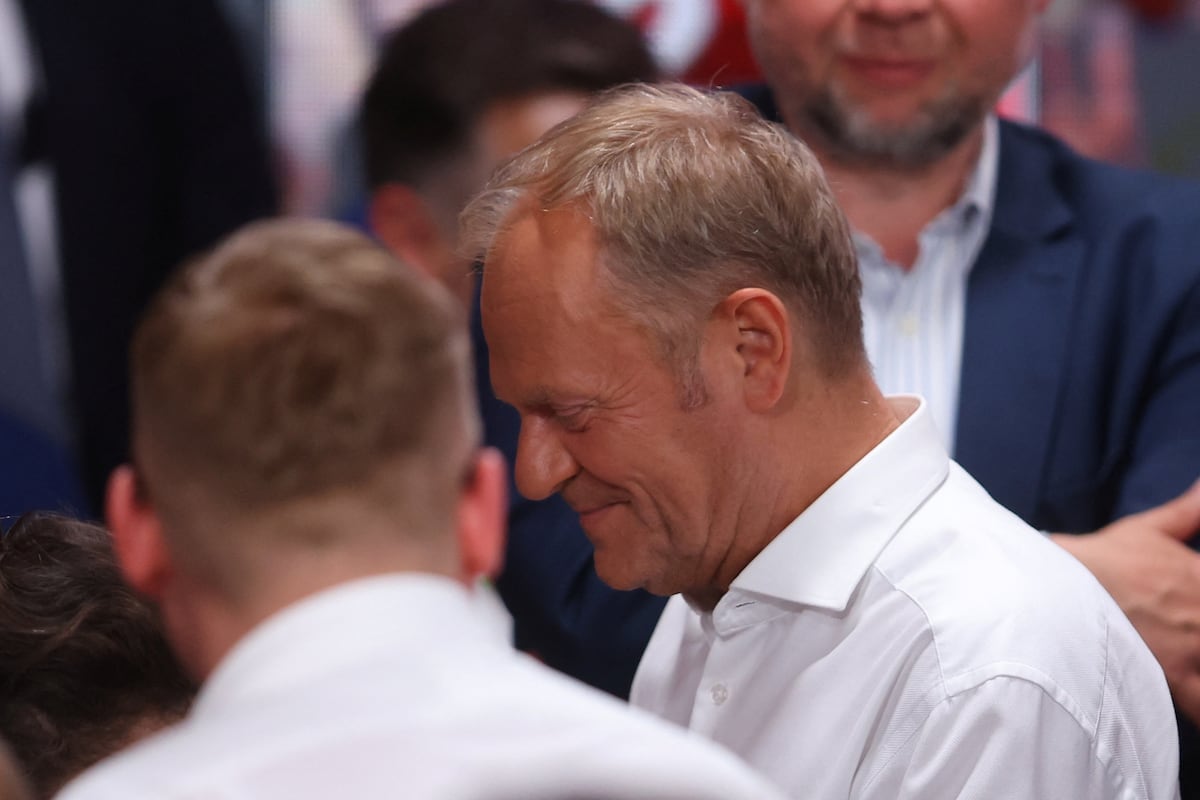
In a bold move to reaffirm his authority, Polish Prime Minister Donald Tusk announced on Monday that he intends to undergo a vote of confidence in the near future, though he did not specify an exact date. This decision follows a significant electoral defeat for his centrist party in the recent presidential elections. The Polish populace has withdrawn their support for Tusk's liberal government, choosing instead to elect Karol Nawrocki as the new head of state—an outcome Tusk is determined to overturn.
During a televised address, Tusk asserted, "I want everyone, including our opponents both domestically and internationally, to see that we are ready for this challenge. We understand the gravity of the moment, yet we have no intention of retreating." He dispelled any rumors of resignation, stating, "As the Prime Minister of Poland, I will not pause for a moment in our shared struggle for the Poland we envision."
Tusk offered congratulations to the election winner and extended an olive branch for cooperation. However, anticipating a rejection, he confidently noted, "We have a contingency plan ready should cohabitation prove difficult." He urged his coalition partners to unite and address the pending work, irrespective of the new president's potential use of veto power.
The legitimacy of Tusk has been severely compromised, contrasting sharply with the rise of his adversary, Jaroslaw Kaczynski, leader of the ultraconservative Law and Justice Party (PiS). Kaczynski took a calculated risk by endorsing the controversial Nawrocki for the presidency to further his agenda. With Nawrocki's victory, Kaczynski and PiS are now emboldened to reclaim power.
In a preemptive strike, Kaczynski initiated a campaign to undermine the liberal government. In a televised address shortly before Tusk's own announcement, he proposed forming a "technical government" led by a non-partisan figure, with ministries helmed by experts. "I call upon all forces to begin discussions on this matter," he declared, expressing confidence that both the current and incoming presidents would support this initiative, implying a separation from PiS despite their personal selection.
Analysts suggest that Tusk's confidence vote is a strategic move to test his government's allies and solidify his position. Failure to pass the motion would not necessarily trigger early elections or force Tusk's resignation. He could continue to govern unless another candidate garners the necessary parliamentary majority or even persist with a minority government should some cabinet members defect.
Wojciech Przybylski, director of the Visegrad Insight think tank, commented in an online discussion that Tusk's position remains secure, describing him as a "skilled politician." The vote of confidence aims to "consolidate his power," Przybylski noted.
Within the government, early signs of division are emerging, though analysts do not foresee an immediate collapse. Szymon Holownia, leader of Polska 2050 and a key figure in the Third Way coalition with PSL's agrarian conservatives, urged partners to renegotiate the coalition agreement. "The election results serve as a yellow or perhaps red card for this government, for this coalition," Holownia, who also chairs the Sejm—the lower house of the Polish Parliament—stated before a meeting to assess the election outcomes. Holownia himself ran in the presidential race but was eliminated in the first round with 4.99% of the vote.
We are looking for an independent senior editor

LEAVE A COMMENT