We are looking for an independent senior editor
Apply Now





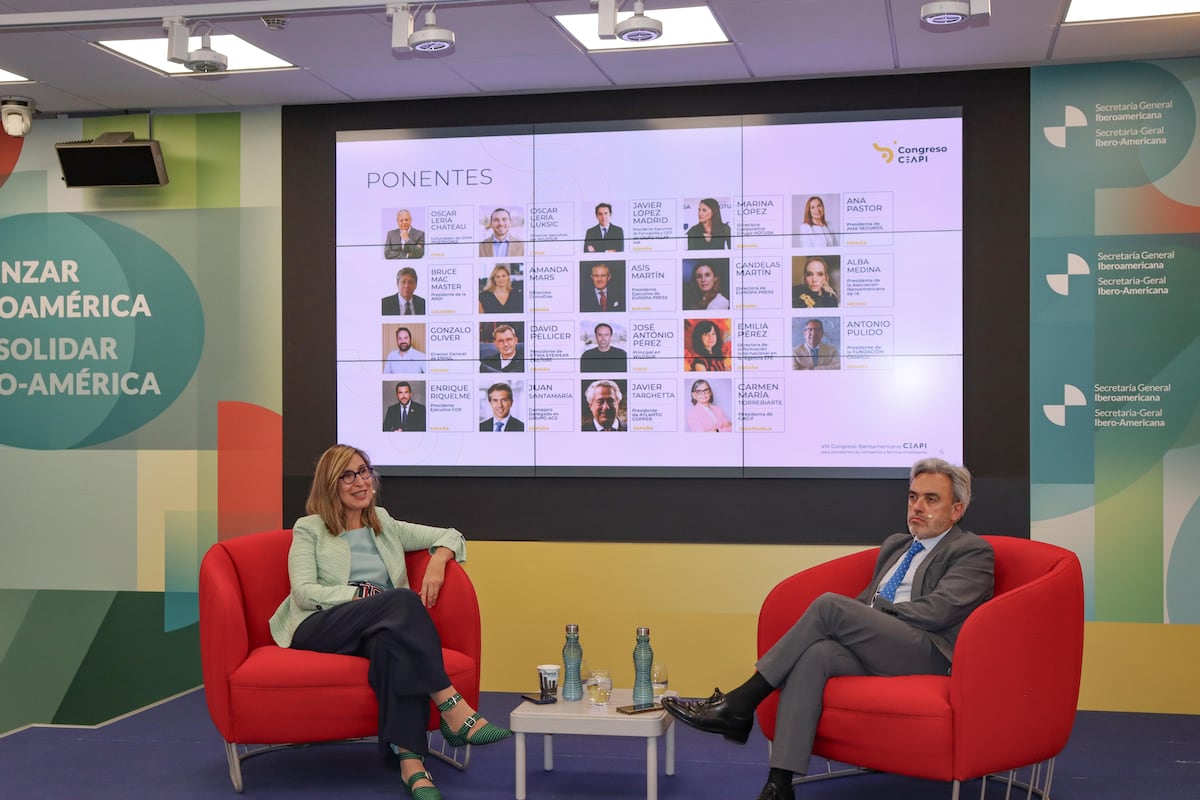
The rise of protectionist policies by the United States and China's expanding footprint in Latin America have catalyzed a renewed drive for relevance among global powers. The Business Council Alliance for Ibero-America (Ceapi), comprising over 350 Spanish and Latin American entrepreneurs, emphasizes the necessity of enhancing transatlantic relations. At their recent VIII Annual Congress in Seville, Ceapi unveiled a manifesto urging Spain to act as a catalyst in strengthening Latin America-EU relations. They argue for multilateral cooperation between Latin America, the Caribbean, and the European Union as a strategic alternative fostering economic balance, shared development, and autonomy.
The manifesto proposes supporting the internationalization of multilatina companies entering Europe through Spain. "Latin American firms have moved beyond investing solely in neighboring countries, extending their reach to Spain," the document notes. Conversely, a growing number of Spanish companies are becoming multi-Ibero-American, seeking expansion into Latin America. Ceapi advocates for nurturing these enterprises, which access a market exceeding 1.1 billion people, representing 25% of the global GDP.
At its core, the document seeks to boost business interactions across the Atlantic. Titled "More Ibero-America: A Global Strategy in a Multipolar World. Keys for a More Connected Latin America with Europe," the document outlines ten general proposals aiming to enrich discussions at the upcoming EU-CELAC Summit scheduled for November in Santa Marta, Colombia.
The manifesto also addresses migration, highlighting the integration of established Latin American communities in Europe, particularly in Spain, as a pivotal experience for crafting a unified migration policy. This approach aims for harmonious cultural, social, political, and economic relations between the two regions, fostering joint growth.
"Current circumstances demand strategic vision, political and business resolve, and both regional and global leadership to establish an Ibero-American bloc that transcends shared history and language, positioning itself as a formidable force in the international system," stated Nuria Vilanova, Ceapi's president, at the congress's opening, attended by various national and international media outlets, including EL PAÍS.
Ceapi identifies five sectors where Latin America can thrive: mining, agro-industry, water and energy, tourism, and education. "It is time for Latin American companies to lead in these sectors, transitioning from extractive to shared models through joint ventures and local partnerships with transformative regional impacts," the manifesto asserts.
Additional points include advocating for "conscious capitalism" that supports the vulnerable, ensuring positive urban impacts of business projects, and promoting education, youth talent, and female leadership to combat inequality.
The manifesto also addresses the challenge of informal labor, noting that approximately 48% of workers in Latin America and the Caribbean, around 140 million people, operate in informal settings. Reducing these rates would enhance social protection access for workers and families, increase fiscal revenue and public service funding, and boost company productivity. Lastly, the document recommends bolstering institutional roles and creating more multilateral organizations to strengthen democracy, transparency, and legal security.
We are looking for an independent senior editor

LEAVE A COMMENT