We are looking for an independent senior editor
Apply Now





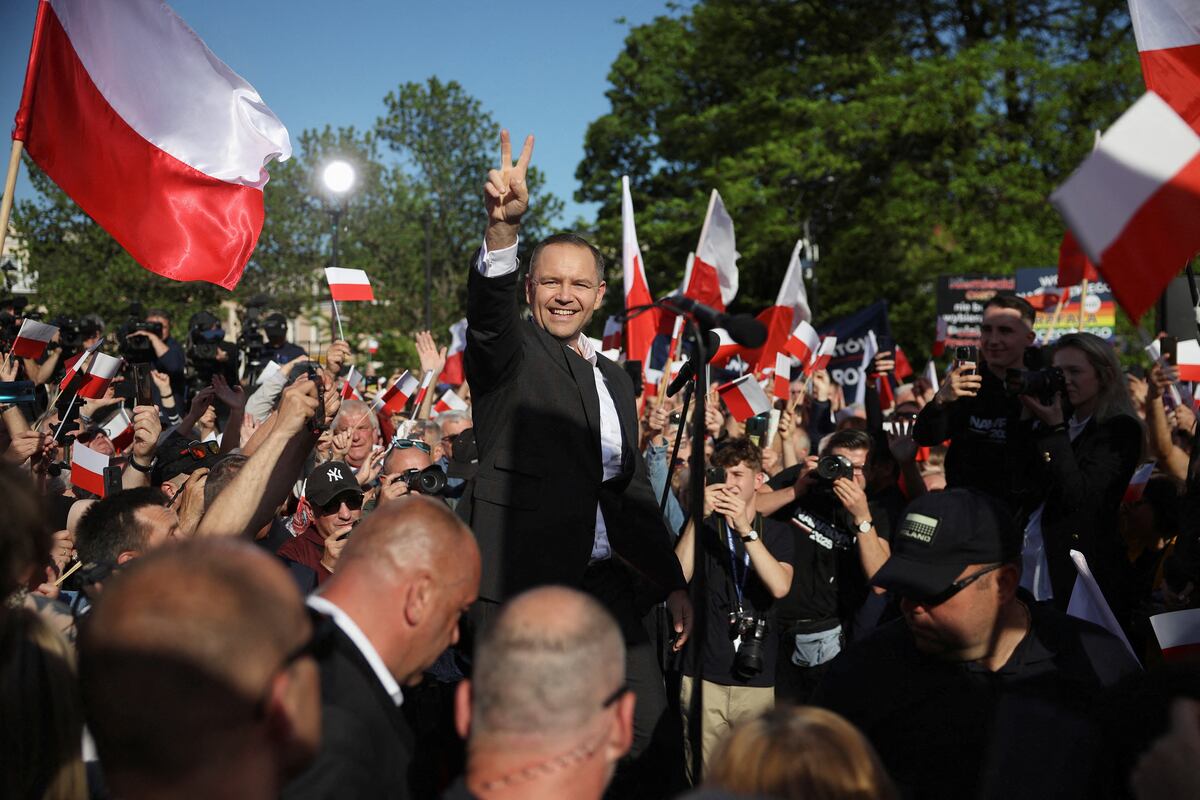
The recent electoral victory of Karol Nawrocki, an ultra-conservative candidate, in Poland's presidential race has sent ripples through the European Union (EU). This development comes as a shock to a union that had hoped for a resurgence of pro-European sentiment following the 2023 ascent of conservative leader Donald Tusk to power in Warsaw. The EU's initial optimism was rooted in Tusk's commitment to reversing years of strained relations between Brussels and Poland under the ultra-conservative Law and Justice Party (PiS), Nawrocki's current backers.
The restrained response from European institutions highlights the complexity of Poland's political landscape. Nawrocki's win not only complicates Poland's full return to European policies but also signifies a growing trend among European citizens who favor anti-EU and illiberal ideologies. European Commission President Ursula von der Leyen extended a cautious congratulations to Nawrocki, reminding him of Poland's commitments to the EU, despite his campaign's anti-Brussels rhetoric. She emphasized the strength found in unity within the EU's framework of peace, democracy, and shared values.
In parallel, European Parliament President Roberta Metsola echoed the sentiment of fostering European unity. Despite the conservative European People's Party (PPE) backing Tusk's defeated opponent, Rafal Trzaskowski, the party has remained silent on Nawrocki's triumph. This silence underscores the EU's delicate position as it navigates the aftermath of Tusk's reforms aimed at restoring judicial independence and enhancing the rule of law in Poland—reforms jeopardized by Nawrocki's potential veto power.
Observers have noted the EU's decision to close a long-standing sanction procedure against Poland as premature, especially given the Polish presidency's veto capabilities. Brussels, aware of the precarious situation, has chosen a "wait and see" approach, hoping for continued cooperation with Warsaw under Nawrocki's leadership. The EU remains committed to monitoring Poland's adherence to democratic values and the rule of law.
European leaders have approached the election results with caution. German President Frank-Walter Steinmeier used his congratulatory message to Nawrocki to stress the importance of German-Polish cooperation, reflecting on the improved relations under Tusk's leadership. French President Emmanuel Macron, however, refrained from commenting immediately after Nawrocki's victory was confirmed.
In contrast, Europe's far-right factions have celebrated Nawrocki's win as a triumph against Brussels' perceived authoritative federalism. French far-right leader Marine Le Pen framed the result as a rejection of EU oligarchic tendencies, while her colleague Jordan Bardella insisted that Nawrocki's democratic election must be respected by EU leaders. Similarly, Spanish ultra leader Santiago Abascal and Hungarian Prime Minister Viktor Orbán hailed the victory as a win for national sovereignty and a setback for pro-EU alliances.
Italian Prime Minister Giorgia Meloni and her deputy Matteo Salvini have also offered their support, emphasizing shared values and historical ties between Italy and Poland. They view Nawrocki's victory as a broader message to Europe, advocating for sovereignty over conformity. This sentiment is echoed by Romanian nationalist George Simion, who lauded the election as a stand against leftist ideologies and a testament to a resurgent Europe focused on freedom and normalcy.
We are looking for an independent senior editor

LEAVE A COMMENT