We are looking for an independent senior editor
Apply Now





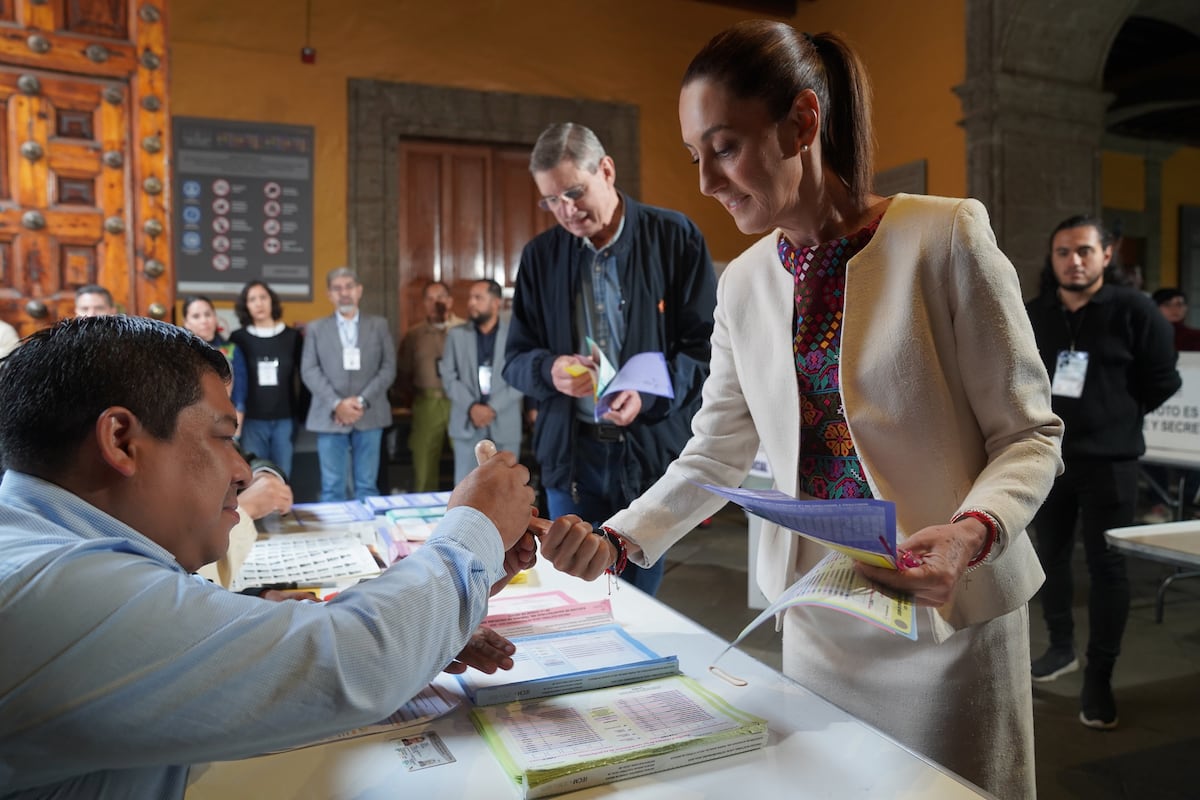
On June 1st, Mexico conducted a groundbreaking election where citizens had the chance to vote for 2,681 judicial positions across federal and state levels. This marks a significant shift in the country's history, as Mexico becomes one of the few nations to allow popular voting for judicial roles, yet participation rates hovered between 12.57% and 13.32%, according to the initial report from the National Electoral Institute (INE).
While countries like Bolivia and the United States elect some judges through public voting, Mexico stands alone in extending this process to all judicial levels. The election faced challenges with limited information, candidate qualifications, and concerns about potential loss of judicial independence.
Former President Andrés Manuel López Obrador made a public appearance to cast his vote, endorsing his successor, Claudia Sheinbaum. He praised her as the world's finest president. Sheinbaum, voting near the National Palace, dismissed accusations of authoritarianism, asserting the elections as a testament to Mexico's democracy.
The turnout for Mexico's first judicial elections reached only 13%, yet President Sheinbaum labeled the event a "total success" despite the low voter turnout for selecting over 2,600 positions. The Supreme Court of Justice's vote count approached 10% participation by the end of Sunday, with final results expected by June 3rd.
At the close of election day, candidates Lenia Batres and Hugo Aguilar Ortiz led the preference lists. President Sheinbaum celebrated the election's success in a video message, emphasizing that voters chose "new guardians of justice" and declared Mexico as "the most democratic country in the world."
Sheinbaum criticized the former judicial system for favoring criminal elements and nepotism, arguing that a universal election contradicts attempts to control the judiciary, which would have been better achieved by constitutional amendments.
The INE confirmed nearly 13% participation in Mexico's first judicial election, as reported by Guadalupe Taddei, INE's chairwoman, based on their initial assessment.
The Attorney General's Office (FGR) reported receiving 23 complaints about potential electoral offenses during Sunday's election, handled through various communication channels.
The Preliminary Electoral Results Program (PREP) in Veracruz showed over 50% vote counting with 46% participation. The state experienced a historic day, choosing over 1,000 public positions, including judicial and municipal roles.
The INE declared a permanent session to commence the vote counting for judges, magistrates, and ministers, beginning Sunday evening and concluding by June 10th. Claudia Espino, the executive secretary, confirmed the transparency of this public process.
Clara Brugada, Mexico City's head of government, celebrated the democratic commitment of the capital's citizens, asserting that the elections marked the dismantling of conservatism in Mexico.
In Veracruz and Durango, the PREP began showing early electoral results, with Veracruz's vote count surpassing 14% by evening, while Durango counted just over 1%.
INE announced the conclusion of the elections, with nearly all planned voting booths installed, though some faced disruptions due to various incidents.
PRI's national president Alejandro Moreno criticized the election as a sham, condemning the lack of transparency and respect for power balance.
The INE reported that 99.98% of the booths were set up, with 1,770 incidents recorded, mainly minor disruptions.
INE will broadcast the district counts live on YouTube, promoting transparency and accountability amidst manipulation concerns.
The INE's information site "Conóceles" received over 21 million visits, indicating public interest in candidate profiles.
Jorge Romero from PAN criticized the election, citing intimidation and predicting low participation, expressing disappointment over the lack of a minimum threshold.
Voting concluded at 6 PM, with low turnout at some locations, as seen in a voting booth in Roma Norte.
Morena's president, Luisa María Alcalde, claimed substantial victories in Durango and Veracruz, highlighting electoral wins in these previously opposing states.
Voting booths closed, marking the beginning of a two-week period to determine final results for nearly 2,700 judicial positions.
Galia González, a first-time voter, expressed feeling overwhelmed by the numerous ballots, hoping her vote makes a difference.
District counts commenced on June 1st, with results expected by June 10th.
INE's counselor, Carla Humphrey, noted the unprecedented presence of military personnel during the electoral process, raising concerns about INE's independence.
President Claudia Sheinbaum defended the elections, emphasizing democracy and citizens' equal rights to elect judicial representatives, refuting claims of authoritarianism.
INE installed 99.9% of planned voting booths, facing challenges mainly in Chiapas, Michoacán, and Sinaloa due to violence.
Beatriz Gutiérrez Müller, former President López Obrador's wife, celebrated the election as a milestone for Mexico, allowing citizens to directly choose representatives for all three government branches.
INE labeled the election a "trust act in institutions," despite violence affecting Chiapas's voting booths.
INE's Guadalupe Taddei reported violence in Chiapas hindering booth openings but assured the electoral process proceeded smoothly overall.
Rodrigo Lozano emphasized voting as both a right and obligation, despite challenges in familiarizing oneself with candidates.
PRI's Alejandro Moreno reiterated his condemnation of the election, refusing to legitimize what he views as a farce.
INE confirmed a smooth electoral process, with minor incidents addressed promptly, as Mexico embarked on its historic judicial election.
We are looking for an independent senior editor

LEAVE A COMMENT