We are looking for an independent senior editor
Apply Now





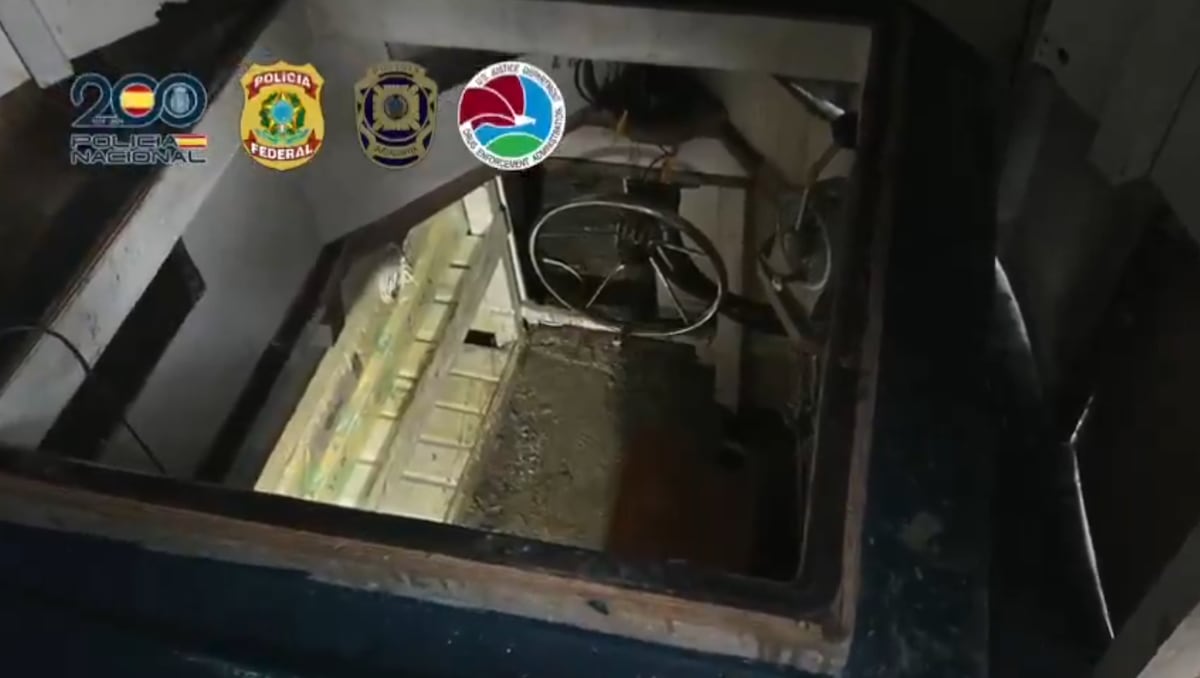
A collaborative police operation involving four nations, including Spain's National Police, has successfully located a clandestine shipyard on an island at the mouth of the Amazon River, where narco-submarines are constructed to transport substantial cocaine shipments to Spain. Dubbed Operation Lupus, this initiative intercepted one such vessel as it prepared to depart from Marajó Island, situated in Brazil's Pará state, en route to the Iberian Atlantic shores, according to Monday's report from the Ministry of the Interior. Five individuals slated to crew the submarine were apprehended, and additional arrests remain possible.
Brazilian authorities have confirmed that the recently dismantled shipyard was responsible for the narco-submarine intercepted on March 25 in Portuguese waters, 680 nautical miles southwest of the Canary Islands, carrying 6.6 tons of cocaine. This operation marked a milestone in anti-drug trafficking efforts, as it was the first time such a vessel was successfully boarded far from shore, preventing the crew from sinking it—a common tactic to obstruct the retrieval of drugs as evidence of criminal activity.
In this instance, the seized submarine had yet to be loaded with drugs, as trafficking organizations typically transfer cocaine onto these semi-submersibles from fishing or sailing vessels while at sea, detailed sources close to the investigation. "Given the risk of failing to intercept it during such a maneuver, authorities opted to intervene before its journey commenced," these sources noted. Police commanders specializing in anti-narcotics operations have observed a significant rise over the past year in these artisan vessels departing South American coasts with cocaine bound not only for Spain but also for Africa.
Operation Lupus commenced in Spain after agents from the Drug and Organized Crime Unit (Udyco) received intelligence that a group composed of Colombian and Spanish nationals was on the verge of launching a semi-submersible in Brazil to transport several tons of cocaine to the Iberian Atlantic coast. Typically, once near coastal zones, cartels transfer their cargo from narco-submarines to high-speed boats for subsequent unloading on land.
The intelligence was shared with Brazil's Federal Police, who had already initiated an investigation following the March interception, confirming the vessel's construction within their territory. A joint operation was organized, with Brazil's air force and navy participating in its final stage using a helicopter and a ship, respectively. The Portuguese Judicial Police, involved in the previous semi-submersible interception, and the U.S. Drug Enforcement Administration (DEA) also collaborated. The ongoing investigation aims to "identify and apprehend all individuals involved in the manufacture, logistics, and financing" of the semi-submersible, as highlighted by Brazilian authorities in a statement.
Narco-submarines have emerged as increasingly popular transportation for large cocaine shipments from South America to Europe, thanks to their substantial carrying capacity, autonomy for long-distance navigation, and ability to remain concealed at sea. Since 1993, more than 300 vessels of this type have been seized on both sides of the Atlantic. Additionally, crews can easily scuttle them by allowing water ingress if confronted by police, which complicates or even prevents the recovery of the drugs as proof of criminal offenses.
We are looking for an independent senior editor

LEAVE A COMMENT