We are looking for an independent senior editor
Apply Now





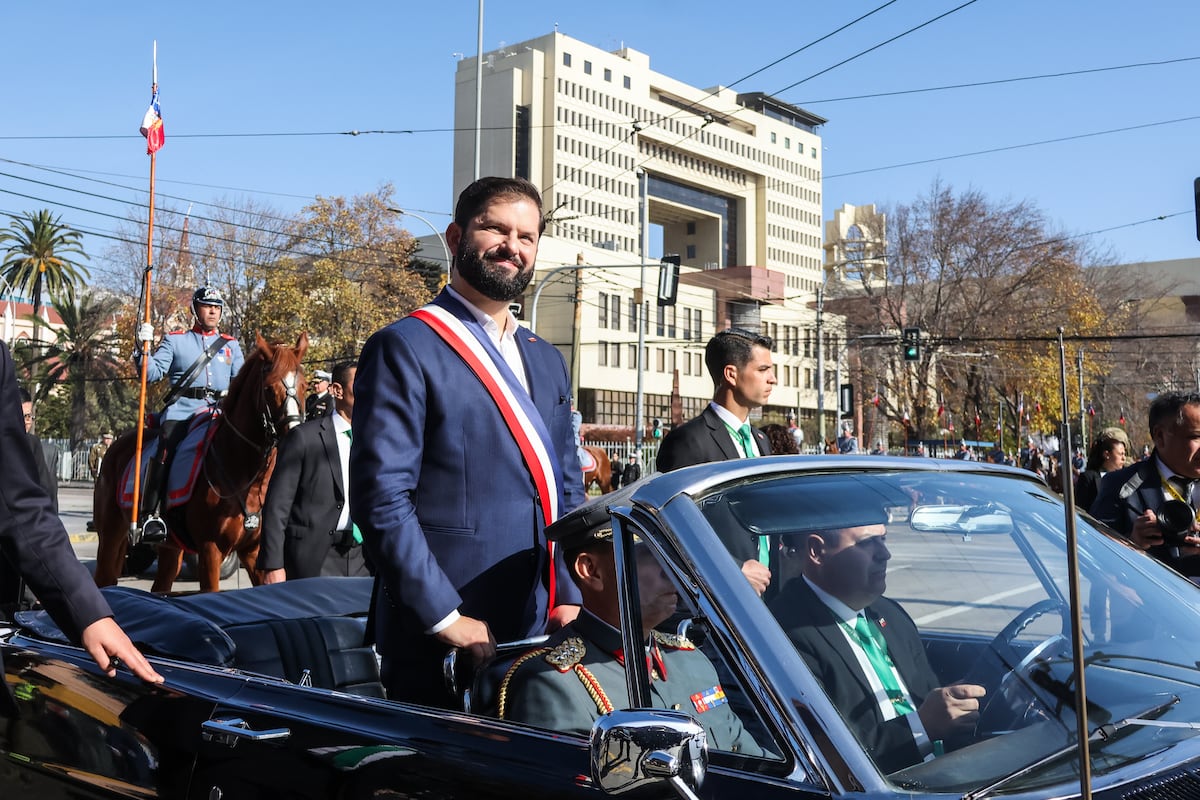
A year ago, during his national address, President Gabriel Boric demonstrated a shift in his administration by focusing on economic growth and the security crisis impacting the nation. These topics marked a departure from the original transformative vision that defined his debut. With an emphasis on growth and security, Boric aligned more closely with the policies of former Concertación governments and the legacy of Sebastián Piñera's administrations. To balance this significant shift, the president strongly condemned Israel's actions in Gaza and proposed a project for free abortion rights.
Now, a year later, President Boric reiterates in his recent address the urgency of tackling the public safety crisis. He emphasizes the need for greater economic growth, reducing unemployment, and enhancing social security standards. Simultaneously, he proposes initiating legislative debates on free abortion, repeats his condemnation of Israel's actions, and suggests transforming the Punta Peuco prison into a common jail as a significant human rights gesture. The address was more descriptive than programmatic, more reflective than forward-looking, recognizing a clear self-critique of the initial vigor that marked his government’s start in March 2022.
Beginning his speech, the president appeared to criticize his advisors and closest collaborators, rather than other political figures or forces, for not considering the lack of legislative majority and despite that, proposing such an ambitious agenda of structural changes. In this vein, he acknowledged the lack of realism of his own generation, first as student leaders and later as opposition lawmakers, in not understanding the importance of agreements, negotiations, and institutional limitations faced by successive governments since the transition began.
Overall, President Boric's balance has been somewhat discouraging, as he admits to deficiencies and a deficit in his administration so far. He acknowledges a stagnation affecting all productive and service sectors. The 2.4% growth achieved in 2024 was due to mining, showing that the government still relies on the extractivist model it promised to surpass. A year after the 2024 address, unemployment has increased, according to data from the National Statistics Institute (INE). Unemployment rose from 8.5% in 2024 to 8.8%. The unemployment rate in the Metropolitan Region is 9.5%, and nationwide, it affects women more noticeably, reaching 9.7%. Unemployment levels last year are higher than those in 2019, just before the social unrest when they were 7.6%. Furthermore, the informal employment rate remains stable at 25%. Therefore, the president has reiterated the need for better conditions for investment and new market creation. He even mentioned promoting tourism as an alternative to improve growth, job creation, and employment opportunities. However, how can tourism be encouraged amid a security crisis and rising crime? Or how can investment be stimulated in a context of increasing corruption cases?
In terms of public safety, crime rates and the perception of insecurity have remained stable. All opinion studies consistently show, since the current government began, that public safety remains a priority for the population. Conversely, the government has struggled to find solutions and adopt measures in this regard. In recent weeks, there has been an increase in violence and criminal acts affecting educational institutions and other highly frequented spaces.
This government has been weak in terms of public investment. The president showcased 10 new hospitals in some provincial capitals, mostly in small cities and towns throughout the country. These hospitals were inaugurated by the current government, although they were built and completed during the previous administration. Few investment alternatives have been offered to the country, such as the extension of rail services on certain sections and the expansion of the Metro network benefiting some municipalities in the Metropolitan Region. These are not investment programs that benefit various territories in the country, nor do they stimulate aggregate demand to the extent of activating productive sectors and generating new jobs.
Regarding issues of probity and corruption, he stated that these could affect the functioning of institutions and the legitimacy of the democratic system. However, it is not clear that creating government audit systems and regulating lobbying will reverse the entrenched corruption problems in public administration or in the transfer of resources to foundations and other external services. The commitment should have been to advance a more substantive reform of state management to achieve greater transparency and accountability. On political system reform, which has not progressed so far, he insisted on the need to reverse party fragmentation. While essential for improving representation and governance, it is insufficient considering the challenges that threaten democracy's projection today.
The president took the opportunity to highlight his administration's main achievements, such as implementing the law enforcing child support payments, reducing the workweek to 40 hours, raising the minimum wage, and pension reform. Several of these initiatives still require thorough assessment, partly because they have been confusing in their implementation and benefit only workers in more formal jobs.
In summary, at the close of the last Public Address, it is possible to perceive a strange paradox. The twilight of a government generationally younger than all those since 1990 is beginning, yet it is unable to offer future alternatives. On the contrary, it is compelled to look back to acknowledge its errors and highlight some of its successes.
We are looking for an independent senior editor

LEAVE A COMMENT