We are looking for an independent senior editor
Apply Now





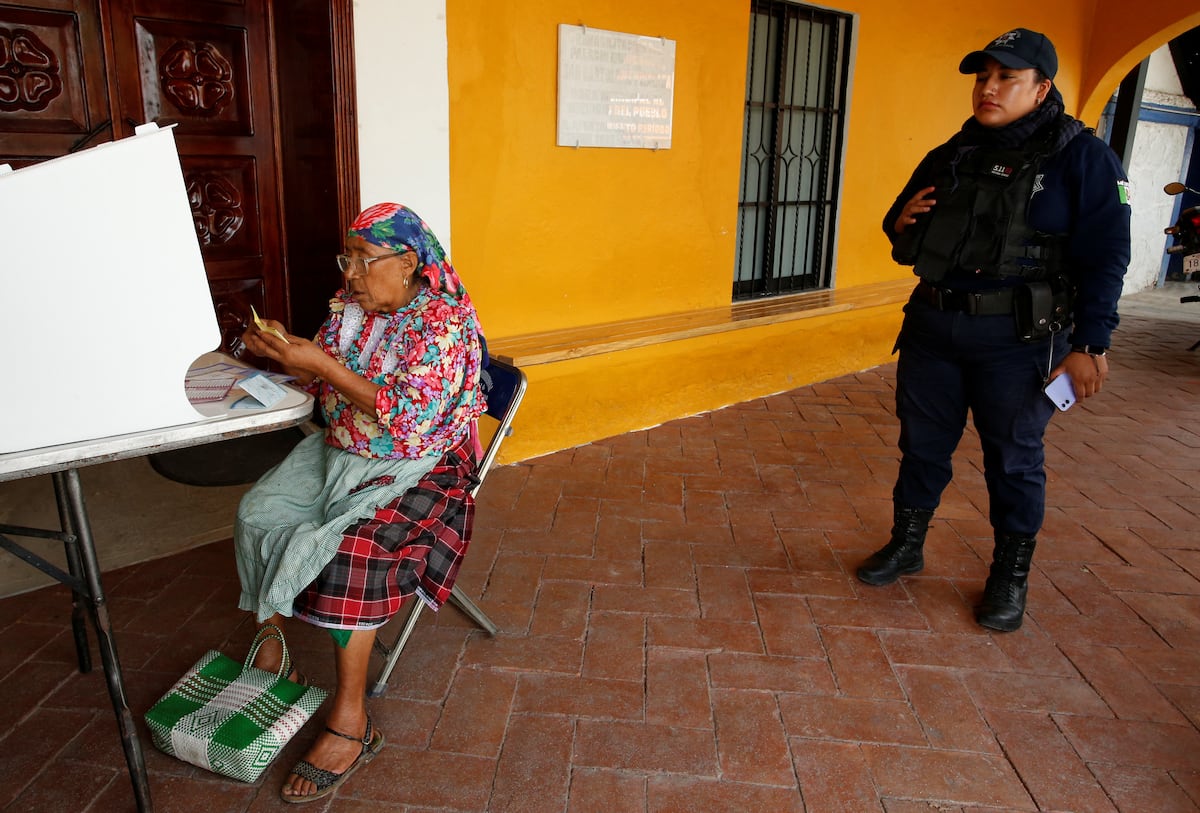
The first of June, 2025, will be recounted through divided voices, lacking a unanimous verdict. Depending on who narrates, it will either be a triumph or a betrayal, a revenge or a conquest, a redemption or a downfall.
The inaugural day of Sheinbaum's year is ensnared between two fictions. It marks, for some, the dawn of judicial democratization, while for others, the demise of its independence. For some, it fulfills the promise of cleansing the referee; for others, it serves as the epitaph of its alleged transparency.
Sunday's events will linger in contention. Some will hail it as a democratic milestone; others will deem it a farce. A solemn day demonstrating the people's awakening, or a defeat marked by indifference. A day caught between the overwhelming support shown in surveys and the cold echo of empty ballot boxes.
The first judicial vote will not only live in numbers but in the shifting narrative. It resides in the space between two forces: on one side, the disgraceful capitulation of an opposition that let go of the reins; on the other, the feeble mobilization of the ruling party that promised omnipotence.
The judicial election will be born amidst a struggle over its meaning. For some, it is an institutional charade, a staged performance. For others, it heralds the start of a new era.
The first day we elected judges will be trapped between opposing memories. For some, it will be when an opaque power—insulated, technical, immune—opened up to the people. For others, it marks the moment when the judiciary ceased to be a counterbalance and became a prize.
This historic day will be contested between two narratives: those who view it as the intrusion of the unwanted into the third power, and those who prefer to forget that they have long resided there.
It will be seen as the day justice became politicized, or the moment we stopped pretending otherwise. Will it be a scandal or a memory lapse?
It will be the day that signifies the death of judicial independence—if anyone dares to swear it was ever alive.
The first of June, 2025, will be a beginning for some, a defeat for others.
Some will remember their first judge election as a genuine exercise of citizen selection; people organized, compared proposals, and exchanged ideas in corners and hallways. Others will see it as a choreography dictated by institutional loyalty.
The judicial election will also be measured by what it revealed—or questioned—about the electoral arbiter's solidity. For some, it will be a blow to its prestige; for others, proof of its strength and responsiveness.
With this duality in mind—and unless we want to remain mired in rhetorical fog—we must begin to assess. Assess whether the judiciary improves. Whether court backlogs decrease. Whether rulings are issued according to law. Whether they arrive on time. Whether impunity levels drop. Whether those who administer justice do so autonomously or under orders.
We are looking for an independent senior editor

LEAVE A COMMENT