We are looking for an independent senior editor
Apply Now





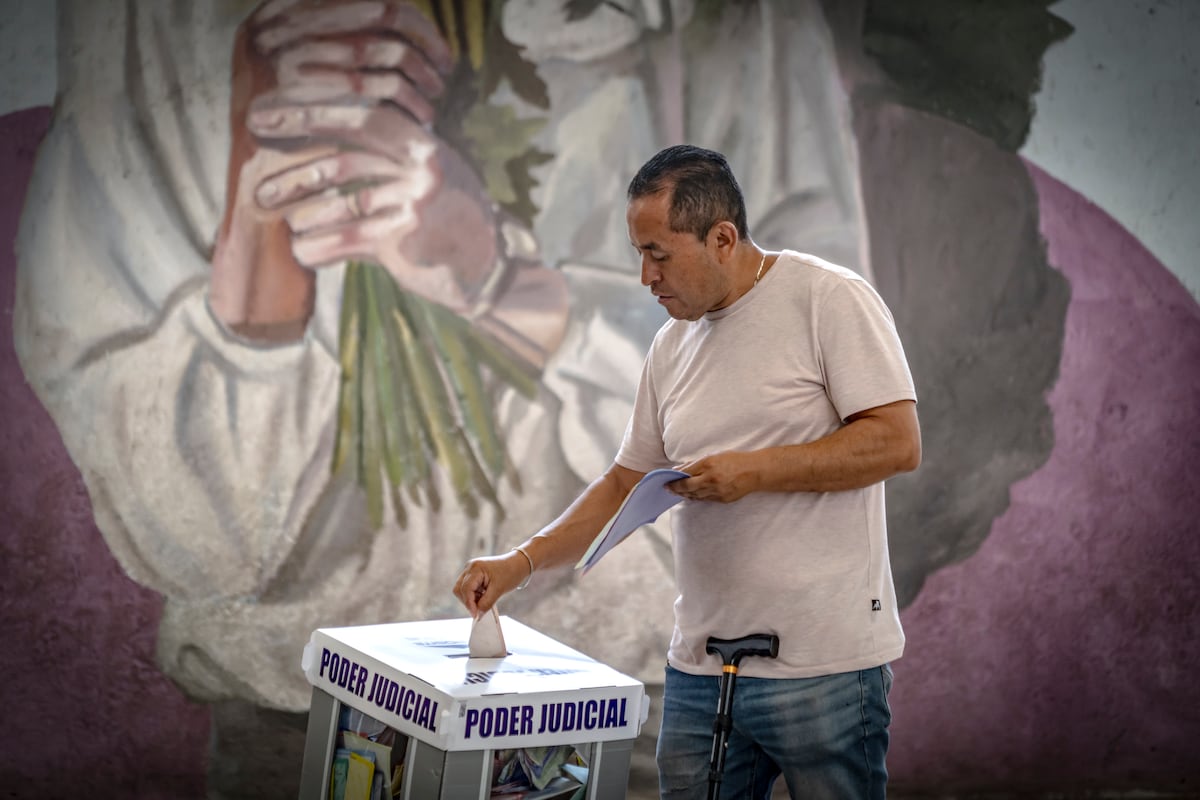
Mexico has embarked on a groundbreaking journey by becoming the first nation to elect its entire Judiciary through popular vote—a monumental institutional shift since its democratization. This development, however, raises questions about its origins and the events leading to this significant reform.
The catalyst is often mistakenly attributed to a symbolic gesture on February 5, 2023, when Norma Piña, then president of the Supreme Court, remained seated as President López Obrador passed by during the Constitution Day ceremony. This act was interpreted as a challenge, believed to have triggered a chain reaction culminating in the judicial reform and subsequent elections. Yet, this oversimplification overlooks the longstanding tensions between governmental powers and the evolution of the idea of electing judges.
These tensions predate López Obrador's presidency, initially fueled by the Judiciary's budgetary excesses. For years, the Supreme Court exploited its autonomy to inflate salaries, with Mexican justices earning more than their counterparts in the U.S., Germany, or Canada. A study highlighted the Court's costly mismanagement and bloated bureaucracy, characterized by hefty salaries and perks for senior officials.
López Obrador, during his campaign, advocated for reducing the Judiciary's spending. However, the then Supreme Court president, Luis María Aguilar, fiercely opposed and manipulated budget proposals to avoid salary cuts, even attempting to deceive Obrador with false budget reductions.
In December 2018, shortly after Obrador assumed office, the Court devised a suspension to block salary reductions, manifesting its extreme defense of financial privileges. This discord was briefly overshadowed by Arturo Zaldívar's ascent to the Court's presidency in January 2019, ushering in reforms to ease executive-judicial friction.
Zaldívar, a skilled politician, endeavored to align with the president, spearheading reforms that acknowledged nepotism and reduced ministerial salaries by 25%. He also championed a popular consultation to decide whether to prosecute former presidents, aligning with López Obrador's interests. However, Zaldívar's tenure also saw significant setbacks to the ruling party, Morena, with the Court partially or fully declaring unconstitutional various reforms, including those affecting the electric industry, public servant remuneration, austerity measures, national security, and fiscal fraud cases, among others.
Under Zaldívar, the Court's relationship with the executive resembled a cold war, dissatisfying the legal community, which sought more substantial opposition to Morena's agenda, often accusing Zaldívar of sycophancy. His strategy involved negotiation, fearing that heightened tensions might prompt the president to leverage legislative majorities for aggressive judicial reform.
The Judiciary's dramatic decline commenced with Zaldívar's departure from the presidency and Norma Piña, a career minister lacking political acumen, assuming leadership. From her inception in January 2019, Piña, preferring solitude, refrained from engaging with the president, opting for open confrontation instead. Guided by staunch presidential opponents, Piña banked on mid-term elections weakening López Obrador and a PRI-PAN coalition securing congressional majority in 2024.
In March 2023, Piña's Supreme Court delivered a significant blow by overturning Obrador's proposed electoral reform, known as Plan B. This pivotal decision prompted Obrador, for the first time, to publicly consider electing judges by popular vote, citing historical precedents both domestically and in early U.S. democracy.
Initially hesitant, López Obrador advocated strengthening humanistic and anti-corruption principles within the Judiciary before pursuing electoral mechanisms. The Court's nullification of the reform transferring National Guard control to the military solidified his resolve, leading to a call for constitutional reform and direct election of Supreme Court ministers.
Historically, the Court's rulings favored the oligarchy and economic power, often hindering workers' rights, progressive taxation, and public projects. Acknowledging the futility of a public discourse on such issues, Morena launched a nationwide campaign blaming the Judiciary for impunity, accusing it of freeing criminals and obstructing justice.
This campaign adeptly connected deep social grievances, such as insecurity and limited justice access, to the Judiciary, transforming Norma Piña into a public target. Despite observing the attack, Piña lacked political savvy to defend the institution, failing to engage with Morena or negotiate reform terms, instead withdrawing in frustration.
Piña's leadership faltered amid chaos, exacerbated by late-night confrontational messages to legislators, later retracted publicly. The Supreme Court faced its most critical juncture under its weakest leadership.
Piña had nearly a year to propose a judicial reform safeguarding the Judiciary while negotiating Supreme Court member terms, but she did not. Instead, she sought opposition support, defensively protected judicial trusts, and conducted ineffective internal consultations.
On February 5, 2024, López Obrador presented the judicial election initiative within a constitutional reform package, contingent on Claudia Sheinbaum's presidential win. The proposal extended beyond Supreme Court ministers to encompass all judges nationwide, addressing systemic issues beyond elite circles.
The expansion aimed to rectify extraordinary legal powers enabling lawfare and systematic obstruction of democratically elected decisions. Reconfiguring the Judiciary's foundation was essential for two reasons: first, to curb judges' misuse of human rights rhetoric for private interests, including tax evasion and public project hindrance; second, to mitigate the Law of Amparo's disproportionate scope, fostering litigation excesses that subordinated state interests to private entities.
Despite these convictions, López Obrador doubted his radical judicial reform would pass in Congress, given Morena's lack of majorities and historical absence of a qualified majority in Mexican democracy. Nonetheless, Morena's unexpected electoral triumph in 2024 enabled the unthinkable, allowing López Obrador to cement the Judiciary's fate with a comprehensive reform mandating elections for all judicial positions in his final month of governance.
We are looking for an independent senior editor

LEAVE A COMMENT