We are looking for an independent senior editor
Apply Now





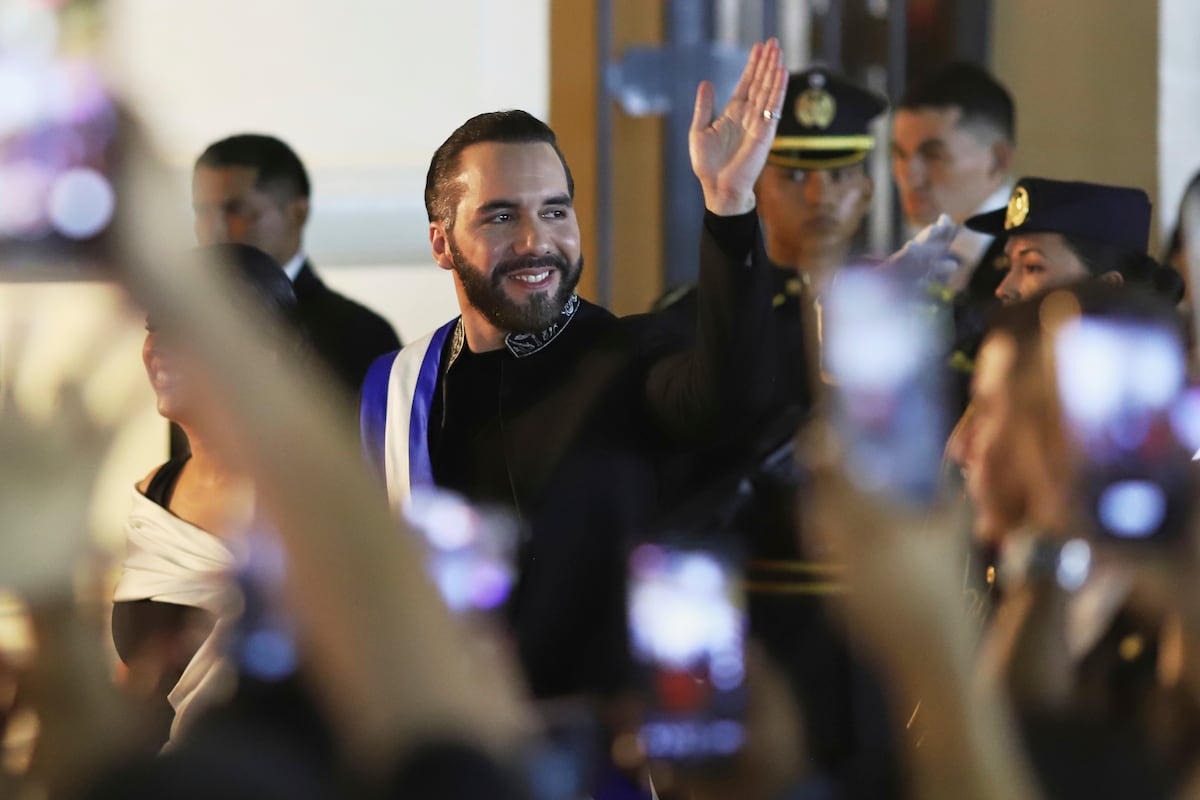
In a bold declaration, El Salvador’s President, Nayib Bukele, expressed indifference towards being labeled a “dictator” by the media and international community. During an 80-minute national address, he dismissed critics both domestically and abroad, emphasizing his preference for such labels over the persistent violence that plagued the streets. “When I check my phone, I see ‘dictator, dictator, dictator’. I’d rather see that than read about ‘murder, murder, murder’,” Bukele asserted.
Amidst a dramatic show of military and police presence, Bukele strode into the National Palace on a red carpet, flanked by thousands of Salvadorans. Instead of delivering the annual report mandated by law, he gave a speech marking his first address in his second presidential term, which exceeds the constitutional limit of five years. This event is historic for El Salvador, as the last president to be re-elected was Maximiliano Hernández Martínez, a dictator who ruled from 1931 to 1944.
In his speech, Bukele highlighted his achievements in enhancing security. He claimed that the notorious gangs, MS-13 and Barrio 18, were responsible for over 200,000 murders during their 25-year reign of terror in El Salvador, although he did not provide a source for this statistic. “El Salvador’s transformation has been one of the fastest in modern history, yet it feels slow to us. We’ve achieved the impossible, but our work is just beginning. We had to fight for what other countries take for granted—the chance to build a future on our terms,” he declared.
Bukele continued to address recent media reports and statements by human rights organizations that denounce his growing authoritarianism. In May, at least 15 individuals, including transport entrepreneurs, activists, human rights defenders, and peasant leaders, were arrested in El Salvador. Additionally, over a dozen journalists have fled the country fearing retaliation.
Bukele’s authoritarian image has solidified over his six years in power, transitioning from a fresh, modern rhetoric to a more autocratic tone. However, his popularity remains unaffected. According to a Cid Gallup survey conducted at the end of May, Bukele retains over 80% approval from the population.
During his address, Bukele referenced the democracy index published by the British outlet The Economist in February, where El Salvador ranked 95th out of 167, with a score below 5, on a scale where 0 is undemocratic and 10 is highly democratic. He used this opportunity to compare El Salvador with Spain, remarking, “I’m amazed that countries with monarchies are rated better than us. A few years ago, we hosted the King of Spain, a true gentleman. We respect the self-determination of peoples who want a monarchy. But ultimately, the index is crafted to suit whoever benefits from it,” he suggested. In the same index, Spain ranked 21st with a score of 8.13.
Bukele argued against claims that democracy existed in El Salvador before his presidency, stating, “Some say there was democracy in El Salvador before and now there isn’t. Have you read that? The truth is, back then, the choice was between the bad and the worse. Those who deny it were simply benefiting from it. The only ones who say otherwise either don’t know or profited from it,” he added.
The president contended that recent criticisms of his punitive measures and the persecution of activists are part of a “globalist agenda fearing a domino effect.” He stated, “They say we imprison human rights defenders, dissidents, regime opponents. I wonder, how can we fight corruption if the entire opposition has immunity? Now some have taken up the badge of political persecution. Being a journalist in their club allows them to break the law without consequences,” he claimed.
“They’re not there to defend causes; they’re there to secure impunity for crime and corruption for their members. They want to impose their narrative, like all political parties worldwide do,” he added.
Bukele also accused international media coverage of being part of a “coordinated attack” supported by “external forces.” “They’re not journalists; they’re political activists doing business,” he stated.
The president justified the Foreign Agents Law, enacted on May 20, which allows his government to determine which organizations can operate in El Salvador and imposes a 30% tax on incomes of those he chooses. “I believe (alleged foreign interference) should be banned worldwide. But even so, we’ll allow it. The only thing we’ll ask is that they pay their taxes,” he remarked.
He assured that humanitarian aid organizations would be exempt from this tax, but those involved in “political” activities would not. The law stipulates that the president himself will define the “concepts” of the law, meaning he will decide what constitutes political activity.
We are looking for an independent senior editor

LEAVE A COMMENT