We are looking for an independent senior editor
Apply Now





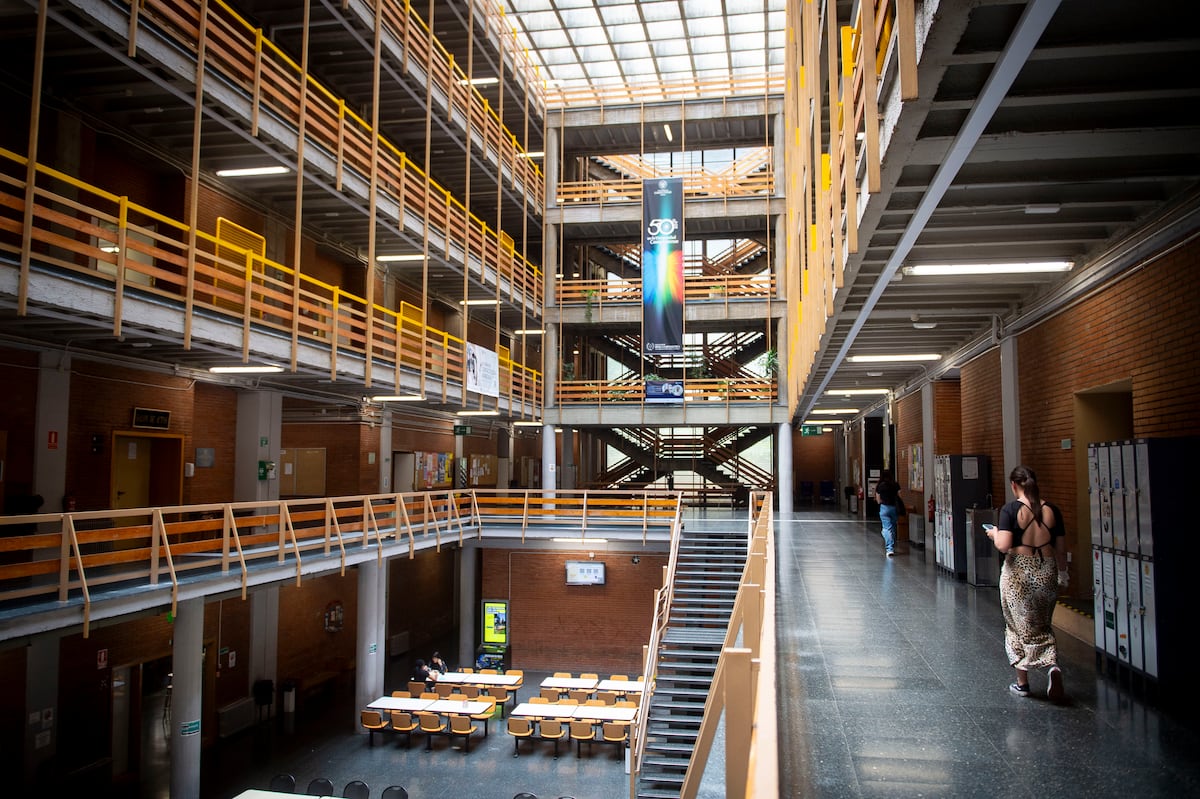
The upcoming General Conference of Autonomous Presidents is set to tackle a pressing issue that rarely gains traction in electoral campaigns or parliamentary discussions: the autonomous financing of public universities. Recent findings from the Center for World University Rankings (CWUR) reveal that a staggering 81% of Spanish universities listed among the top 2,000 globally have experienced a decline in their rankings compared to the 2024 edition. This drop is largely attributed to insufficient resources, a stark contrast to the efforts seen in many Asian countries, which are investing heavily to remain competitive in the knowledge-driven global landscape.
According to Nadim Mahassen, president of the CWUR, Spain's representation in the rankings is commendable with 53 universities, yet the declining performance, particularly in research, coupled with limited governmental funding, poses significant concerns. The rankings evaluate various factors including education quality (25%), alumni employment (25%), faculty quality (10%), research outcomes (10%), high-quality publications (10%), influence (10%), and citations (10%). Leading the pack is the Autonomous University of Barcelona.
While Mahassen points to the central government, it's the regional administrations that primarily manage university funding, often with tight budgets. Despite the efforts by the government under Pedro Sánchez to bolster scientific funding, Spain still lags behind European standards. Official figures show a nearly 40% increase in funding from 2018 to 2024, with plans for a 32% rise from 2024 to 2027 now uncertain due to budget extensions.
Mahassen continues, emphasizing that while other nations prioritize educational and scientific development, Spain struggles to keep pace. Without stronger funding and strategic planning, Spain risks falling further behind in the rapidly evolving global context.
The Organic Law of the University System (LOSU) aims to allocate 1% of the GDP to universities by 2030, a feasible goal considering the current investment is around 0.7%. However, achieving this target is uncertain as some regional governments may not be willing to comply. Even if met, Spain's investment would still be below Europe's average of 1.2%, with many countries exceeding 2%.
Madrid, the wealthiest community, exhibits the most significant shortfall at 0.5%. Conversely, Catalonia is showing progress, with President Salvador Illa committed to meeting the LOSU target by 2030.
Within the CWUR ranking, nine institutions have improved (Autonomous of Barcelona, Valladolid, Alicante, Coruña, UOC, Europea, Vic, León, and Alcalá), one remains unchanged (Vigo), while 43 have declined. The report highlights scientific performance as the main factor, with stable outcomes in two universities, improvements in nine, and declines in 42.
The Autonomous University of Barcelona leads at position 126, followed by Barcelona (136), Complutense (253), Valencia (298), and others ranked between 310 and 432, including Autonomous of Madrid, Granada, Basque Country, Polytechnic of Catalonia, Seville, and Pompeu Fabra, all public institutions. The prestigious Carlos III of Madrid is notably absent due to its small size. Among private universities, Navarra ranks eleventh in Spain, with only five others among the top 2,000, while 47 of the 50 public universities are represented.
Globally, private institutions like Harvard, MIT, and Stanford in the United States dominate the rankings, with public British universities Cambridge and Oxford securing fourth and fifth positions. Despite maintaining a strong presence, the CWUR president critiques the United States for its declining performance in higher education, urging concern from Linsa McMahon, Secretary of Education, and the Trump Administration. For the first time, China surpasses the US in the number of universities within the top 2,000 worldwide.
We are looking for an independent senior editor

LEAVE A COMMENT