We are looking for an independent senior editor
Apply Now





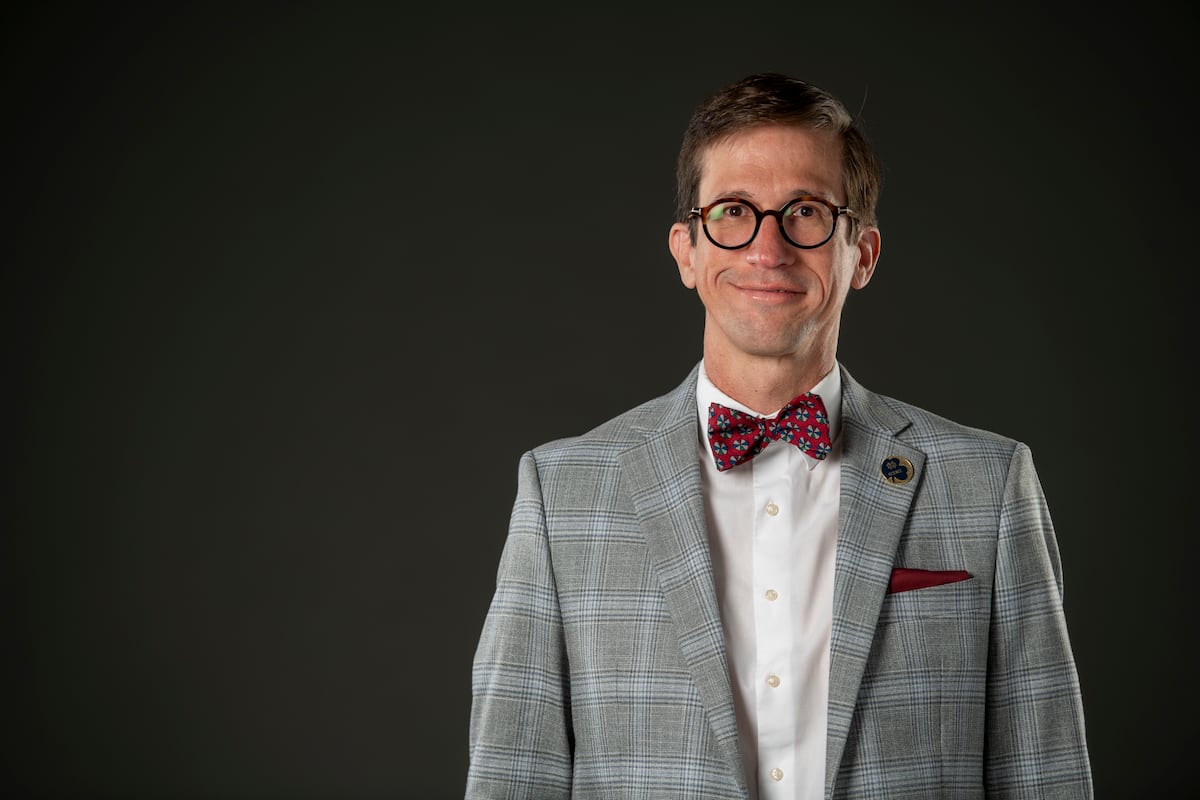
On July 1st, Santiago Schnell, born in Caracas in 1972, will take the helm as the rector of Dartmouth College, a prestigious Ivy League institution alongside Harvard, Brown, and Yale. Schnell is leaving his role as dean at the University of Notre Dame's Faculty of Sciences, marking a significant milestone in a career that began with studying biology at Venezuela's Simon Bolivar University and later pursuing a Ph.D. in mathematical biology at Oxford.
"A rector's role is akin to a gardener: ensuring every university community member has the resources and environment to thrive," Schnell shared in a phone interview with EL PAÍS.
Arriving in the U.S. two decades ago as an assistant professor at Indiana University, Schnell reflects on his time in Oxford. "I was happy there, but the pay wasn't great. Reputation was the main compensation. Europe's top universities face financial limitations. If you want to be in the major leagues of research, you must come to the U.S.," he states. In 2008, he transitioned to the University of Michigan, eventually leading the Molecular and Integrative Physiology department, recognized globally during his tenure.
As a scientist, Schnell has gained international recognition for his work on enzymes, the tiny molecules driving life's chemistry. He's a member of the American Academy of Sciences and Letters, named an Emerging Leader in Health and Medicine by the National Academy of Medicine, and received the Arthur Winfree Prize. He's also been instrumental in securing hundreds of millions for academic research.
Question: How did you feel about being appointed to this elite American university?
Answer: I never imagined an Ivy League would recruit me; they are very exclusive and elitist. Coming from a "banana republic," as often perceived, it's surprising anyone would take me seriously. I love Venezuela; my education there was excellent. But at Oxford, I realized I was as smart, if not smarter, than my peers, though I had knowledge gaps. It took time to reach the world's top level. Ivy Leagues rarely hire rectors or deans not from the university under exceptional circumstances. I'll be Dartmouth's second non-alumni rector in over 250 years—a lottery ticket I never expected.
Question: Has your Venezuelan background been an advantage?
Answer: Being Venezuelan has been beneficial. My strong accent in English often excuses my bold statements. I've expressed ideas that would get an American academic fired immediately. I've always thought outside the box. I'm direct and physical, embracing colleagues, smiling—very Latino and Caribbean in my interactions, a weapon I didn’t know I had. Colleagues often say, 'Santiago, you have something others don't.'
Question: Your enzyme research, resulting in the Schnell-Mendoza equation, brought you international fame.
Answer: The theory for measuring enzymes hadn't changed in a century; it was outdated. Through a mix of luck and creativity, I solved the mathematical problem with an equation allowing much more precise measurements.
Question: Your studies on the molecular link between health and disease stem from personal health challenges.
Answer: My health has never been great. I have multiple autoimmune diseases. I learned this late after many wrong diagnoses. For instance, I had poor sphincter control due to Crohn's disease, but my most severe childhood issue was allergies. Out of control, aggressive treatment led to cancer at 15, which I thankfully overcame. That event changed my life perspectives. From there, problems like psoriasis, worsening Crohn's, arthritis, and losing my intestine arose. At 53, I sleep with a respirator due to Haddad syndrome, causing suffocation. I understand life through my health issues, as my body constantly battles against me.
Question: You assume leadership at an Ivy League university amidst Trump's administration's challenges to higher education.
Answer: American university websites feature letters from presidents, rectors, deans, department heads, outlining solutions for U.S. and global issues. Academic leaders have been arrogantly thinking, in my opinion. Universities maintain positions not conducive to dialogue, making us one of the least popular entities in the country. Over 50% of the population doesn't attend college and questions why someone with a privileged life should dictate world operations. This crisis intensified with the pandemic. The public doesn't trust science, suspects us. Trump's measures against universities reflect a desire to say, 'These ivory tower institutions must face reality.' The government swung the pendulum far, potentially causing permanent damage, but universities share responsibility.
Question: Harvard didn't provoke the government; it was the opposite.
Answer: This dispute risks ruining what made this country great—a powerhouse of intellect and Nobel laureates, many foreign, flourishing in the U.S. with financial resources. I believe we must collaborate with the government. I know leaders in the new administration who think we can reach an agreement. Despite Trump's demands, negotiations are more complex, but behind the scenes, they're friendlier than they appear. Serious discussions are ongoing about making universities more neutral, serving all society. Moreover, the federal government has the right to withdraw funds under certain conditions. Some institutions violated non-discrimination rules in admissions or sports, causing widespread suffering.
Question: Should universities remain neutral or defend democratic laws and values amid accusations of Trump's autocratic practices?
Answer: Universities aren't filled with politicians but academics generating knowledge. Universities can't dictate. It's the history professor invited to work in Congress or the economics and political science professor taking their expertise to government, Congress, or the judiciary. It's not the university but the expert providing public service. In my view, universities in a democracy like the U.S. are public servants. When Trump tries something, courts stop him.
Question: What's your stance on the government's attempt to build a wall against foreign students?
Answer: This country has two major engines: freedom to pursue success and immigration. America thrives on immigration, and the population pyramid is reversing. As an academic leader, it's a major concern. High school student numbers decline annually by 3-5%. In 20 years, only a fraction of today's universities will exist due to insufficient students to sustain the education system. The solution is opening doors to immigration. The government will eventually realize if they want to compete with China, they must change this policy. Otherwise, they'll ruin the country. Moreover, many street protests are by university students, so they want to ban foreign university students for ideological reasons. Academically, we want students to express themselves—it's part of the university engine. The government doesn't get it yet, and we're taking it to court for understanding. We've been lucky winning some battles.
Question: Do you believe this crisis will deepen?
Answer: Harvard, Columbia, Brown, Dartmouth—these universities were founded long before the U.S. became a nation. They've survived British monarchy separation, civil war, world wars. Their strength and academic tradition are so robust that despite the current crisis, these institutions are far greater than the country. No matter what the government tries, they've endured everything and will continue. We might be wounded for months or years, but technological and social advancements universities provide will persist regardless of government treatment. It's what we've done for centuries. Even if challenged, we'll keep educating.
Question: Does the Trump administration threaten science, as many researchers claim recently?
Answer: I partially agree. We don't know what will happen with certain study areas. The budget is under Congressional negotiation. Until finalized, any statement is speculative. It seems many are speculating on the topic.
We are looking for an independent senior editor

LEAVE A COMMENT