We are looking for an independent senior editor
Apply Now





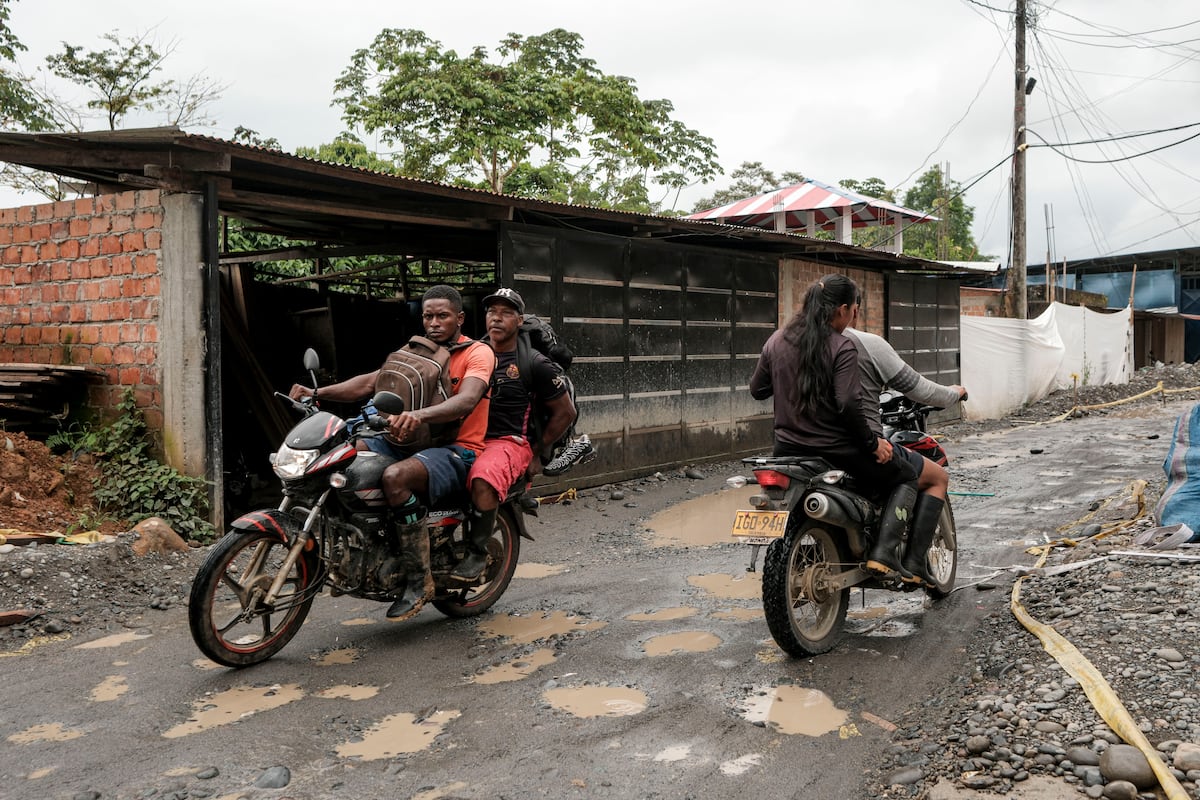
Colombia's ambitious dream of achieving comprehensive peace, heralded by President Gustavo Petro at the start of his administration, has encountered numerous setbacks. However, amidst these challenges, the idea of conducting simultaneous negotiations with various armed factions remains alive in the department of Nariño, located in the southwestern corner of Colombia, sharing borders with Ecuador and the Pacific Ocean. This region has become a crucial laboratory for territorial peace, where government delegates have recently secured significant agreements with groups such as the Comuneros del Sur, a faction that broke away from the ELN guerrilla, and the Coordinadora Nacional Ejército Bolivariano (CNEB), which unites two dissident factions of the former FARC operating mainly in Nariño and the neighboring Putumayo.
Recently, the government agreed to establish temporary location zones in these two border departments to gather 120 CNEB combatants willing to disarm and reintegrate into civilian life. The CNEB serves as an umbrella organization for two groups, the Comandos de la Frontera and the Coordinadora Guerrillera del Pacífico, following a split from the Segunda Marquetalia at the end of 2024. During the fifth negotiation cycle in Tumaco, delegates agreed to initiate a Comprehensive Training and Temporary Location Zone in Roberto Payán, a coastal municipality in Nariño, and another in yet-to-be-defined areas of Putumayo. Commitments were also made for humanitarian demining activities, the search for missing persons, and the handover of war materials.
This announcement complements tangible outcomes achieved with the Comuneros del Sur, marking them as the first group to surrender weapons to the government. In April, they relinquished 585 explosive devices, subsequently destroyed by the Army. President Petro even attended the event in Pasto, the departmental capital, to formalize these steps. Negotiators have signed agreements benefiting victims, preserving historical memory, regulating illegal mining, and replacing 5,000 hectares of illicit crops.
Nariño, with 69,000 hectares, including over 30,000 in Tumaco, leads Colombia in coca cultivation. The Pacific coast serves as a natural exit for drug trafficking routes toward Mexico and Central America, primarily targeting the U.S. market.
The principle that "Nothing is agreed until everything is agreed," successfully applied in the peace negotiations with the FARC during Juan Manuel Santos' administration (2010-2018), has evolved in Nariño. Now, the approach involves simultaneous dialogue, negotiation, and implementation, according to Governor Luis Alfonso Escobar. He emphasizes that national dialogue made sense when interpreting the conflict where the FARC was a monolithic structure; today, armed structures have regional expressions, fighting among themselves for criminal revenues from drug trafficking and illegal gold economies.
The dialogue's core with armed factions deciding to negotiate with the state is to create conditions for transitioning from illicit to legal economies, ensuring legal security for negotiators—currently in question—and transforming territories through investments from national, departmental, and municipal governments. The focus is on accelerating investments in water, energy, health, housing, and infrastructure. Agreements are being made to collaboratively replace 20,000 of the 69,000 hectares of coca in the department.
Governor Escobar, from the ruling Historical Pact, claims his administration is the only departmental government decisively supporting the total peace policy while emphasizing its territorial expression. This is complemented by the Army's pressure to combine security with dialogue continuity, despite difficulties.
A major obstacle remains the extradition shadow, highlighted by the arrest of Andrés Rojas, known as Araña, the top commander of the Comandos de la Frontera and a negotiation table delegate. He was unexpectedly detained by the Prosecutor's Office on February 12 in a Bogotá hotel, following a negotiation cycle, due to a U.S. drug trafficking request. Pending Araña's situation resolution, President Petro recently halted another extradition, that of Gabriel Yepes Mejía, alias HH, the Comuneros del Sur commander. The executive decided to "suspend delivery" of Yepes "while contributing with verifiable inputs and concrete results in achieving total peace," despite risking strained relations with Washington. As the president noted, extradition orders can cease if peace processes demonstrate significant progress. The legal framework remains a pending government policy task.
Governor Escobar asserts that peace process results are measured in saved lives, citing statistics showing a reduction in conflict-related murders (83% in 2024), displacement (16%), and forced recruitment of children (40%), among others. He also sees potential for dialogue with other dissidents, like the Estado Mayor Central, advancing the department toward a multilateral ceasefire involving armed groups and not just the Army.
The various structures vie for territorial control, often fighting each other more than the state. "The government's strategy should subdue them in security matters to tackle criminal revenues, but there are areas where these groups have tacit non-aggression agreements, allowing for possible bilateral or multilateral ceasefire experimentation," he suggests.
We are looking for an independent senior editor

LEAVE A COMMENT