We are looking for an independent senior editor
Apply Now





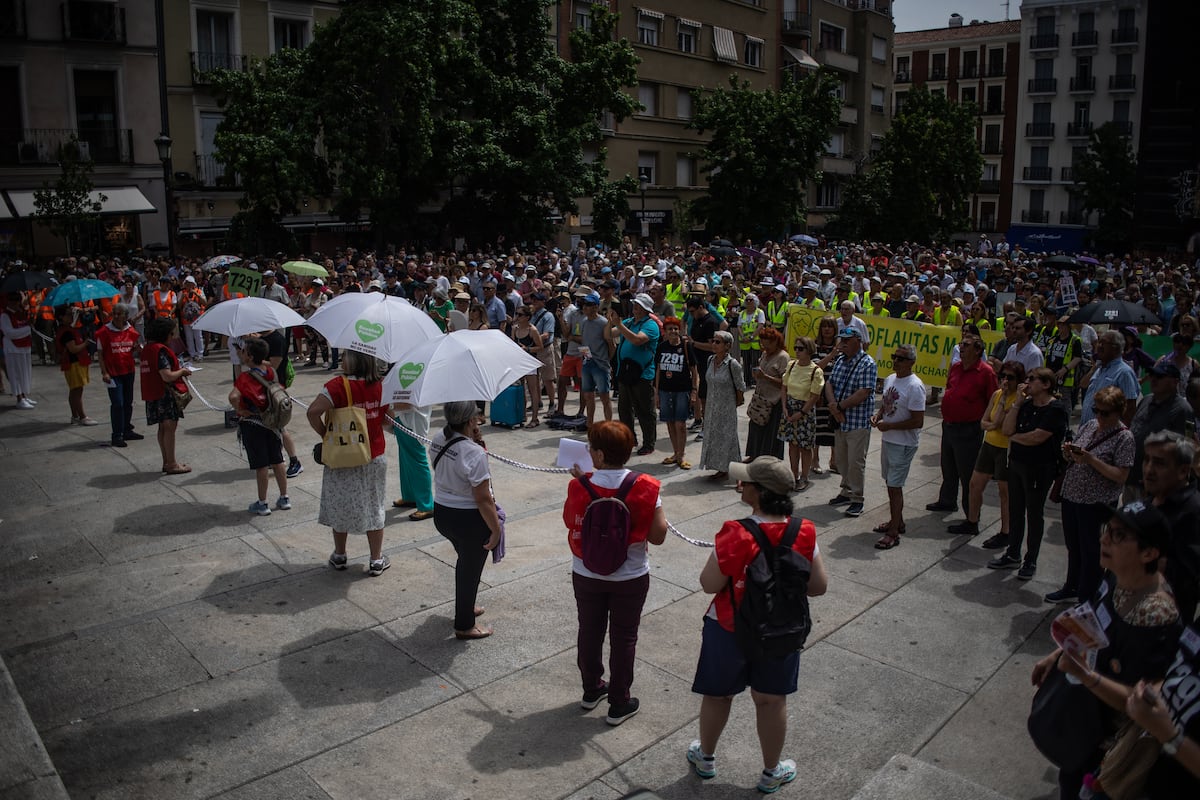
Rosa Álvarez and Rut Moyano, both victims of separate tragedies, found themselves united in their pursuit of justice. Álvarez, from Catarroja, lost her father in October, while Moyano continues to grapple with the aftermath of devastating floods in Benetússer. Their participation in a memorial event wasn't for their respective tragedies but for the victims in nursing homes during the height of the pandemic, when protocols barred hospital transfers. These seemingly disparate tragedies share more in common than one might initially perceive.
Victim platforms from both disasters have established connections, initiated by those affected by COVID-19. The first outreach was an invitation to Dana victims for a documentary screening titled "7,291"—a stark reminder of the lives lost in Madrid's senior residences. The collaboration has grown, with shared emotions of rage and indignation against negligent administrations illustrated by Álvarez and Moyano, who criticize the governments of Carlos Mazón and Isabel Díaz Ayuso.
Beatriz Garrote, acquainted with loss from the 2006 Valencia metro accident, understands the camaraderie formed among victims. She draws parallels between her experience and the current plight of Dana victims, who demand accountability and justice. The initial response to victims often involves silencing and deflecting attention from administrative failures, echoing her own encounters with political indifference.
The journey of organized victim groups in Spain reveals a recurring narrative. Each case is unique, but they share a common thread of neglect. As Granada Ripollés, former Yak-42 family association executive, states, victims are often disregarded in avoidable tragedies.
Political figures like Carlos Mazón and Isabel Díaz Ayuso have yet to meet with key victim associations. The PP party has accused them of political motives, while Vox questions the authenticity of victim representation. Despite initial resistance, recent meetings with EU Commission President Ursula von der Leyen and Pedro Sánchez suggest a shift in political engagement.
Rosa Álvarez, leading the Association of Victims Mortales 29-O, emphasizes the need for solutions over consolation from politicians. Surprisingly, she found more understanding from Von der Leyen than from local leadership, highlighting a disconnect between victims and their representatives.
María Jesús Valero, who lost her father during controversial pandemic protocols, voices frustration over continued mistreatment. She perceives Ayuso's administration as dismissive, evidenced by repeated vetoes against investigating nursing home management.
Ayuso's recent openness to meet with victim groups is seen as insincere by Valero, given past disrespectful remarks from her administration. The struggle for justice extends beyond political barriers, relying on legal avenues for truth and accountability.
Beatriz Garrote, seasoned by years of advocacy, advises patience in the pursuit of justice. Her experience with the Valencia metro tragedy underscores the lengthy process of achieving legal redress. The political landscape often attempts to quickly deflect blame, as seen in the 2006 investigation, leaving victims unacknowledged.
Despite political setbacks, victim groups persist in their advocacy, maintaining public awareness through consistent efforts. Garrote laments that victims must organize to fight for rights that should inherently be protected.
Public interest in these cases ebbs and flows, with media coverage occasionally reigniting attention. Political changes have opened avenues for investigation, but accountability remains elusive.
Jesús Domínguez, survivor of the 2013 Alvia accident, echoes the sentiment that avoidable tragedies rarely result in political responsibility due to insufficient social pressure. The pattern of ignoring victims and delaying justice is evident across cases, with public memory often fading before accountability is achieved.
Domínguez notes the added complexity in the Alvia case, where both PSOE and PP governments face scrutiny, leading to muted political responses. The lack of reaction to recent judicial findings further exemplifies the systemic disregard for victim concerns.
Granada Ripollés, connected to the Yak-42 tragedy, asserts that while victims possess the right, they have yet to receive justice. The 2017 Council of State ruling identified the Ministry of Defense's responsibility, prompting a resignation but leaving many issues unresolved.
Ripollés reflects on the government's expectation for families to grieve silently, without questioning. Her defiance and organization of victim groups represent a refusal to conform to this narrative, advocating for truth and justice against political indifference.
We are looking for an independent senior editor

LEAVE A COMMENT