We are looking for an independent senior editor
Apply Now





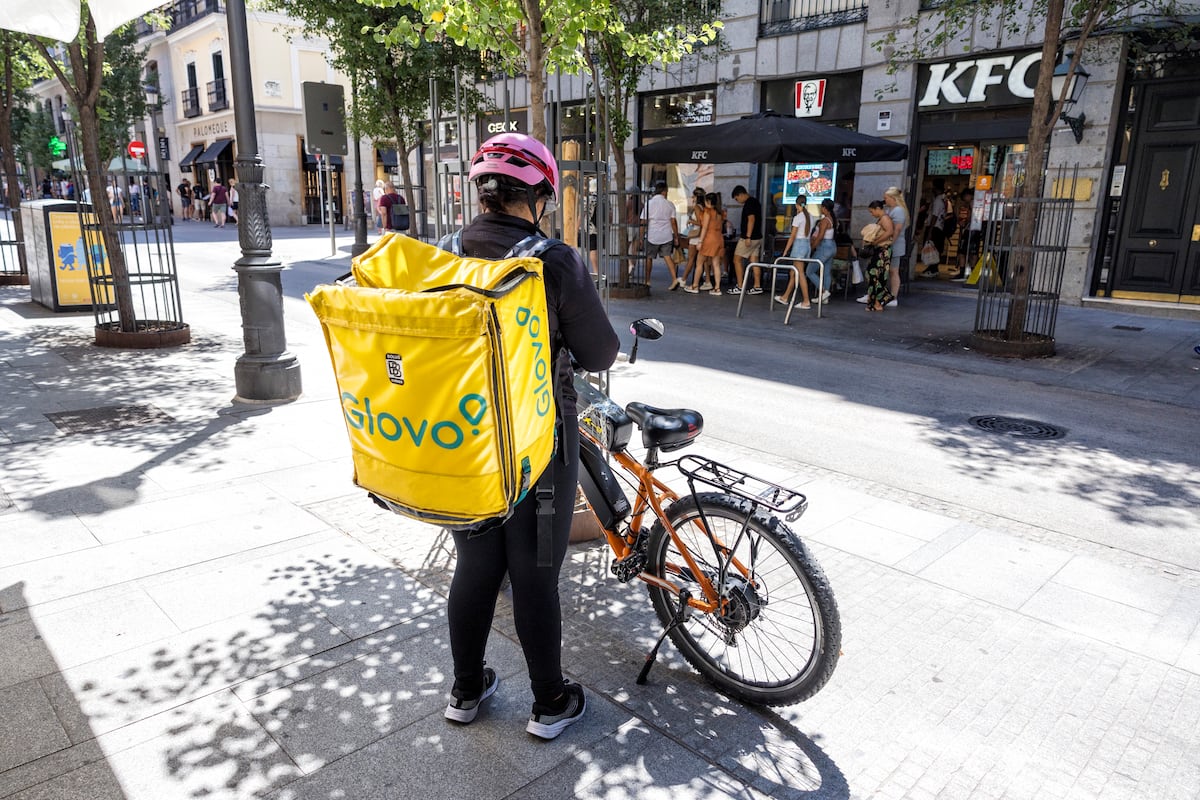
After years of defying legal and judicial mandates, Glovo seemingly capitulated on December 2, 2024. Just before co-founder Oscar Pierre was due to testify in a criminal investigation for alleged worker rights violations, the Catalonia-based company announced a shift in its employment model in Spain, sparking optimism within the Ministry of Labor. However, six months later, Glovo still relies on false self-employment and trials subcontracting models criticized by unions like CC OO. While Glovo claims to have offered 4,000 jobs to current self-employed couriers with plans to extend to 20,000 by June, worker representatives remain skeptical due to the company's history.
The situation unfolds step by step, beginning with Glovo's market-shaking announcement on December 2. The communication, which pleased the Ministry of Labor, was linked to the “rider law” and changes in the Penal Code that brought Pierre to justice. Despite accumulating fines and back-dated contributions, it wasn't until the criminal threat became concrete that the company reconsidered its stance.
According to CC OO, just before Pierre's testimony, Glovo began setting up a company to hire false self-employed workers, described as a front by David Martín, a collective bargaining expert at CC OO in Aragón. The union accuses Glovo of using this "parallel company" to continue exploiting couriers while avoiding direct employment and fragmenting workforces. This led to a formal complaint to the Labor and Social Security Inspectorate, highlighting what they see as "illegal worker transfers" currently under investigation.
A similar situation exists in Navarra, where CC OO points out "illegal worker transfers by Glovo to subcontracted companies, acting as fronts to bypass basic labor laws." The union in Navarra filed a complaint, noting that these companies were established with foreknowledge of December's developments. Contracts for couriers in these companies, referred to as “fleets,” allegedly include abusive clauses waiving future claims against Glovo, according to Carlos Sola of CC OO Navarra. Glovo confirms that they are providing explanations to the Inspectorate regarding the complaint.
Glovo argues that external fleets were used to maintain operations during this transitional phase. The company states that it resorted to third-party companies to sustain activity and test the new labor model, a common practice in the sector. However, they do not clarify if these fleets were specifically created by Glovo, as CC OO claims. Oscar Pierre recently mentioned a shift towards a 100% labor-based model with direct hiring.
CC OO's national representative, Raquel Boto, believes union complaints have pressured Glovo to abandon the fleet model in favor of direct employment. She stresses that Glovo has not engaged in the promised social dialogue but merely informs unions of their steps. Fernando García from UGT adds that Glovo claims to have sent 4,000 job offers to couriers, aiming for 20,000 by June. However, the actual number of contracts depends on courier acceptance, which remains uncertain.
A key issue is whether Glovo acknowledges the tenure of false self-employment in recognizing worker seniority. García notes that Glovo promises to recognize this in contracts but stops short of admitting the previous model was labor-based. Another concern is the outdated 2006 messaging agreement being offered, potentially leaving many at minimum wage.
The acceptance of job offers largely depends on working hours per courier. Glovo offers a choice between registered hours and a six-month activity average. Full-time work is sought by unions, while Glovo reserves using fleets for demand fluctuations, potentially adopting a model similar to Just Eat, which combines fleets and direct hiring. Just Eat has sued Glovo for unfair competition, seeking 295 million euros in damages.
Glovo maintains that couriers are receiving documentation to formalize employment and states that no new self-employed couriers have been hired since the shift announcement. Both Boto and García approach Glovo's promises cautiously, citing unresolved issues and opaque information. While the move is positive, they reserve legal and union actions if commitments are unmet.
If Glovo fulfills its promise to employ all couriers, Uber Eats would be the last major Spanish delivery company partially using false self-employment. Uber Eats combines salaried work through subcontractors and independent contractors. The company claims compliance with local regulations and offers couriers the choice of employment type.
We are looking for an independent senior editor

LEAVE A COMMENT