We are looking for an independent senior editor
Apply Now





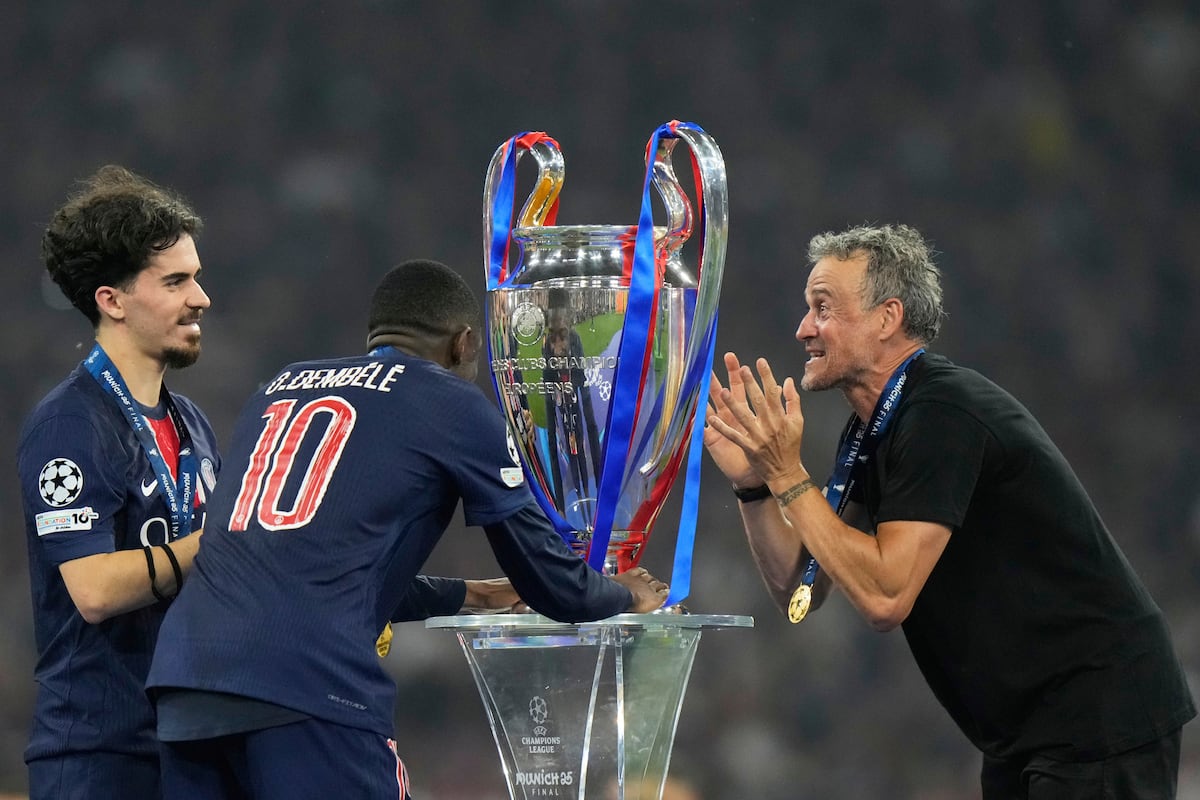
Few moments capture the essence of Luis Enrique's transformation into a football visionary as vividly as his passionate speech in the locker room at the Parc des Princes. Faced with a dire situation, where PSG seemed on the verge of elimination by Real Sociedad in February 2024, the Asturian coach found himself needing to reignite the team's spirit. His players were gripped by fear of losing possession and hesitated to risk the bold passes needed to break through the opponent's defense.
Throwing caution to the wind, Enrique exclaimed, "Six are pressing us against eight! And we're not managing! If we must be eliminated from the Champions League, so be it, but we're going to play our style of football!" He implored his team to embrace open, dynamic play, with defenders and midfielders like Vitinha and Fabián taking more assertive positions. His message was clear: "If we lose, we lose, but we must attempt to play our game!" His raw honesty resonated deeply with a youthful squad, the youngest ever to clinch a Champions League title, who went on to demolish Inter 5-0 in Munich, showcasing the principles of dynamism, generosity, and creative rebellion that once revolutionized European football.
Luis Enrique's sincerity stems from personal tragedy, giving him a profound perspective on life. As a PSG employee notes, "He lives like an everyman, indifferent to material concerns." His calls for courage are genuine, and they left a lasting impact on a team with an average age of 25. His approach harks back to the innovative tactics of the Ajax era, when Stefan Kovacs and Rinus Michels introduced position-switching midfield play that redefined football. This philosophy, echoed by teams like Liverpool, Barcelona, and Manchester City, has been instrumental in establishing consistent and enduring dominance in the sport.
Convincing players to defend higher up the pitch and demand the ball requires a certain fundamentalism, the kind that only someone unafraid of losing their job or reputation can possess. This is precisely what Luis Enrique epitomized in the spring of 2023. After a disappointing World Cup in Qatar and facing skepticism from the football world, he found redemption when PSG's president, Nasser al-Khelaifi, offered him a chance to lead the team. Al-Khelaifi, disillusioned by previous failed attempts to conquer Europe with star-studded rosters, sought a fresh approach, one that mirrored the success of managers like Guardiola and Klopp.
Al-Khelaifi's desperation matched Enrique's drive. The Qatari sovereign wealth fund's acquisition of the club in 2011 had seen a parade of high-profile managers like Carlo Ancelotti and Thomas Tuchel, yet none had achieved the ultimate goal. The plan to accumulate superstars like Ibrahimovic, Neymar, Mbappé, and Messi initially seemed sound, but the allure of celebrity failed to deliver results. After a disastrous 2022, the club shifted focus, with sporting director Luis Campos introducing a deliberate Iberian influence, convinced that Spanish and Portuguese players were best suited for collaborative play and fostering a disciplined environment.
Campos recognized Enrique's potential to lead this cultural shift, moving away from individual brilliance to collective effort. Enrique's commitment was unwavering; he left his family in Barcelona and immersed himself in PSG's training complex, living ascetically. "With the players we had before, I wouldn't have considered coaching here," he candidly admitted in a revealing documentary. "We don't need to sign Ballon d'Or winners; we need to develop them."
Former Barcelona sporting director Ramon Planes concurs, "There aren't many good coaches, but when you find one, they're indispensable. Luis has been able to develop his vision of electric, dynamic football with players as disciplined as soldiers, attacking and defending together." Enrique's relentless drive and the perfect roster allowed him to implement his philosophy, starting with Vitinha, the team's linchpin.
Player selection was meticulous, especially for midfield roles. A high-level midfielder must excel in four key areas: handling high-pressure situations, dynamic play against world-class defenses, interpreting defensive tactics, and relentless pressing. As a PSG scout explains, "A top midfielder can't score below seven in any of these aspects. That's why teams like Real Madrid and Atlético struggle to compete."
The revolution culminated when Enrique chose Vitinha, Fabián, and Neves, dismissing Ugarte and Zaïre Emery. This transition wasn't without challenges, including a major crisis from November to January when PSG was on the brink of Champions League elimination. Facing Guardiola's City and trailing 0-2, Enrique delivered a fiery halftime speech, urging his players to embrace his philosophy of high pressure and risk-taking. His words ignited a transformative performance, cementing his legacy as a visionary coach.
We are looking for an independent senior editor

LEAVE A COMMENT