We are looking for an independent senior editor
Apply Now





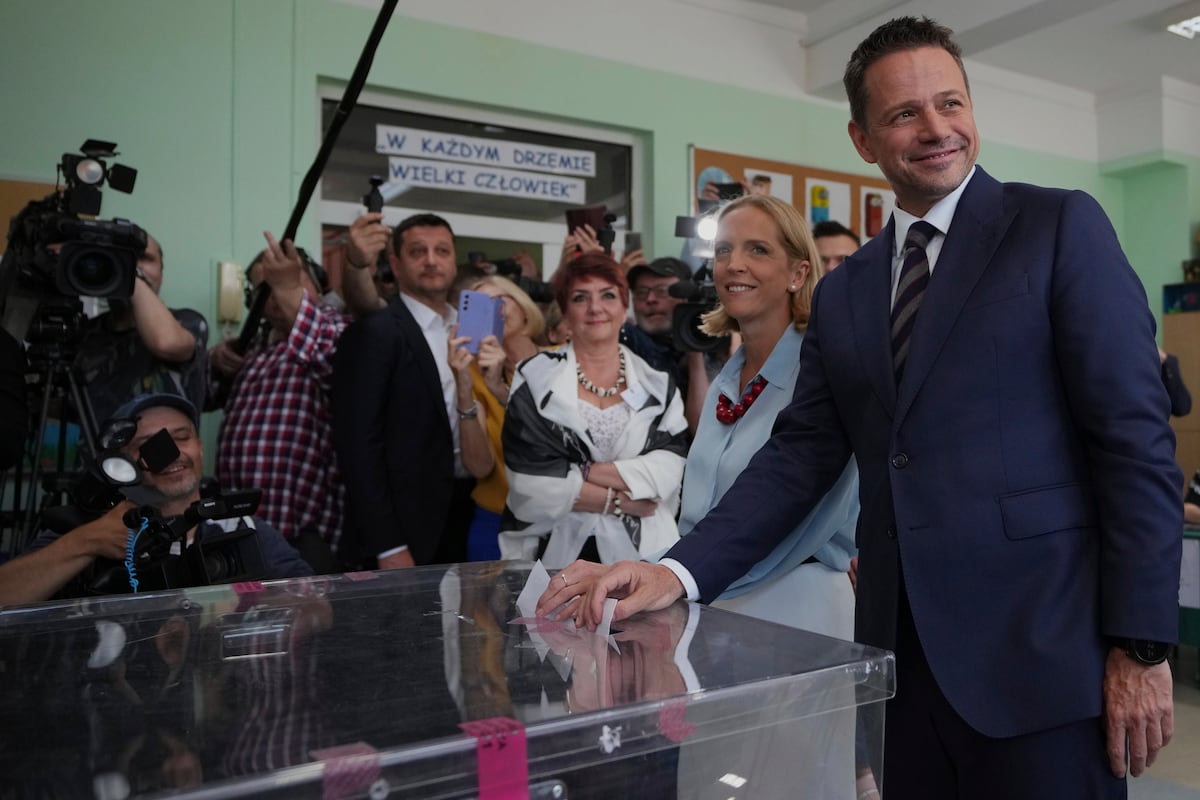
As Poland wraps up its electoral cycle initiated in 2023, the nation's future hangs in the balance, poised between two divergent paths. This Sunday, the country must decide whether to embrace its role at the center of the European Union or steer towards becoming a stronghold of Trumpism in Europe. The two candidates—Warsaw's pro-European mayor, Rafal Trzaskowski, and the ultranationalist historian Karol Nawrocki—are virtually tied going into the decisive second round of the presidential election.
While the Polish president does not govern, they wield significant influence through their veto power over legislation. A victory for Nawrocki, backed by the ultraconservative Law and Justice Party (PiS), would likely stymie the reformist agenda of the liberal center-right Prime Minister Donald Tusk. Conversely, a win for Trzaskowski could rejuvenate Tusk's efforts, providing much-needed momentum since his return to power at the helm of a liberal coalition in December 2023. The declining popularity of the current administration adds pressure, as Tusk's leadership both domestically and within the EU is at stake.
Voter turnout is crucial, with 24.8% of the 29 million eligible voters having cast their ballots by noon. Among them, Karol Weber, a 44-year-old entrepreneur, opted for Trzaskowski, attracted by his vision of a modern and inclusive Poland despite his Catholic upbringing. Similarly, Zbig, a retired scientist, expressed confidence in the liberal candidate's ability to accelerate national progress. Yet, even in Warsaw's liberal heart, the ballot box held votes for Nawrocki. Kamil, a 41-year-old businessman, expressed his preference for Nawrocki, citing his opposition to immigration as a key reason.
Polish presidents also play a vital role in foreign policy. Trzaskowski, 53, serves as vice president of the Civic Platform, Tusk's center-right party, and champions European integration. He has consistently affirmed his commitment to the EU, emphasizing Poland's potential leadership role within it. In contrast, Nawrocki, favored by the Trump administration, has garnered support from figures like Viktor Orbán and George Simion, underscoring the election's significance for both populist and European factions.
Nawrocki's campaign has been marred by allegations of a checkered past with connections to organized crime, yet these claims seem to bolster his image among certain voters who view them as liberal media attacks. His prioritization of Polish interests, including a staunch stance against immigration and a promise to keep NATO's doors closed to Kiev, resonates with parts of the electorate.
Both candidates share an interest in bolstering national defense, opposing migration agreements, and securing borders, albeit with differing social agendas. Nawrocki advocates for traditional Christian and nationalist values, while Trzaskowski represents a progressive shift towards European principles, supporting abortion rights, LGBTQ+ rights, and the rule of law.
The first round results, favoring ultraconservatives and the far-right, have alarmed liberals. Tusk's government, struggling to fulfill its promises, now faces a critical juncture. Nawrocki's victory would likely obstruct government actions, leveraging presidential powers against Tusk's administration. As the election unfolds, Poland stands at a crossroads, its decision set to reverberate through its national and international political landscape.
We are looking for an independent senior editor

LEAVE A COMMENT