We are looking for an independent senior editor
Apply Now





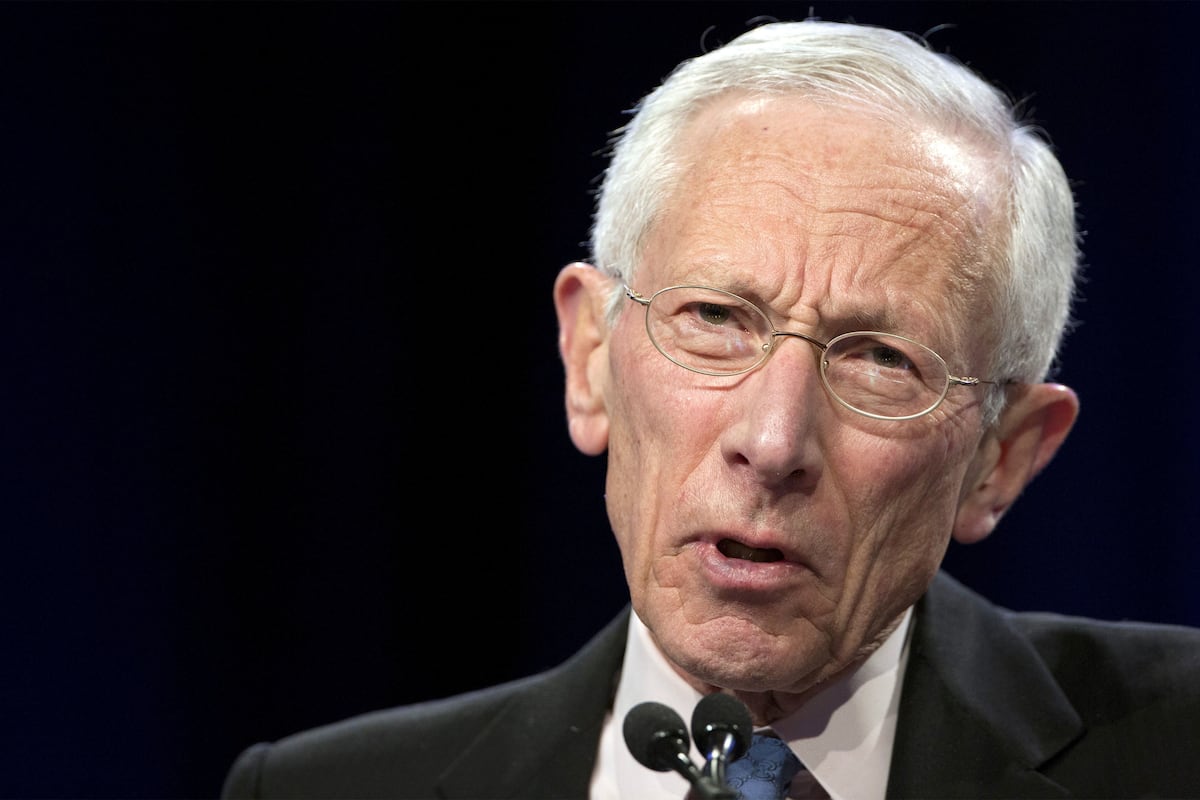
Stanley Fischer, a towering figure in the world of economics, has left a lasting impression on the field. He passed away at the age of 81, as reported by the Bank of Israel. Fischer’s career was uniquely distinguished, both as an academic and a policy maker. He educated scores of economists through his teaching at the University of Chicago and Massachusetts Institute of Technology (MIT), and through his seminal work, the 1978 textbook Macroeconomics, co-authored with Rudi Dornbusch.
His influence extended into the political realm as well, where he held prestigious positions such as the second-in-command at the International Monetary Fund (IMF), governor of the Bank of Israel, and vice chairman of the Federal Reserve. Notably, Fischer supervised the doctoral thesis of Ben Bernanke, who later led the Federal Reserve, considering Fischer a mentor. Among his MIT students were future luminaries like Mario Draghi, Lawrence Summers, Greg Mankiw, Kazuo Ueda, and chief economists of the IMF, Olivier Blanchard and Maurice Obstfeld.
Olivier Blanchard, reflecting on Fischer’s monumental impact, described him as both a mentor and a friend, highlighting his exceptional capabilities as an economist and politician, and most importantly, his profound humanity. Blanchard's admiration was echoed in his statement: “Science, commitment, honesty, and humility in service to humanity.” Fischer's influence on global macroeconomic policy through his research and students is unmatched.
Born in Lusaka, Zambia, in October 1943, Fischer was part of a Jewish community of Baltic origin that had migrated to Southern Africa. He earned his degree in Economics from the London School of Economics, followed by a Ph.D. from MIT in 1969. He taught at MIT from 1977 to 1999, having previously been an associate professor. His tenure at the University of Chicago as an adjunct professor and postdoctoral fellow further solidified his standing in academia.
Between 1988 and 1990, Fischer served as the World Bank's chief economist. He navigated complex financial crises across several countries during his tenure as deputy managing director of the IMF from 1994 to 2001. After stepping down from the IMF, he joined Citigroup as vice chairman until 2005.
Fischer held dual American and Israeli citizenship upon becoming governor of the Bank of Israel in 2005, a role he maintained until 2013. His decisive actions during the 2008 financial crisis, such as cutting interest rates and then raising them as signs of recovery appeared, were pivotal. His earlier involvement in drafting Israel’s 1985 Economic Stabilization Plan helped overcome severe economic challenges, including high inflation and dwindling foreign reserves.
The Bank of Israel commemorated Fischer's profound influence, highlighting his critical role in the 1980s and later as governor during challenging economic periods, including the global financial crisis. Fischer sought the position of IMF managing director in 2011, despite age and traditional nationality barriers, but was ultimately not selected.
In 2014, Fischer was appointed by President Barack Obama as vice chairman of the Federal Reserve, where he led the Financial Stability Committee and the Economic and Financial Monitoring Committee. His contributions extended to international forums such as the G20 and G7, representing the Fed with distinction.
Fischer retired in 2017, yet continued to advise BlackRock in 2019. His departure marked by Janet Yellen's praise underscored his invaluable insights and leadership in monetary policy deliberations and financial stability efforts.
We are looking for an independent senior editor

LEAVE A COMMENT