We are looking for an independent senior editor
Apply Now





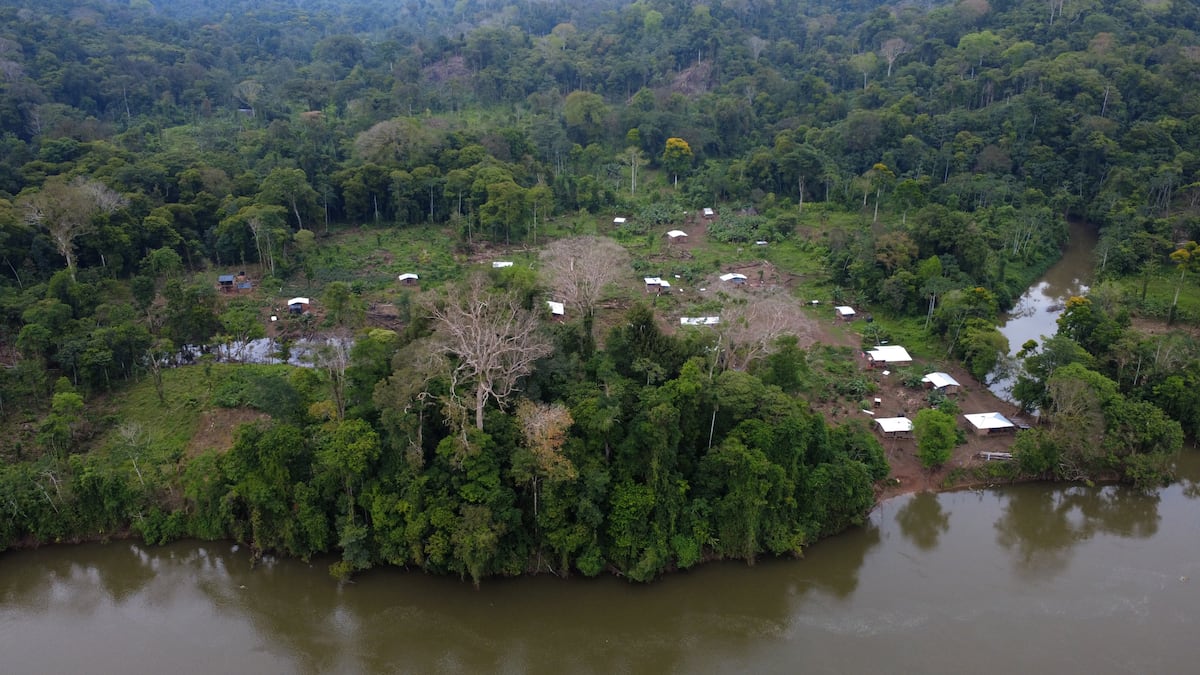
José María Flores Arróliga's boat berths at a makeshift dock on the Costa Rican side of the San Juan River. The river flows steadily, its gentle currents barely rocking the boat designed for the open sea. With a contagious smile, José unloads his last remaining watermelons, as large as missile heads. He has sold nearly the entire harvest from his farm in Machado, a settlement founded within the Río San Juan Wildlife Refuge. This dense forest forms part of a larger cross-border corridor linking the refuge with the Indio Maíz Biological Reserve, a crucial ecosystem bridging Mesoamerica and South America.
Chema, as he's known locally, is in high spirits with the upcoming patron saint festivities in Machado. The first celebration was in July 2024, shortly after his arrival from Bluefields, the main city in Nicaragua's southern Caribbean region. He purchased 100 acres for 40,000 córdobas—just over $1,000—and began clearing trees to build his home and define plots for his watermelon, banana, and cassava crops.
"I'm taking a gamble with these 100 acres," Chema tells EL PAÍS, though he omits the full name of the landowner who sold him the property. He hints at a link to the government of Daniel Ortega and Rosario Murillo. "That's why July 19th was chosen for Machado's first patron saint festivals," he explains, referring to the Sandinista revolution anniversary. "The government is giving us a chance to work. Here, you have two choices: you're with the government or against it. If you're against it, you get nothing. I'm with the government; I have no reason to hide it," he admits.
In the worldview of Nicaragua's indigenous communities living in protected forests—Miskitos, Mayangnas, and Afro-descendant Krioles—people like Chema are labeled "colonists." They are invaders who, since Ortega's return to power 15 years ago, have embarked on a relentless plundering and destruction of ecological reserves like Bosawás and Indio Maíz, the Rama-Kriol territory, and now the Río San Juan Wildlife Refuge, all part of the same ecosystem.
This vast southeastern Nicaraguan forest, extending into Costa Rica, is protected by national laws, conservation protocols endorsed by UNESCO and the Ramsar Convention on Wetlands. Selling land within the 3,069 square kilometers of these three reserves is strictly prohibited. Yet, Chema acquired his land for agriculture, one of four extractive industries that exhaust Nicaragua's forests: mining, logging, livestock, and intensive farming.
This "ecocide," as exiled Nicaraguan biologist Amaru Ruiz calls it, has forced over 3,000 indigenous people from their homes. They cannot resist the armed violence used by invaders to seize lands. This colonization has resulted in at least 70 indigenous deaths over the past 15 years. Since 2018, when an illegal farmer ignited a devastating forest fire that scorched 6,788 hectares of the Indio Maíz Biological Reserve, the invasion has been complete.
Journalistic investigations over the past decade have documented illegal land transactions within these reserves, accompanied by violence, and a dance of deeds and public notaries operating under a regime that recently passed the "Environmental Conservation and Sustainable Development Areas Law," which prioritizes "economic development"—mining, logging, and ranching—over environmental conservation and the rights of indigenous communities. Colonization is no longer merely tolerated; it is now legally supported.
This complicity is evident in the cross-border forest, where colonists have occupied the core of the Indio Maíz reserve and have penetrated it to settle along the San Juan River for the past three years. The border has so far prevented them from building settlements on the Costa Rican side, but it hasn't stopped the expansion of activities like mining, ranching, logging, and wildlife trafficking. The invasion has already crossed the river and poses a binational problem that few in Costa Rica seem to notice.
Omar Guillén, another settler, believes the invasion reaching the San Juan border is due to "saturation" in Nicaragua's protected reserves. Indio Maíz has been fragmented into plots, filled with settlements, and even hosts a nightclub called "Selva Negra" in Managuita. The forest along the border is now the territory with the most "availability" for making "cheap little farms," he says. Plots of 50 acres sell for 15,000 to 20,000 córdobas (about $400 to $550). There are no formal documents, only "approvals" lacking legal validity.
Colonists have found that the only way to aspire to property titles is to align with the ruling party. Settlements along the 200 kilometers of the wide San Juan River bear red-and-black Sandinista flags. The Fundación del Río, an environmental NGO led by Amaru Ruiz, warns that colonization in this area has dramatically increased over the past 36 months. They have spent three years documenting, with satellite images, how plots have replaced dense forests. From a drone's view, deforested areas resemble a giant's footprints intent on wilting the jungle, home to green macaws, jaguars, tapirs, American crocodiles, hawksbill turtles, and the majestic harpy eagle.
A recent Fundación del Río report reveals that at least 1,587 illegal structures have been erected in the Río San Juan Wildlife Refuge, a 49% increase in settlements. "Three years ago, they didn't exist," several Costa Rican locals consulted by this newspaper repeat.
Globally, Nicaragua has lost 22% of its forests over the past two decades, according to Global Forest Watch. The United Nations places the country with the highest deforestation rate in Central America. In Indio Maíz, the loss reaches 38.7%, and in the Río San Juan Refuge, 32%.
According to Fundación del Río, the first invasions in this area were driven by Sandinista officials from the El Castillo municipality in the Río San Juan department. Subsequently, a Sanitation and Protection Project for the Indio Maíz Reserve was endorsed by Jorge Ariel Omier Ruiz, president of the Rama-Kriol Territorial Government and a Sandinista activist.
In Machado, Chema's settlement, the complicity of the Ortega and Murillo government seems evident: the National Institute of Development Information (INIDE) has censused the population, a school and health center are being built, and settlers are managing permits with the ministries of Health and Education.
However, these settlements develop without urban planning or basic services. Although the Fundación del Río report does not provide exact figures, most new settlements lack educational or health infrastructure.
Costa Rica is experiencing the first effects of the invasion. Given the situation, Costa Rica provides services, especially free health and education. Colonists and residents interviewed for this report agree on a pattern: children cross the river every morning to attend school in Costa Rica and return in the afternoon to Nicaragua, to the occupied lands.
The Costa Rican Social Security Fund (CCSS) confirmed to EL PAÍS that in the past three years, it has treated over 2,500 uninsured Nicaraguans annually in the border area. Meanwhile, the Costa Rican Ministry of Education reports a significant increase in Nicaraguan students enrolled in secondary school between 2023 and 2024, particularly in border cantons like Los Chiles (from 209 to 440), La Fortuna (from 97 to 298), Puerto Viejo (from 254 to 450), and Pital (from 208 to 390).
While Ortega's regime institutionalizes the illegal occupation of the forest, it is the Costa Rican state that vaccinates, educates, and cares for the settlers and their children. In these areas, particularly those with illegal mining, violence and trafficking of toxic substances used in the gold industry flourish.
"Las Chorreras is a mining town born in another context. However, with this invasion, people enter through Las Cruces in the Indio Maíz Reserve and then exit in this Costa Rican area," explains environmentalist Amaru Ruiz, standing on a hill overlooking a plot where forest once stood. "Artisanal miners find a supply chain in Costa Rica: from basic food items to mining supplies. The mining population finds farms in Crucitas for extracting soil. We're investigating an entire network of mercury and cyanide trafficking. That's why we see a total invasion of the left bank of the San Juan."
The Costa Rican Police, where open-pit mining is banned, ensure constant patrols in the area, and report weekly seizures of fuel, generators, shovels, and other equipment. In the first three weeks of April alone, they detained 50 miners. But they struggle to keep up.
In early May, Pilar Cisneros, an official deputy, denounced the situation with more economic than environmental arguments. "We're giving away gold worth $4,000 an ounce. For Nicaragua to boost its exports. They already export over $2 billion a year. It's our gold, and they're leaving us with the pollution," she said.
Disputes over gold have ignited tensions, mercury trafficking, and clashes among groups operating without regulation. Although there are military outposts along the entire Nicaraguan border, their presence is limited to monitoring river navigation, which belongs entirely to Nicaragua. They do not intervene in these mining enclaves and settlements. Many illegal camps are set up just meters from their barracks. There, under the regime's complicit gaze, parallel economies supported by illegal mining, smuggling, and the law of the jungle have flourished. And with the gold, violence also advances into Costa Rica.
Environmental activist Ulises Alemán, who has spent 40 years protecting the green macaw and the mountain almond trees where they nest, summarizes it from the northernmost stretch of the Costa Rican border: "Everything is connected. If the green macaw disappears, it's not just a bird we lose; it's the entire forest dying."
We are looking for an independent senior editor

LEAVE A COMMENT