We are looking for an independent senior editor
Apply Now





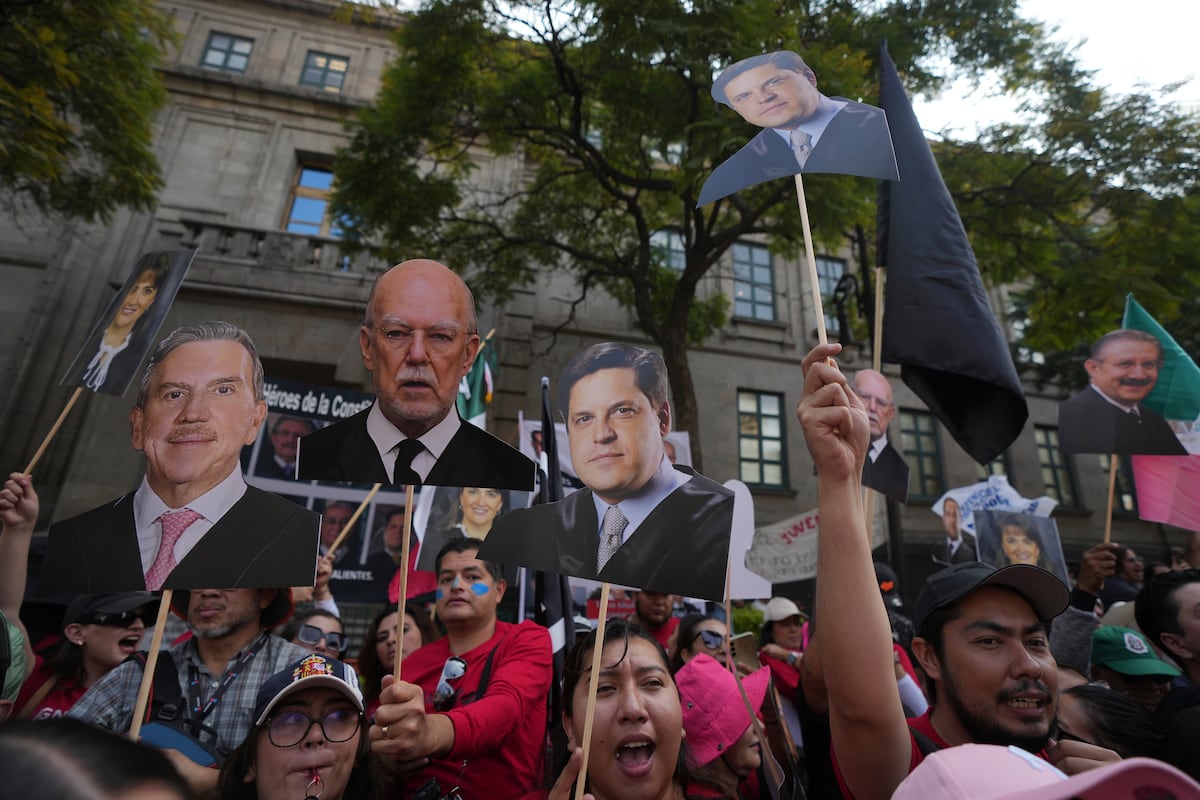
The date was February 5, 2024, when Andrés Manuel López Obrador put forth a radical proposal amidst his sweeping reforms: "Judges, magistrates, and ministers will be elected directly by the people." The then-president had a longstanding issue with the judiciary, frequently accusing judges during his morning briefings of "freeing criminals" and ministers of opposing the Fourth Transformation's projects. From the country's highest court, a resounding silence prevailed, with the mantra "let the sentences speak" being the order of the day.
López Obrador had previously floated the notion of a judicial election, but it gained traction only after Morena's overwhelming victory on June 2. This win sparked a crisis at the Supreme Court, where ministers scrambled to salvage the situation but ultimately failed. As a result, nearly 2,700 judicial positions will be decided at the polls this Sunday, paving the way for a Supreme Court that's more political, under greater scrutiny, and burdened with increased responsibilities.
The Supreme Court of Justice of the Nation (SCJN) stands as the crown jewel of Mexico's judicial system. Its members are the country's most influential judges, tasked with resolving power disputes and ensuring constitutional adherence. Traditionally, they have been the judicial aristocracy, sometimes a thorn in the side of the Executive. Back in President Felipe Calderón's administration, the court delivered one of the administration's prized achievements: Florence Cassez's release.
This Sunday heralds an unprecedented event both in Mexico and globally: federal elections for 881 positions and state elections for 1,800 roles across 19 states. Participation represents a moral battle for Morena, the orchestrator of these contentious elections, which have been organized with limited funding. The INE anticipates each voter will take approximately nine minutes to cast their ballot, with experts cautioning about potential cross-voting—an increased likelihood of more votes for the Supreme Court positions than for district courts.
Many voters—70% according to an EL PAÍS survey—are unfamiliar with the candidates, although some names like the current ministers stand out. The most-voted individual on the purple ballot will secure the presidency of the Supreme Court, the ultimate prize of these elections.
Post-election, what will the court look like? The revamped court will commence operations on September 1 with nine members instead of 11. This reduction, criticized by lawyer Luis Tapia, lacks a thorough analysis. Most elected will be first-time ministers, necessitating a fresh start in learning the ropes. Previously, members joined as others completed their 15-year term, ensuring consistent experience within the court. Additionally, the two chambers responsible for handling cases will be dissolved, channeling all matters to the full bench.
These modifications threaten to exacerbate the backlog already plaguing the court. Minister Loretta Ortiz acknowledged the court would start September with over 8,000 pending cases, a thought that literally keeps her awake at night. Lawyer Melissa Ayala also expresses concern over the "absolute reconfiguration" of an already saturated court, which now faces the learning curve of new ministers, who will be two fewer than before.
Human rights expert Luis Tapia identifies the hasty removal of the chambers as the primary hurdle: "This will have tangible consequences since the chambers are specialized; the first resolves criminal and civil matters while the second handles labor and administrative issues. They resolve far more than the full bench, often handling 60 cases a day compared to one or two by the plenary, and none if they're complex."
New judicial reform rules stipulate judges must resolve cases within six months. "It's truly a Herculean task," Minister Loretta Ortiz admitted in an interview with EL PAÍS. UNAM researcher Aleida Hernández notes "not everything is black or white," suggesting ways to navigate the situation: from requesting extensions from the Disciplinary Tribunal to increasing sessions and strengthening the technical team. "Structural changes naturally cause anxiety, but legal norms always allow for flexibility, known as ductility in law," she explains.
Beyond the pending cases, the new court faces an urgent task: appointing members of the Judicial Administration Body (OAJ). Previously, the Supreme Court president also chaired the powerful Federal Judiciary Council. This changes with the reform, splitting the council into two separate entities: the Disciplinary Tribunal (whose five members will also be elected on Sunday) and the Administration Body, responsible for managing the majority of the judicial budget and overseeing judge appointments and movements.
OAJ members won't be chosen by popular vote; three will be appointed by the Supreme Court, one by the Senate, and another by President Claudia Sheinbaum. This body will be one of the most crucial in the new judicial power structure, alongside military courts, which won't be elected at the polls. This responsibility falls on the first day of unfamiliar Supreme Court ministers. "Before even knowing their team or googling the SCJN's location, ministers must appoint the administration body, or justice could be stalled for months," warns Melissa Ayala.
The candidates with the most votes for the court will be revealed next week. Experts predict the election will inherently produce a more political court—where candidates were compelled to campaign and present proposals—and the low voter turnout—estimated at 23% by an Enkoll survey for this newspaper—could empower those who do vote. The most mobilized so far are Morena supporters, who risk their political capital in this election. "The court will likely be obedient to political power," Luis Tapia states, "rendering it less significant as it loses relevance as a counterbalance. Perhaps resembling the 1995 court, where central issues like abortion, militarization, energy reform, electoral reform, and mandatory pre-trial detention aren't debated."
On the flip side, Aleida Hernández points out, the court will also be under closer scrutiny. "Society, now able to influence its composition to some extent, will watch the ministers' performance, their actions and omissions, and their political, economic, and military connections. This public scrutiny seems healthy in a substantive democracy. I'm convinced it will be a court more concerned about its performance."
We are looking for an independent senior editor

LEAVE A COMMENT