We are looking for an independent senior editor
Apply Now





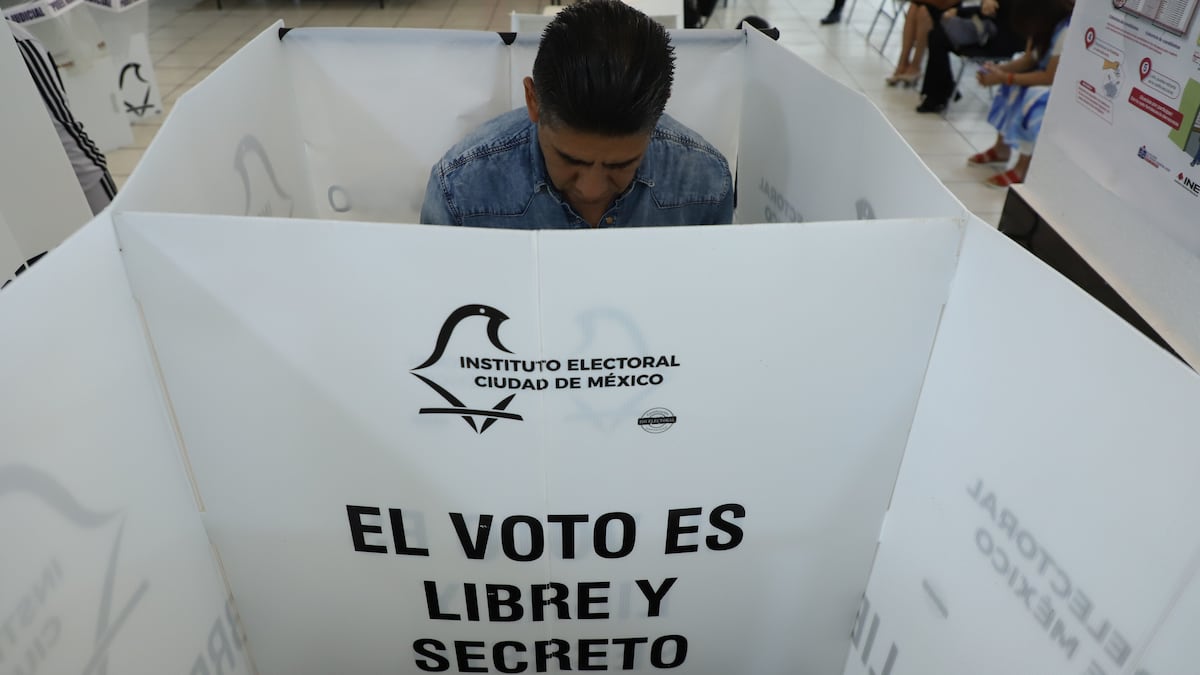
Mexico is preparing for a groundbreaking election that stands out globally for numerous reasons. Only a few countries, such as Bolivia and the United States, select their judges via public vote, and none on such a comprehensive scale. This Sunday marks the first occasion in history where the Mexican populace will choose all federal judges and those in 19 of the 32 states, totaling nearly 2,700 judicial representatives shaping the judiciary for the coming decade. This election, followed by a subsequent one in 2027, signifies Mexico's leap into the unknown with a complexity and scale no other nation has dared to attempt.
Inspired by Bolivia's experience, former President Andrés Manuel López Obrador initiated this ambitious reform before leaving office, a legacy now carried forward by his successor, Claudia Sheinbaum. The eyes of the continent and the world are watching this historic event closely. Colombian President Gustavo Petro noted the region's keen interest, pointing out that Mexico's decision reflects a strong desire for change, even if controversial. "Latin America sees that the people's wishes for change are not followed by legal doctrines," he stated, highlighting the significance of this reform.
In 2013, Argentina under Cristina Fernández proposed a similar reform to elect members of the Judicial Council, akin to Mexico's Judicial Discipline Tribunal or Spain's General Council of the Judiciary. Though ultimately blocked by Argentina's Supreme Court, it demonstrated that Bolivia's approach was not isolated and resonated throughout the region. "In Latin America, when democratizing the judiciary, governments often believe the way is through voting," summarizes Josafat Cortez, a political scientist from UNAM. Mexico has fully embraced this method, joining a select group of countries with varied approaches and impacts, including Bolivia, the United States, Switzerland, Venezuela, and Japan.
Bolivia introduced judicial elections in its 2009 Constitution amidst governmental and opposition conflicts, similar to Mexico's situation. In Bolivia, a centralized country, voting applies only to the four highest state tribunals, not lower levels. These 26 positions, including the Council of the Magistrature and the Plurinational Constitutional Court, among others, require legislative approval, sparking criticism over political influence.
Since then, Bolivia has held three elections—in 2011, 2017, and 2024. During the first two, the opposition encouraged null or blank votes, making up 58% and 67% of ballots, respectively. "Experts advised against boycotting elections but rather encouraged informed voting, as many problematic individuals reached high positions," explains Laurence Pantin from Monterrey's Justice Observatory. In 2024, valid votes exceeded others for the first time at 64%, with 82% participation, highlighting a positive trend of increased female and indigenous representation since the reform.
In contrast, the United States' judicial elections operate oppositely. Federal judges are appointed by the president and confirmed by the Senate, whereas state-level positions are often decided by public vote, varying widely by state law. Alejandro Díaz from Monterrey notes that 38 of 50 states elect their highest state courts through voting, with the remaining states using gubernatorial appointments and parliamentary confirmation.
Among these 38, eight states involve party-affiliated candidates; 14 have non-partisan candidates; and 16 employ retention elections, similar to Japan, where judges seek revalidation rather than initial appointment. At the appellate and district levels, most states use voting, mixing systems within each jurisdiction. Unlike Bolivia, women face more challenges in the U.S. system, where business interests heavily influence judicial elections, says Díaz.
Japan, with a centralized judiciary like Bolivia, involves citizens only in revalidating rather than appointing judges. After executive appointment, judges face public endorsement in the next legislative election and every 10 years thereafter. Despite this process, no judge has been removed in 25 instances, points out Óscar Torres, a UNAM comparative law expert. Despite political influence, Japan maintains rigorous judicial candidacy requirements, ensuring competence through exams and training at the Judicial Institute, preserving rationality, Torres adds.
Switzerland and Venezuela, though otherwise different, share a justice-related election for "judges of peace," focusing on mediation in minor community disputes. In Switzerland, where federal judges are parliament-elected, this role is prominent in cantons, the country's subdivisions. Venezuela began electing these judges last year, appointing 15,000 officials and alternates, despite opposition.
"The popular election of judges of peace is justified by their closeness to citizens," explains Torres, emphasizing its municipal nature. These judges historically mediate minor conflicts, like property disputes, underscoring that "justice involves more than law application; it's about conflict resolution, which judges of peace significantly facilitate."
We are looking for an independent senior editor

LEAVE A COMMENT