We are looking for an independent senior editor
Apply Now





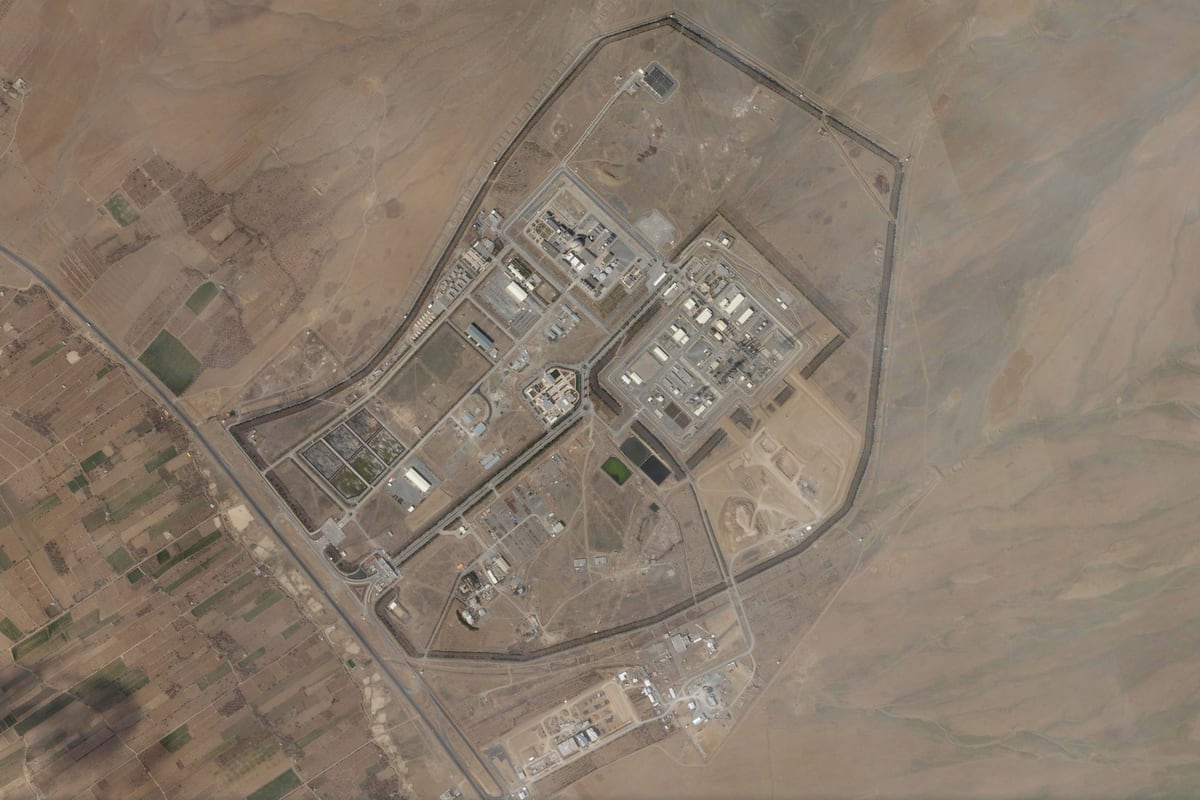
The world is experiencing a turbulent phase of geopolitical change that is intensifying the risk of nuclear proliferation. Multiple factors are contributing to this trend. Iran has made significant advancements in its nuclear program, which, according to the International Atomic Energy Agency (IAEA), involves suspicious activities that raise alarms among regional adversaries and Western powers. The rise of Trump has shaken the trust of U.S. allies in Washington's nuclear umbrella, prompting them to consider alternative options. Meanwhile, China is expanding its arsenal to match the scale of the U.S. and Russia, who are focused on modernizing their nuclear weapons rather than pursuing disarmament as prescribed by the Non-Proliferation Treaty (NPT). The architecture of security treaties is collapsing.
Rafael Mariano Grossi, director-general of the IAEA, expressed his concern about this overall dynamic during a meeting with international journalists invited to the agency's headquarters in Vienna to explore the nuclear landscape. When asked if this geopolitical context increases the risk of nuclear proliferation, he responded emphatically, "yes."
"Countries that once respected the NPT, despite having the technology and capacity to develop atomic weapons, are now openly discussing whether they should reconsider their stance in this changing world where past guarantees are no longer as firm. The novelty is that nations that were staunch supporters of the NPT are now questioning it. I believe this is where the risks lie. It is a moment filled with enormous consequences where the principle of non-proliferation must be upheld more firmly than ever," Grossi added, highlighting a new aspect of the proliferation challenge.
In South Korea, for instance, surveys indicate that up to 70% of the population supports the development of their own nuclear weapons. Polish leaders are considering options, not to manufacture weapons, but to have new and more reliable nuclear guarantees. "Poland must turn to the most modern capabilities, including those related to nuclear and modern non-conventional weapons; this is a race for security, not war," said Polish Prime Minister Donald Tusk in March.
The distrust among U.S. allies in their protection is a new factor that adds to old problems that are worsening. The IAEA has been documenting for years a rapid acceleration of Iran's nuclear program, which, along with evidence of secret activities, raises concern. Tehran is already enriching uranium to a level of 60%, far above the requirement for atomic energy plants and nearing the more than 90% threshold needed for bombs.
The IAEA plans to publish two reports on Iran, which some news agencies have accessed. One confirms the new leap in enriched uranium production, with an accumulation of about 400 kilograms enriched to 60%, when in February there were about 275 kilos. Only 40 are needed to, once elevated to more than 90%, arm a bomb.
The second, a special report on Iran requested by the IAEA's Board of Governors, confirms evidence of nuclear activity at three previously undisclosed sites, with circumstances remaining unexplained.
"We are still in the process of trying to clarify several matters about which Iran has not provided adequate responses," Grossi said to the international group of journalists on Wednesday. "In recent years, the agency has managed to find traces of uranium in places that supposedly did not host any atomic activity in the past. To date, we have not obtained that clarification," he emphasized.
Diplomatic sources cited by Reuters suggest that, based on this, Western powers will push for a resolution declaring that Tehran is violating its nuclear non-proliferation obligations for the first time in over 20 years.
This development would certainly pose a serious obstacle to negotiations between the U.S. and Iran to reach a new nuclear deal. Grossi, who is not involved in the bilateral negotiation but is in contact with Trump's envoy, Steve Witkoff, and also with the Iranians, expressed some hope in noting a willingness to dialogue.
Trump's readiness to seek arms agreements is a hopeful element in this context. In an interview given to this newspaper in early May, Fiona Hill, Trump's national security adviser during his first term—and very critical of him—highlighted the president's inclination to pursue such agreements.
"Trump is very interested in negotiating arms control treaties, whether with Russia, perhaps later with China, or with Iran and North Korea. That was one of his main priorities in the first term. He is concerned about the expiration of the New START (nuclear arms limitation treaty between the U.S. and Russia, which expires next February)," Hill said.
Some speculate that this inclination has narcissistic streaks, specifically the desire to win a Nobel Peace Prize, which Barack Obama achieved, who directed sharp sarcasm at Trump during a correspondents' dinner when he was still president.
But regardless of the motivation, the reality is that both geopolitical movements and Trump's own political volatility cast serious shadows over the hopes of the negotiating push being truly effective.
Israel is seriously considering launching an attack against Iran's nuclear program. Just this Saturday, Benjamin Netanyahu again called for the international community to halt Iran's nuclear program. Sources cited by Reuters indicate that recently, the Saudi Defense Minister warned the Iranians in Tehran that they should negotiate with Trump because, if not, Israel will attack. Within the Iranian regime, there is a struggle between those who believe dialogue should be seized and those who think the extreme weakness shown by Israel's military superiority requires nuclear insurance. Riyadh, for its part, announced its intention to enrich uranium, something that falls within the civil dimension of a nuclear program but has a potentially ambivalent significance.
This context becomes even more complicated when observing China's military developments. The Pentagon has been noting for years that Beijing is expanding its nuclear arsenal. The opacity of the Chinese regime makes it extraordinarily difficult to know the reality, but the general dynamic of Chinese military strengthening and the opinion of respected experts agree in pointing out that this increase is very credible. Undoubtedly, China wants to bring its arsenal closer to that of the U.S. and Russia, more substantial due to the enormous development they had during the Cold War.
This development is accompanied by major advances in hypersonic technology, which brings revolutionary changes to bomb vector sectors, alters previous balances in missile defense matters, and contributes to generating instability.
We are looking for an independent senior editor

LEAVE A COMMENT