We are looking for an independent senior editor
Apply Now





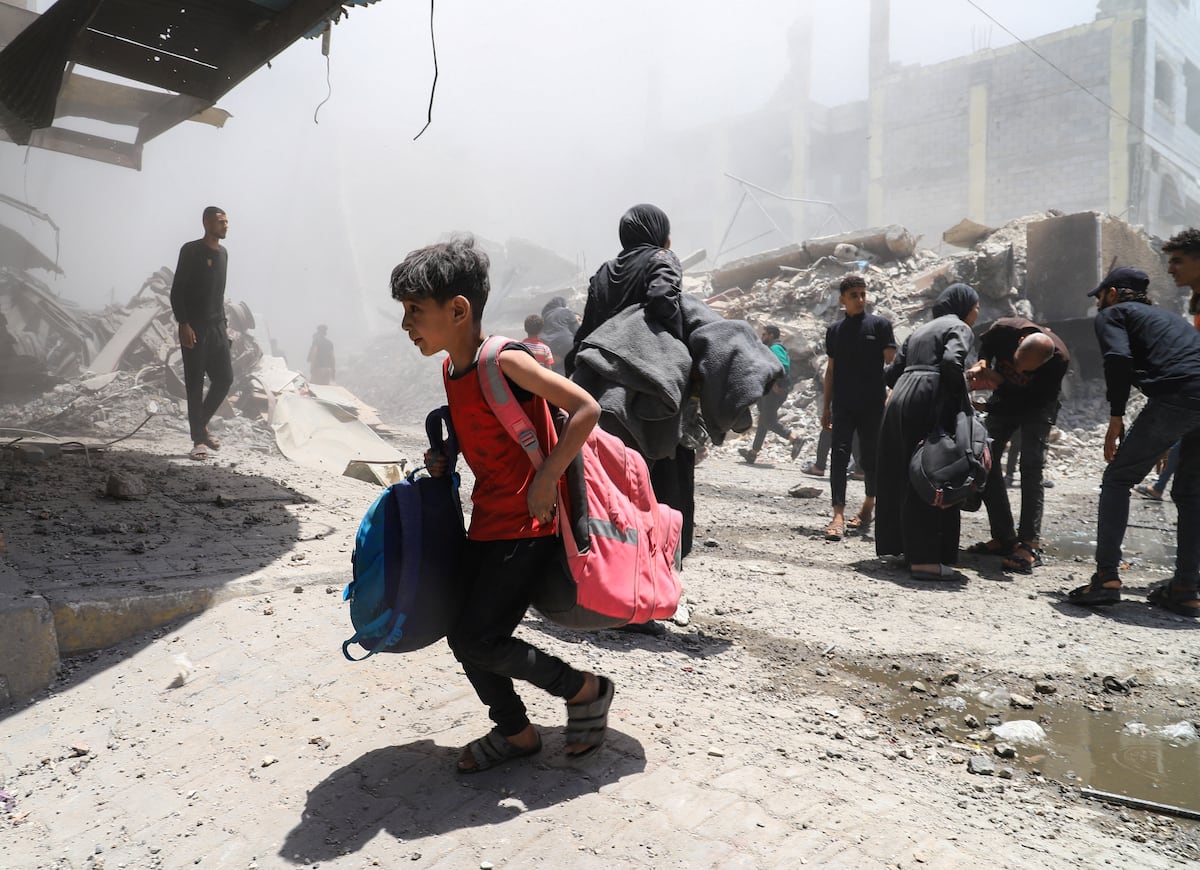
The tragedy that unfolded at the Fahmi al Jarjawi school is a stark reminder of the brutal reality faced by Gaza's children. Haneen, a four-year-old survivor, represents the countless young lives marked by trauma. On a fateful Monday, a bomb reduced the school to ruins, claiming 36 lives, including 18 children. Haneen, who had taken refuge there with her family and other displaced individuals, was found amidst the chaos, crying out for her lost parents.
Despite surviving, Haneen bears the scars of the attack—second-degree burns cover 25% of her body, including half her face. Her family perished in the blaze, leaving her as the sole survivor. This harrowing image of a child wandering through flames has become emblematic of the ongoing conflict that has ravaged Gaza for nearly 20 months, affecting over two million residents, particularly its children.
Another heartbreaking story is that of Ward Jalal al Shiek Jalil, whose testimony broadcasted by Al Jazeera portrays the horror of witnessing familial loss. Her father and brother, among few survivors, remain in critical condition. Such narratives underscore the disproportionate impact of this war on youth, with UNICEF's regional director Edouard Beigbeder highlighting the unbearable cost of war on Gaza's children.
Beigbeder recounts instances like the rescue of severely injured children from the rubble of their homes and schools. The figures are not mere statistics but represent profound human suffering. The emotional plea from Palestinian ambassador Riyad Mansour at the UN Security Council reflects the collective anguish over the deaths of more than 17,000 children since the onset of the conflict, including 1,000 infants.
International criticism mounts against Israeli Prime Minister Benjamin Netanyahu as the military campaign, dubbed "Chariots of Gideon," continues to devastate Gaza's civilian population. Beyond military aggression, the Israeli blockade exacerbates the humanitarian crisis, rendering Gaza the "hungriest place on earth," according to Jens Laerke of the UN's OCHA. This tactic violates international law by indiscriminately weaponizing hunger against civilians.
Rosalía Bollen of UNICEF reports on the increasing numbers of children left without guardians. Since Israel's unilateral ceasefire breakdown in March, the situation has worsened, with thousands losing parents to conflict, detention, or injury. The community network in Gaza attempts to fill the void, with extended families taking in orphaned children despite their own dire circumstances.
Medical NGOs like Doctors Without Borders and Médicos del Mundo strive to provide direct care, bypassing bureaucratic barriers to reach affected children. However, the lack of formal systems for reuniting families remains a significant challenge, as noted by Sally Suhail Saleh. Efforts by organizations like UNICEF to locate surviving relatives are time-consuming but crucial for the children's welfare.
While family networks offer some relief, children without such support face extreme risks, including exploitation and abuse. These vulnerable groups are susceptible to forced labor, recruitment by armed factions, and sexual violence. In dire cases, NGOs provide shelter and aid to those entirely alone.
Food scarcity compounds the crisis, with families struggling to secure even one daily meal. Malnutrition rates among children and pregnant women have surged, with the UN warning of 71,000 children under five at risk of severe malnutrition. The humanitarian landscape grows bleaker, as illustrated by scenes of children foraging for grass to eat.
Despite the conflict, Gaza's parents prioritize education for their children, fearing a lost generation due to prolonged school closures. UNICEF endeavors to address this need through makeshift learning spaces, though military evacuations disrupt these efforts. Remote learning initiatives provide a semblance of normalcy amidst chaos, highlighting the resilience and determination of Gaza's community.
We are looking for an independent senior editor

LEAVE A COMMENT