We are looking for an independent senior editor
Apply Now





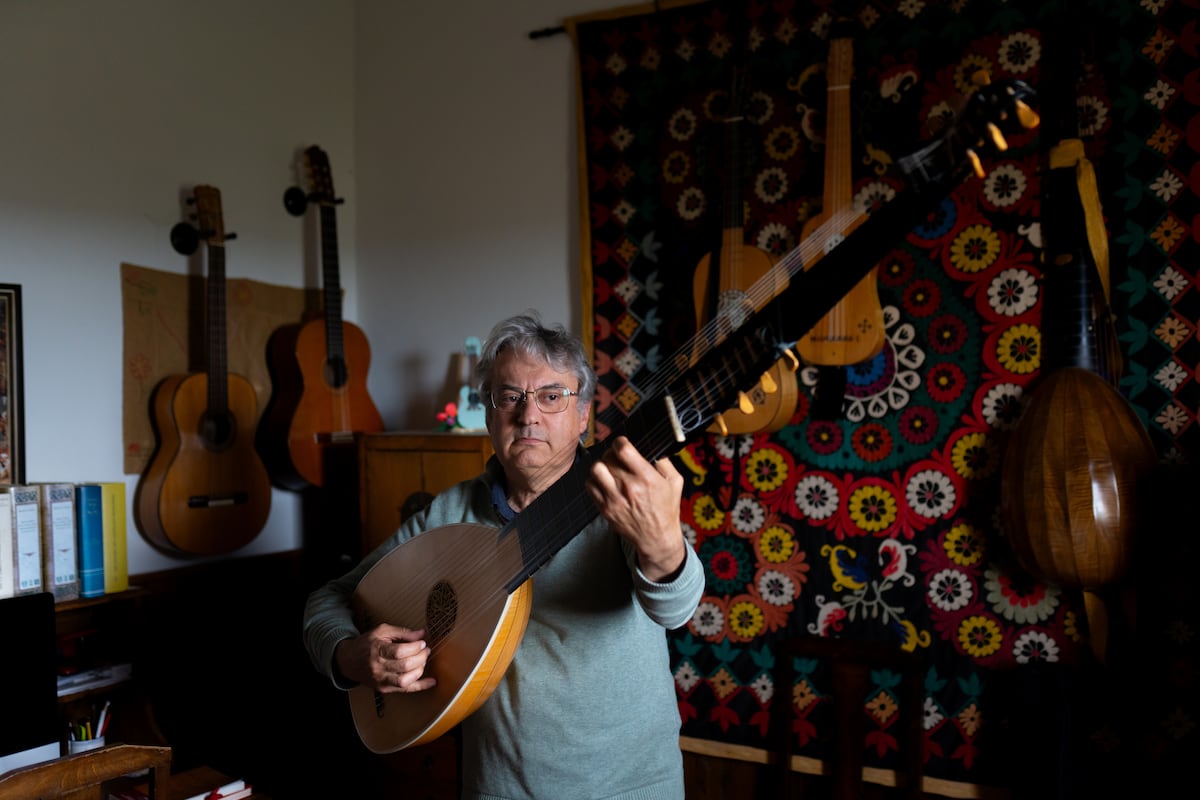
In Spain's most technologically advanced town, you won't find flying cars or humanoid robots. The mayor plays a baroque lute, and high-speed internet has yet to arrive. The midday streets are deserted, adorned with poetry recited by their authors against stone walls. A decade ago, poet Antonio Gamoneda mused, "There's black grass on the slopes and purple lilies in the shadows, but what do I do in front of the abyss?" The quiet is punctuated only by a rooster's crow and a stork's clatter, yet the Spanish Technological Employment Map by the Cotec Foundation shows this serene Salamanca town, Juzbado, with 189 residents, has over 91% of its workforce in tech sectors. But where are they?
Musicologist Fernando Rubio has won elections here for nearly twenty years. He recalls receiving confused calls at the town hall upon becoming mayor.
"Hello, I'm calling from Juzbado."
"No, sorry, you're calling from the factory. I'm the one in Juzbado."
Rubio refers to Spain's sole uranium factory, a bunker with double fencing established in 1985 by the National Uranium Company (ENUSA), located three kilometers from town. With 381 workers, it has twice the population of Juzbado, gradually adopting its name. The factory's bustling activity, including night shifts, contrasts with the town's calm. It supplies nuclear plants in Spain, France, Belgium, Switzerland, Sweden, and Finland. 17% of Spanish homes' electricity and power for millions of Europeans rely on fuel processed outside this Salamanca town.
EL PAÍS archives show initial distrust of the project. "Many villages don't want the factory," declared the mayor in 1980. The journalist depicted Juzbado as "a village without asphalt and unemployment," where residents lived "off their land and few livestock." Fears of "genetic mutations in humans" led hundreds to protest at the fence. After 40 years, no major safety issues or radioactive emissions have occurred, though annual drills remind it's not just any factory. Three years ago, workers practiced a terrorist attack: a supposed fire to distract from a bomb placement.
ENUSA is a public company, with 60% owned by the State Industrial Holdings, under the Ministry of Finance, and 40% by the Energy, Environmental, and Technological Research Center, under the Ministry of Science. Its annual turnover hovers around 300 million euros. A dozen consulted locals believe the lucrative uranium monoculture should have contributed more to Juzbado's development over decades. "We don't have high-speed internet; we'll get it by year's end as the State Secretariat for Telecommunications is extending broadband universally. Now we have patchy internet," laments the PSOE mayor.
Fernando Rubio, an expert in baroque and Renaissance music, teaches at the University of Salamanca but lives with his family in Juzbado, perched on a cliff with stunning views of the Tormes River. As mayor of Spain's most technological town, he prioritized poetry. Since 2008, top Spanish-speaking poets visit the Salamanca town, reciting their verses, which are etched on bronze plaques. "As you're not safe from anything, try to be the salvation of something yourself," proclaimed Uruguayan Ida Vitale, Cervantes Prize winner. "Doves coo in their nests and a bell rings in the distance, a small heartbeat calling us to live on the edge of mystery," intoned Francisca Aguirre, National Spanish Literature Prize winner.
The mayor strolls through verse-laden alleyways to the town's sole bar, El Toral, run by Lourdes García. An 84-year-old man, Benedicto Martín, enters and orders wine. He shares that he worked half his life at "the nuclear," as it was once called. Another local, 71-year-old Antonio Ruiz, orders a beer. "Like the bullfighter Espartaco," he quips. He helped build the factory and then processed uranium pellets until retirement. No one in the bar believes Juzbado is Spain's top tech worker town. "They're not Juzbado people; we're the usual here," says Ruiz, bitter his son couldn't get a factory job. Everyone knows everyone in town. The mayor and locals can barely name a dozen Juzbado residents working at the uranium plant.
Entering the factory is challenging. This newspaper requested a visit from ENUSA on April 7, after the report naming Juzbado as Spain's most technological town. The public company proposed a May 13 date weeks later. During the wait, the April 28 national blackout brought uranium into political debate, with the Popular Party and Vox urging the government to extend the lifespan of Spain's seven nuclear reactors, set to close between 2027 and 2035.
President Pedro Sánchez stated in Congress two weeks ago: "They talk a lot about nuclear plants but not about how Spain has no uranium, so we'll need to import it. From where, gentlemen?" The Popular Party quickly responded on social media: "We have more uranium than Pedro Sánchez has shame," referencing over 34,000 tons of low-quality reserves in Spain's subsoil, mainly in Salamanca, according to the International Atomic Energy Agency. Sánchez later clarified: "Spain's uranium deposits stopped being exploited decades ago because they were economically unfeasible and highly polluting." ENUSA closed its last mine in 2000, under then-President José María Aznar (PP). The public company has spent over 120 million euros restoring the environmental footprint of that mine in Saelices el Chico, also in Salamanca.
The Juzbado factory essentially converts uranium oxide powder bought from other countries, mainly Kazakhstan, Uzbekistan, Namibia, Russia, Niger, and Canada, into pellets. Each pellet, one centimeter in diameter, generates as much energy as a ton of coal, enough for a family for a year. Factory director Pablo Vega welcomes EL PAÍS in a meeting room. According to his data, 23 workers (6%) have ties to Juzbado, either by birth or residence. "As a public company, I can't say: I'll bring people from this town. Anyone can apply for a position under equal conditions," he explains.
The Cotec Technological Employment Map analyzes Social Security affiliation data for all Spanish municipalities. Juzbado lists 411 workers, 375 in tech activities. Most factory employees, however, live in Salamanca, 25 kilometers away. Buses run daily. "Having a factory in the municipal area offers young people opportunities and helps retain population. Plus, the town hall benefits from taxes," says Vega, a 51-year-old industrial engineer from Zamora, residing in Salamanca.
The mayor has calculated the factory's impact on the town. ENUSA owns over 600 hectares, nearly 40% of the municipal estate's land and assets. The town hall owns only 1%. ENUSA pays the town about 220,000 euros yearly, mainly in property and business taxes, accounting for a third of its total income. ENUSA's president earns over 245,000 euros gross annually. Mariano Moreno has held the position for three years, previously PSOE manager.
The Juzbado factory is "a strategic facility" for the European Union, which only has three others like it, in Lingen (Germany), Västerås (Sweden), and Romans-sur-Isère (France), Vega emphasizes. His mission is to keep producing uranium after Spain's reactors close in 2035. The factory already exports 65% of its output. ENUSA has signed an agreement with U.S. company Westinghouse to make fuel for Russian-designed VVER reactors in Europe. Juzbado will help Finland, Czech Republic, Slovakia, Hungary, and Bulgaria avoid dependence on autocrat Vladimir Putin.
Rubio, a party leader in depopulation battle, has pondered rural death's slow pace, forced to accept macro-farms that seal the fate with foul smells. "Castile and León sadly have seven of Spain's ten regions at extreme depopulation risk. Salamanca holds three: Campo Charro, Vitigudino, and Ledesma. Our population density is nearly desert-like," he explains. "A major issue is rural areas have lost self-esteem, stuck in fatalistic destiny: we'll empty out. That dynamic must radically change," he argues. "Common places politicians often use, like having jobs and infrastructure [to repopulate empty Spain]. But the better your job, the more likely you'll leave. Fixing roads mainly helps people escape. Jobs and roads are essential, but not enough. No one will live somewhere just for a nearby job, if they'll rot with boredom in the evening, with nothing happening. Cultural development is needed," he proclaims. "And we are a living town."
One poem engraved on Juzbado's walls discusses language precision. "Expectant words, fabulous in themselves, promises of possible meanings, airy, aired, Ariadnes. A small mistake makes them ornamental. Their indescribable accuracy erases us," recited Ida Vitale. Perhaps Juzbado is Spain's most technological town due to its distant uranium factory, but this Cervantes winner sought and found another adjective: "I'm enthralled, I've discovered a divine town."
We are looking for an independent senior editor

LEAVE A COMMENT