We are looking for an independent senior editor
Apply Now





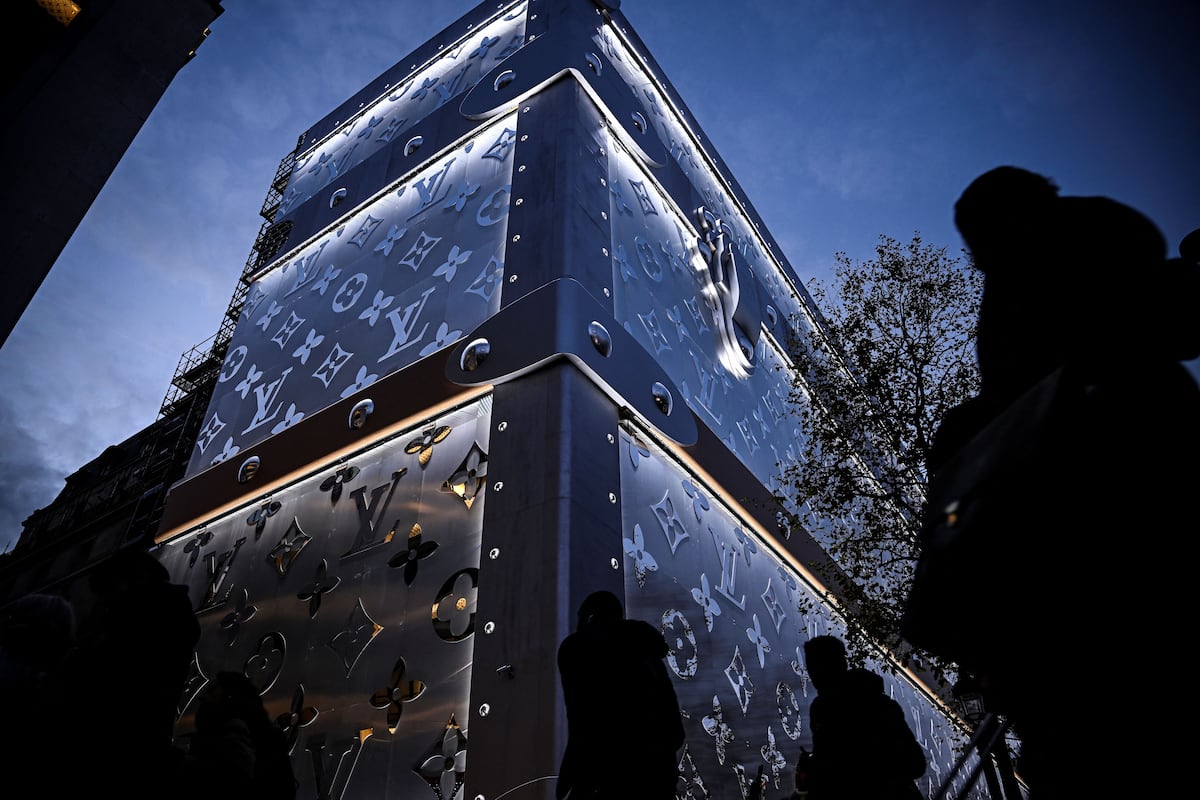
For the first time in a long while, the luxury sector is experiencing a moment of uncertainty. After decades of growth and a notable spike during the pandemic, experts are now divided on whether this is a stabilization phase, an involution, or even a bubble burst. The decline in consumption in China, a major growth driver, has negatively impacted leading global groups, especially those in France and Italy. Economic uncertainty, exacerbated by Donald Trump's tariff war, along with inflation and rising prices, have made demand more unpredictable.
As a result of these factors, the luxury market has lost 50 million consumers over the last two years, according to Bain Company and Altagamma's annual luxury report. The luxury clientele is predicted to be 350 million in 2024, down from 400 million in 2022, with spending at 1.5 trillion euros in 2024, a slight 1% decline—the worst figures since the 2008 crisis. Recently, forecasts for 2025 were revised downward, anticipating sales to drop between 2% and 5%.
"The industry has evolved considerably over the last 40 years," explains Delphine Dion, a professor at Essec Business School. "Now, we're facing uncertainty, amplified by challenges in China and the US. Fifty years ago, this was a small industry catering to a few consumers, but it's become a global market with groups in every region."
Luxury personal goods—fashion, leather goods, jewelry—experienced their first contraction in 15 years, with spending dropping 2% to 363 billion in 2024, mainly due to the generation Z's price sensitivity. Ultra-rich customers account for 40% of major brands' revenue, intensifying sector polarization.
"More than a slowdown, we're returning to the pre-COVID period," says Sabine Pasdelou, a luxury historian. "The pandemic was an exception; now we're back to normal, but with higher inflation affecting accessible luxury demand." Despite a flatter two years, the industry has grown 15% compared to 2019, pre-COVID.
The sector faces contradictions: by nature exclusive, it has become more accessible, losing some of the excellence characterized by craftsmanship (savoir-faire). Once for the few, now for many. Once timeless, now ruled by trends. Luxury was the ordinary for the extraordinary, now it's the extraordinary for the ordinary.
"These explosive years have blurred lines, making luxury accessible through marketing to reach the middle class. Access has democratized, adding a fashion component; when its essence was timelessness, you bought something for life or inherited it," says Stephano Venchiarutti, a consultant at Gentils Pariziens, who believes "the bubble, inflated for years, is starting to deflate."
"We're witnessing an involution: the priority was craftsmanship; now it's industry, and we're in a madness where luxury labels are used, but people buy status, not craftsmanship, just logos," emphasizes Abraham de Amézaga, a sector expert and professor at ISG Luxury Management. Between 2019 and 2023, unprecedented demand for luxury goods allowed the sector to advance 5%, according to McKinsey Company. Price increases accounted for over 80% of growth during this period. Ignacio Marcos, a senior partner at the consultancy, notes, "While there are deceleration factors like decreased Chinese demand, other areas complement this consumption, such as the growing US, Japan, and emerging India."
Only a third of brands worldwide saw business growth in 2004, compared to 95% in 2021 or 65% in 2023, according to Bain & Company. The impact is uneven; categories like personal goods, open to price-sensitive average consumers, are more affected, while resilient categories maintain exclusivity, catering to ultra-rich customers less affected by uncertainty.
The largest global luxury giant, LVMH, founded by Frenchman Bernard Arnault in the 1980s and now owning 90 brands, including Christian Dior and Louis Vuitton, saw a 2% drop in revenue in 2024, hit by reduced Chinese demand, which accounts for 25% of its global sales. The second group, Kering (Gucci, Saint Laurent), founded by French billionaire François Pinault, saw a 12% drop in revenue, dragged down by its flagship Italian brand, Gucci.
Few companies are weathering the storm well. The Swiss group Richemond, owner of Cartier watches, increased sales by 10% last quarter. Meanwhile, the Prada group, having recently acquired Versace from US multinational Capri Holdings (Michael Kors), grew 17%, and French Hermès grew 15%.
In a stock market decline for most, Hermès marked a milestone by surpassing LVMH in market capitalization for the first time, becoming the CAC 40 leader, the main Paris stock index, and the third-largest European title by market value. Experts highlight Hermès's consistent strategy, maintaining savoir-faire value, as noted by Venchiarutti.
As luxury groups expand, they've adapted product portfolios to different customer segments, with some brands shifting towards silent luxury, away from branding. Those adapting well to these changes are more resilient today," explains Ignacio Marcos.
Gucci and Hermès, representing opposite strategies in a slow market, exemplify this. "Gucci's customers no longer buy into its perceived quality-price ratio, whereas Hermès offers added value. Gucci has become mass-market, while Hermès remains a coveted item, following inverse paths," says Ukrainian designer Fedor Savchenko, sector expert and owner of Desmalter.
Categories like jewelry and watches, still viewed as investments, withstand better. Some watch brands (Rolex models) have years-long waitlists, similar to Hermès's Birkin bags. Ferrari shares a similar fate. "These brands maintain luxury through access. They don't sell the most exclusive first product, but the second, earning points for accessing the first. To get on the A-list, you must pass through B," explains Marcos, making them safe havens during crises or instability.
The decline in Chinese demand, a key catalyst for current uncertainty, relates to economic conditions but also a shift in consumer behavior. Younger consumers (25-35 years) represent 40% of clients and a third of luxury sales. "China is developing its own luxury, aiming to prove 'made in China' is on par with French savoir-faire. The government has heavily invested in anti-counterfeiting efforts, attracting talent trained or employed in European brands, applying savoir-faire locally," says Pasdelou, advocating for ending the Western, Franco-Italian luxury vision. China's capability to produce high-quality products is vital today.
Recent acquisitions were by Beijing or Qatar groups, except Prada's recent Versace purchase. In 2018, Chinese group Icicle acquired French Carven, and two years earlier, Qatar's royal family-owned Mayhoola acquired Balmain. In 2012, a Qatari fund took Valentino from British Permira.
Experts doubt major concentration moves but foresee acquisitions focused on "sleeping beauties," small luxury houses with heritage, attracting expert clients seeking identity and storytelling, says Pastelou.
A current challenge is recapturing or recovering elusive, less loyal clients questioning quality-price relations more than ever. "We've seen drastic price increases recently. A bag costing 1,800 euros pre-COVID now costs 2,500. People question the value they're paying," says Amézaga. Concurrently, "quality has dropped while prices rise without apparent reason," highlights Venchiarutti.
Experts agree that part of the artisanal value was lost in adapting production to increased demand. Some brands have demystified products "no longer meeting any of the three criteria: exclusivity, quality, or timelessness," notes Marcos.
Production outsourcing has also devalued prestige, losing the concept of home-made. Social media's double-edged sword, an exhibition platform, also serves as a visible complaint box for dissatisfied consumers. On channels like TikTok, many clients post videos exposing poor product quality.
"There's luxury fatigue from social media overexposure, creating excess and exhaustion feelings. Social media holds significant power; an influencer can be an incredible client acquisition avenue or, conversely, provoke a crisis, as trust now lies in prescribers rather than brands," warns Venchiarutti, noting these tools have somewhat trivialized the sector.
Price hikes have triggered a second-hand market boom, offering slightly cheaper items or inaccessible store pieces. A Hermès Birkin bag, with years-long waitlists, sells for more on these platforms than in stores, especially collection models. "This trend will persist, especially in accessories, watches, and jewelry, due to accessibility and more reasonable secondary market prices," says Marcos.
Another phenomenon, stemming from changing demand motivations, is the shift from material luxury to experiential luxury. In 2024, spending in this category rose 5%. Increasingly, clients value experiences over owning a 15,000-euro bag, such as staying in hyper-exclusive castles, dining at Michelin three-star restaurants with years-long waitlists, attending unique shows, or space travel. According to Carlos Sánchez, McKinsey senior partner, "luxury's exceptionalism now lies in experiences, already representing over half of Spain's consumption."
Brands have long embraced this shift, with groups like LVMH and Kering diversifying into high-end hospitality and art. Cartier invited VIP clients to a masked ball at a Venetian palace, while in 2022, Saint Laurent took select guests to a Sahara desert show. "Post-pandemic, exceptional time is valued more than material possessions, no matter how exclusive. Consumers have evolved, leaning toward spiritual rather than possession-based luxury," explains Pasdelou.
Despite uncertainty, a rebound is expected, with predictions of reaching 2.5 trillion euros by 2030, with annual growth between 5% and 9%, according to McKinsey forecasts. "This is a resilient industry with solid growth foundations, as the ultra-rich continue to increase yearly," says Marcos.
Challenges include capturing emerging demand, finding new ideas, maintaining VIP exclusivity while ensuring mass-market business, half of brands' revenue. Loyalty with veterans, reclaiming lost clients, and attracting emerging ones. Sustainability, creating luxury without impact, is also crucial. Continuously evolving society demands strategic growth and innovation meeting ethical standards," says Pasdelou.
Bain Company highlights emerging markets' potential, where luxury consumption can offset Asian or potentially North American declines, particularly in Latin America, the Middle East, India, and Africa, which could add over 50 million upper-middle-class luxury consumers by 2030.
The US President Donald Trump's trade war introduces instability, though experts downplay its impact. They believe it's too soon to assess its effect, maintaining market growth expectations. Some groups, like Hermès and LVMH, announced plans to transfer tariff impacts to labels. Carlos Sánchez, from McKinsey, notes tariffs "might disrupt supply chains, but their real impact won't significantly affect final prices, as tariffs wouldn't apply to total costs. A 30% tariff on a 10,000-euro bag doesn't mean a 3,000-euro price increase."
2025 marks a crossroads in the luxury industry. Analysts agree it's a prime time for the sector to reset and emerge from existential crisis. "Groups must rethink strategy and reposition," Dion emphasizes. "It's a chance to reclaim luxury principles, reconsider massification, return to essence. Growth rates will be more moderate than before, yet ultra-rich individuals, spending 50,000 euros annually on luxury, will always exist," concludes the expert.
"It was a Thursday in 2003. My father invited me to dinner at his favorite restaurant to announce his retirement. The following Monday, he settled into my office and said, 'You no longer work here, but there,' pointing to his," shared François-Henri Pinault, the 63-year-old French businessman, with Harvard Business Review, recalling when his father, François Pinault (88 years), handed over Kering's reins, founded in the 1960s and now the world's second-largest luxury conglomerate.
Securing succession processes to preserve family business legacies is a headache for luxury magnates, many of whom are elderly, seeking to appoint heirs. In Italian Prada, founded in 1913, Miuccia Prada (76 years) positioned her son, pilot Lorenzo Bertelli, within the group, though his future leadership remains uncertain.
Donatella Versace, 65, has run the Italian company since 1997, possibly leaving it to her daughter, Allegra, the majority heir. Giorgio Armani founded his brand in 1975. Childless, he announced last year, during his 90th birthday, plans to lead for another couple of years. Though previously defending brand independence, he didn't rule out selling as part of succession plans. "The best option will be a trusted group of close people I've chosen," he stated.
Bernard Arnault, owning the world's largest luxury group, LVMH (Louis Vuitton, Christian Dior), is 76 and has long prepared succession, though he won't cede control yet, remaining at the helm for another 10 years, until 86. Company rules capped at 80, but shareholders recently voted to change them at the general assembly. It was supported by 99.18%.
Arnault, France's wealthiest man, has five children, all involved in the company. Four hold board positions or strategic roles within the group. According to Aline Pozzo di Borgo, ISC School luxury consultant, the billionaire "has positioned his children, each in their sector, though Delphine, the eldest, could take charge," she notes.
Delphine Arnault, 50, leads Christian Dior, alongside Vuitton, a LVMH pillar. The Arnault family holds 48% of the group's capital and 64% of voting rights. "This succession is significant, as it's unlikely another empire of this magnitude will arise," explains the expert.
All aim to avoid heir disputes like Gucci's post-Mauricio Gucci's 1995 murder. "Children are discussed, but we mustn't forget these entrepreneurs aren't alone, they have trusted teams, though many intend to stay until the end," notes Sabine Pasdelou, a luxury sector historian.
In Hermès, founder Émile-Maurice Hermès's heirs and main shareholders created a society to shield against LVMH, discreetly increasing its capital in the brand to 20%. In the past two decades, the global giant acquired numerous Italian brands like Fendi and Bulgari, while Kering acquired Gucci. Pastelou emphasizes, besides ensuring business management, "preserving genetic heritage; it's about alliances to preserve high society, a sort of oligarchy."
We are looking for an independent senior editor

LEAVE A COMMENT