We are looking for an independent senior editor
Apply Now





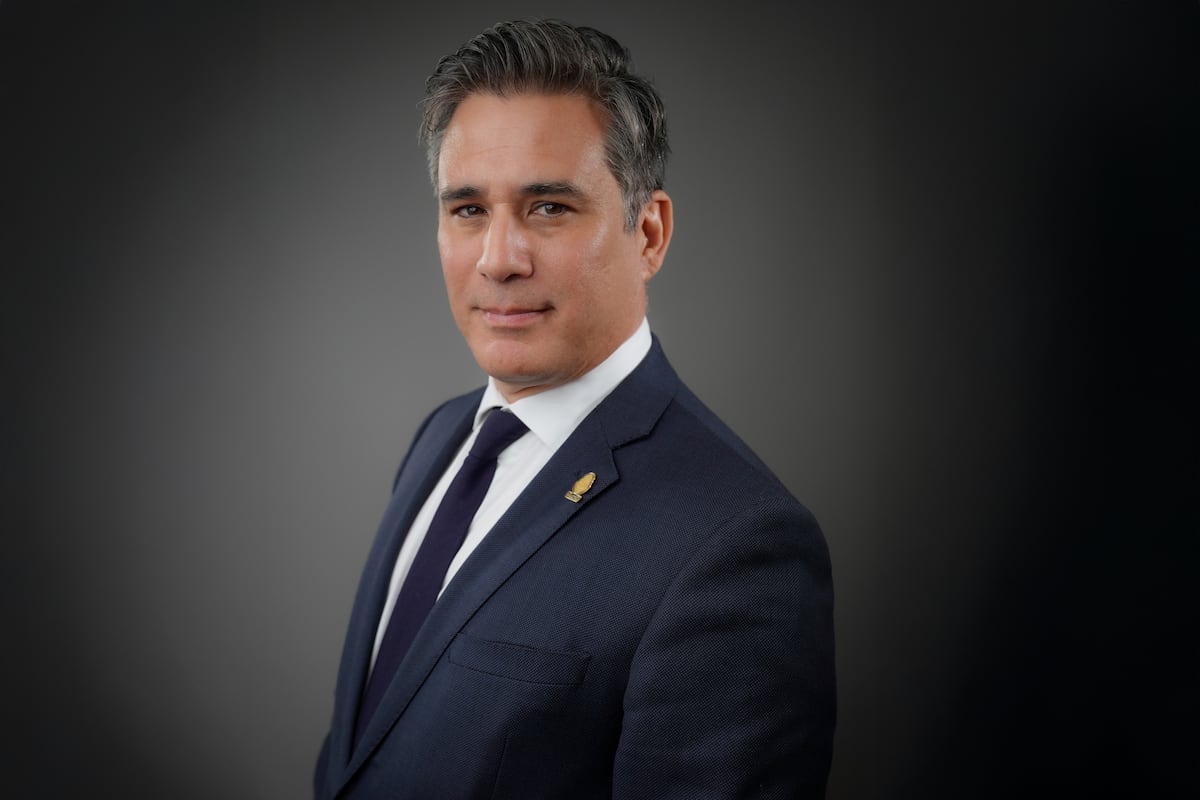
Manuel Tovar Faja, a seasoned Costa Rican diplomat and lawyer, has spent over ten years navigating the corridors of the Organisation for Economic Co-operation and Development (OECD) in Paris. He never envisioned he'd lead a critical meeting of foreign trade ministers amid such global upheaval, as economies react to volatile environments and the disruptive influence of Donald Trump, all while multilateral trade agreements fray and uncertainties mount.
Since joining the OECD in 2013 as a special envoy from Costa Rica, Tovar has been instrumental in advocating for this small Central American economy's membership, achieved in 2021. Serving as the head of the Costa Rican delegation from 2016 until their acceptance, he embraced the role of Minister of Foreign Trade in 2022, driven by principles of free trade, equitable rules, and the necessity of international agreements. At the verge of leading a pivotal meeting in this "complex and pesky" global context, as he describes in an interview with EL PAÍS, Tovar underscores the urgency.
Scheduled for the first week of June, the summit of OECD member nation ministers will see Tovar at the helm, having successfully led Costa Rica to chair the OECD Council in 2023. His mission is clear: to rebuild international bridges that have been eroded, particularly following the erratic tariff announcements from the United States, a prime destination for nearly half of Costa Rica's exports.
Q: Why is this meeting potentially a landmark?
A: Presiding over the OECD ministerial is an honor and a significant responsibility, especially now as a global trade skirmish unfolds and the multilateral trade system deteriorates further. We are tasked with acting as a bridge among diverse interests, such as those from the European Union, United States, Israel, Turkey, Latin America, Japan, England, and Asia-Pacific.
Q: How vital is the OECD in this scenario?
A: With its heritage and history, the OECD has consistently addressed crises with standards and public policies to tackle global challenges. Currently, the question is how we promote balanced trade, eliminate distortions identified by many, and bring various economies to the table for mutual understanding. Our aim isn't to ignite discussions that highlight differences but to seek consensus and shared interests.
Q: Is there a risk of superficial agreements that mask real and growing divergences?
A: We're focusing on common visions, such as effective governance of artificial intelligence, combating illicit trade and drug trafficking, and ensuring a more resilient and secure supply chain to mitigate risks like those seen during the pandemic. There's consensus on advancing towards digital commerce, increasingly relevant today. In times when multilateralism's value is questioned, the OECD, representing 38 countries, aims to demonstrate its capability to reach understandings.
Q: Given your stance supporting free, fair trade and stable rules, what do you anticipate from the United States?
A: The trade policy under President Trump has raised concerns, sensitivities, and challenges for many. Yet, through dialogue and negotiation, convergence can be achieved, not through escalation or retaliatory measures. While some large economies don't adhere to the rules, prompting the U.S.'s policy, discussions on respecting environmental, labor laws, intellectual property, and avoiding market-distorting subsidies are crucial.
Q: Whom are you referring to?
A: China.
Q: Considering known policies from the White House, what outcomes do you expect?
A: From my OECD experience, everything is decided at the last minute. I've met with the USTR and State Department to grasp their sensitivities and ambitions, as I have in Brussels and Japan, noting many shared views on balanced, lawful trade and women's empowerment. The key lies in translating these into discussions at the table. The international community, markets, and OECD members must show consensus, sustaining hope in multilateralism as a means to reach agreements.
Q: Could it be naive to expect agreements now?
A: If I were to abandon the possibility of reaching an agreement, there'd be no reason to preside over this ministerial meeting. I'm aware of the reality but also driven by responsibility.
Q: And if no agreements are reached?
A: Failing to reach understandings risks undermining the value of an international system that has brought peace and security, potentially leading to anarchy over rules.
Q: Is this what happened with the World Trade Organization (WTO)?
A: The WTO has weakened over the years. It's governed by consensus among 166 countries, including G7, G20, nations at war like Ukraine and Russia, and less developed, protectionist economies. Achieving agreements in such a diverse organization is challenging, aggravated by some major economies exploiting the rules, contrary to the spirit of multilateralism.
Q: Could a similar situation arise in the OECD?
A: The OECD has a more defined membership, often sharing common positions despite current differences. BRICS don't hold permanent seats, though invited as observers. Thus, the OECD holds potential to rekindle a rule-based system.
Q: What's your current diagnosis?
A: It's crucial to be pragmatic in a very complex and annoying international environment, aiming to restore broken trust among historical partners, neighbors, and major economies.
Q: Could Trump's tariffs be a strategy or tactic for other purposes?
A: Perhaps. It's not my place to judge President Trump's public policy goals. Costa Rica shares a historically close relationship with the United States that can't be undone. Remember, Costa Rica is among the countries with the lowest tariffs, at 10. We dislike tariffs, aiming to restore previous conditions through dialogue with the U.S. We'll soon share news, achievable only through conversation.
Q: It'd be unusual for the U.S. to maintain tariffs for all but remove them for Costa Rica.
A: We'll see. Anything is possible.
We are looking for an independent senior editor

LEAVE A COMMENT