We are looking for an independent senior editor
Apply Now





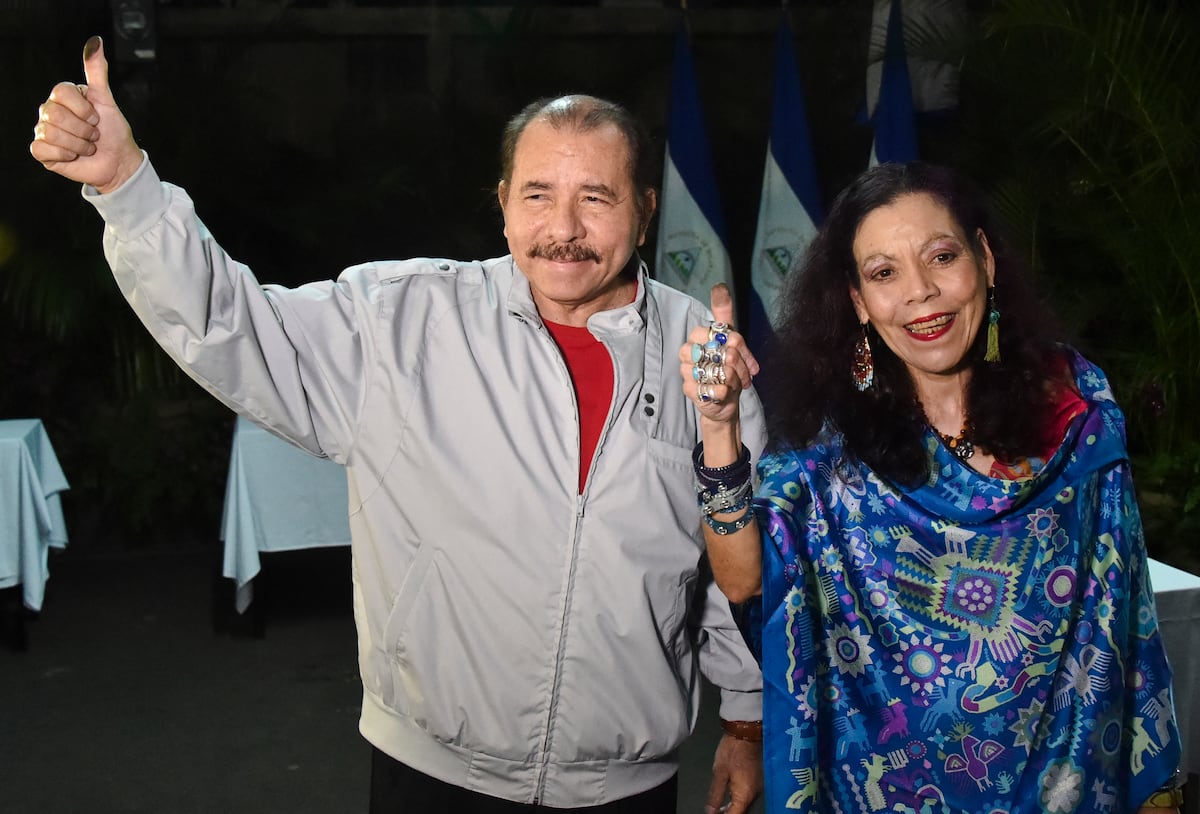
In a nation gripped by uncertainty, Daniel Ortega vanished from public view for 25 days, igniting speculation about his health and even his potential demise. His unprecedented absence on May 18 from the anniversary of Augusto C. Sandino—an event central to the Sandinista narrative—fueled these rumors. Yet, on May 24, Ortega reemerged alongside his wife, Rosario Murillo, and top government officials at a ceremony for China-donated buses. Despite appearing frail and aged, nearing his 80th birthday, Ortega's rhetoric remained fierce, branding his opponents as "trash" while reiterating regime slogans. During his public absence, the oppressive machinery he commands in Nicaragua escalated its actions, reaching new heights in 2025.
Recent police raids in northern Nicaragua unveiled a startling development: among those detained was José Peralta Jarquín, head of Military Intelligence in Matagalpa. This marks a significant shift in repression, targeting an institution previously deemed untouchable: the military. This occurs amidst the complete subjugation of Nicaragua's armed forces to Ortega and Murillo's absolute rule.
Prior to these arrests, Álvaro Baltodano, a retired general and key economic and military figure, was detained. Baltodano, once instrumental in the regime's economic strategy and a proponent of mixed economy projects like the failed interoceanic canal, represents a significant fracture within the Sandinista circle. Analysts suggest this reflects the intolerance of the ruling pair, particularly Murillo, to any dissent.
On May 7, Nicaragua's military leadership fully aligned with the regime. Army Chief, General Julio César Avilés, pledged adherence to constitutional reforms naming Murillo, alongside Ortega, as supreme military leaders. Sources indicate the military's facade of independence from the regime's repressive tactics has vanished. "All generals now report to Murillo, or face purging," insiders claim. Consequently, several unremarkable officers have been promoted to fill positions vacated by ousted figures like Fidel Domínguez, a notorious enforcer in León.
Alongside military maneuvers, the Ortega-Murillo regime intensified its repressive model. Initially, judicial authority was stripped and subordinated to the National Police, headed by Francisco Díaz, a relative of the copresidents, especially concerning asset seizures. Subsequently, the National Assembly, dominated by the regime, urgently passed a judicial career law eliminating merit-based entry and promotion, effectively nullifying judicial independence in appointments.
Simultaneously, nine constitutional and organic laws were revised to conform to the new political constitution, solidifying a totalitarian model by transforming all institutions into organs managed by the copresidential duo, effectively ending the separation of powers. However, the most shocking reform involved constitutional articles pertaining to nationality loss. The new law stipulates automatic loss of Nicaraguan citizenship upon obtaining a second nationality. This raised critical questions among Nicaraguans about retroactivity and potential asset confiscation, akin to the fate of over 400 denationalized opposition figures.
Public outcry, especially on social media, compelled parliamentary president Gustavo Porras to clarify the law’s non-retroactive nature, asserting that post-approval, dual citizenship is prohibited. "No one should serve two homelands," he stated, referencing denationalized opponents who acquired foreign citizenship.
Murillo further inflamed tensions by denouncing exiles as "unforgivable" and "condemnable." "These unforgivables will never return to the land that is not theirs," she declared. "Those persisting with lies and slander, which is all they have, offer nothing because we seek peace." Earlier, Murillo's anger over UNESCO awarding the World Press Freedom Prize to La Prensa led to Nicaragua's withdrawal from the UN agency. Lastly, on May 26, the regime inaugurated the "Héroes de Chinandega" university campus in a monastery seized from Chinandega's Clarist nuns. Many view these extreme repressive measures as likening Nicaragua to a tropical North Korea.
We are looking for an independent senior editor

LEAVE A COMMENT