We are looking for an independent senior editor
Apply Now





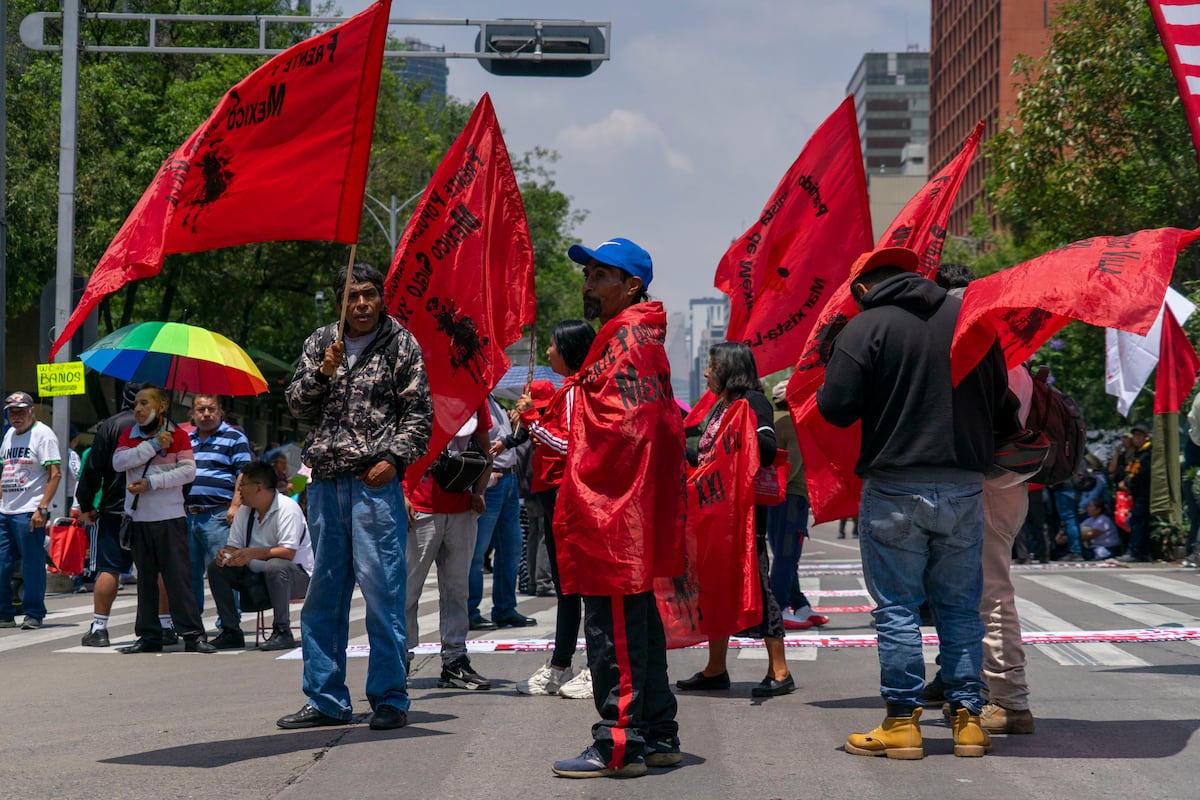
In the realm of political discourse, originality often takes a backseat. Criticisms aimed at the National Coordinator of Education Workers (CNTE) echo familiar sentiments, reminiscent of previous debates. Interestingly, the individual who once pledged to repeal the 2007 ISSSTE law now finds themselves accusing the CNTE of aligning with right-wing agendas. This backdrop leads to the potential boycott of upcoming elections, where, for the first time, judicial system judges will be elected.
Critics of the leftist government aren't immune to accusations of "playing into the right's hands," even as the administration embraces lifelong PRI members, arguably strengthening the right's influence. It would seem logical that the CNTE's demands align with the Fourth Transformation's objectives: repealing the ISSSTE law enacted during Felipe Calderón's presidency and returning pension management to the government, away from private enterprises that have profited from it. Yet, achieving the anticipated separation between political and economic power proves challenging.
Among the critiques from officials and supporters of the Morena party, those focusing on the student population's welfare stand out. Concerns about the education provided to children in CNTE-active regions are frequently voiced. Mario Delgado, the Secretary of Public Education, emphasizes the need to "reason with the CNTE" due to his deep concern for children missing classes, describing it as unfair to them and their families. This worry is reflected in radio programs and YouTube channels, asserting that CNTE's presence correlates with educational underperformance in certain states, as though a causal link exists.
Such concerns prompt several questions. How can a quality educational system be developed when educators' working conditions are far from ideal? For decades, teachers and school facilities have faced dire material conditions. The curriculum, designed in a centralized and top-down manner, fails to adapt to local cultural realities and needs. Have the new free textbooks, printed in the nation's diverse indigenous languages, been adequately distributed?
The educational lag in states like Oaxaca, Guerrero, or Michoacán is not caused by the CNTE but by a centralized system that, since the last century, has sought to suppress indigenous cultural practices prevalent in these areas. This issue is compounded by the structural poverty in southern regions, exacerbated by extractive and developmental projects that strip communities of their lands, languages, and cultural diversity.
We are looking for an independent senior editor

LEAVE A COMMENT