We are looking for an independent senior editor
Apply Now





Gabriel Boric, the Chilean President at 39, is gearing up for a transformative phase in his life. Alongside his partner, Paula Carrasco, an environmental chemist from the University of Chile and a government official, they anticipate the arrival of their first child, Violeta, in early June. Carrasco, a former national basketball player aged 31, moved into Boric's rented residence in the Yungay neighborhood, a bohemian area near downtown Santiago that struggles with crime. However, the couple plans to relocate soon to San Miguel, a popular municipality in the central-southern part of the capital, near Carrasco's grandparents.
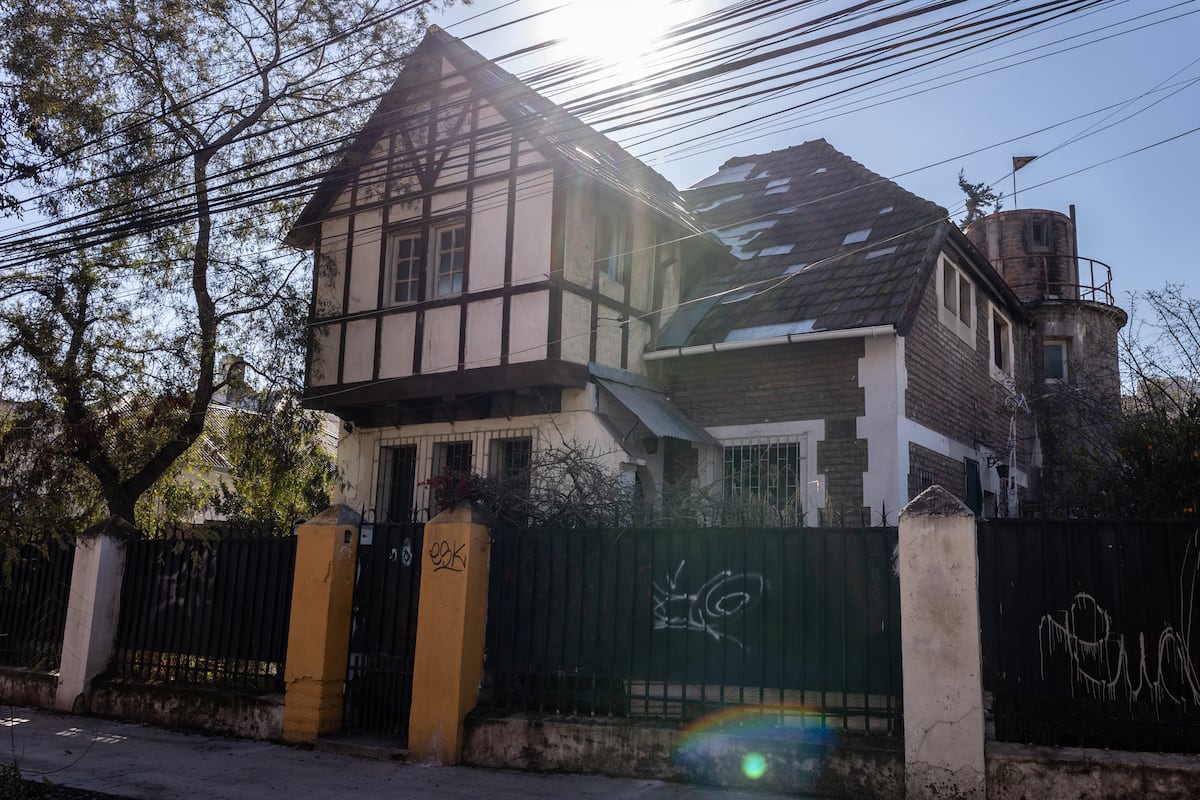
Rumor has it that Boric intends to buy a house two blocks south of the El Llano neighborhood's entrance, a more upscale area of the commune known for its mansions from the late 19th and early 20th centuries, many overshadowed by towering buildings. The property in question, built in 1938, showcases Tudor-style architecture reminiscent of an English castle, situated on a plot of 792 square meters, with 235 meters usable, valued at over 500 million pesos (around $529,000).
Pía Montealegre, an architect and academic from the Institute of History and Heritage (IHP), notes the house features a grand staircase and a distinctive tower, possibly once serving as a water tank, though she clarifies it lacks the architectural or historical significance of El Llano's mansions. "It's not architecturally special or heritage-rich. Homes in this area symbolize a period of urbanization where the middle class settled in southern Santiago, while the upper class had already moved to Providencia and Las Condes," she says.
The academic applauds Boric's "shrewdness" in opting for an old space in a neighborhood with houses resisting amidst buildings, rather than moving to any section of the city. Montealegre, who resides in a 1930s building herself, emphasizes that it's not just a home purchase, but a life project, requiring significant effort. Additionally, she highlights that Boric will integrate into the community, near parks, stores, and kindergartens in a middle-class commune of about 145,000 residents that needs infrastructure boosts. These attributes suggest the couple considered it an ideal residential setting to raise Violeta.
Boric broke a certain tradition by choosing to live in the Yungay neighborhood instead of the city's eastern sector, as his predecessors did. Partly because it's the first time a President didn't have a fixed residence. Boric hails from Punta Arenas in the extreme south of Chile, where he grew up with his family, and he arrived at La Moneda at 35. Prior to assuming office, he rented an apartment in the touristy and historic Bellas Artes neighborhood in the city center.
Yungay was the first neighborhood established in the Republic, in the mid-1800s, always a welcoming area for provincial and immigrant arrivals via train at the Central Station. The picturesque heritage neighborhood retains its charm but has suffered from increased crime over the years, with violent robberies and homicides occurring close to the President's residence, whose term will end in March 2026.
The President's future neighborhood also boasts historical significance. As chronicler Roberto Merino recollects in his book "Santiago de memoria" (1997), Bernardo O'Higgins, Chile's independence architect, had his farm there ("during the 19th century, farms were inherited and no prominent family lacked one near Santiago"). O'Higgins rested in that locality the night after the victory at the Battle of Maipú, and he also temporarily established the Government there following the 1822 earthquake. Years after his death, miner Ramón Subercaseaux purchased the land, which remained in the family for generations, giving rise to the El Llano Subercaseaux neighborhood and a handful of streets bearing the surname.
Many urbanists today liken that part of San Miguel to a small Ñuñoa, a traditional municipality in Santiago's eastern sector, humorously noted for its recent hipster character and associated with members of Boric's Frente Amplio party. Experts suggest that a century ago, it was thought that the wealthiest would move towards the Beauchef, Quinta Normal, and El Llano neighborhoods, but ultimately, El Llano became an island of affluent homes within the commune.
Sonia Palestro, aged 80, knows San Miguel's streets well. She is the eldest daughter of late socialist deputy Mario Palestro Rojas, who also served as the commune's mayor from 1963 to 1967. Today, San Miguel hosts diverse social sectors, with burgeoning building construction heralding a resurgence of the middle class, comprising young professionals. The old neighborhoods of large houses are disappearing.
"This commune, once very poor, yet simultaneously with wealthy neighborhoods, exposed us to varying economic and social realities," Palestro notes in writing. Her father recounted to her and her four siblings that along the Zanjón de la Aguada's banks, a channel running openly, unemployed workers from the country's north arrived after nitrate mines closed, setting up makeshift homes of tin, sticks, and cardboard, becoming a refuge for poverty.
Palestro highlights that the large-patio houses that populated the El Llano neighborhood, built by early 1900s magnates owning mines, vineyards, and fields, have given way to numerous buildings and condominium constructions. "The neighborhood chosen by our President Gabriel Boric and his partner is one of those preserved nearly intact (...) one might say it recalls what San Miguel was not so long ago," Palestro remarks about the residence they plan to move into, on the street where her cousin and commune mayor for 12 years, Julio Palestro Velásquez, lived.
We are looking for an independent senior editor

LEAVE A COMMENT