We are looking for an independent senior editor
Apply Now





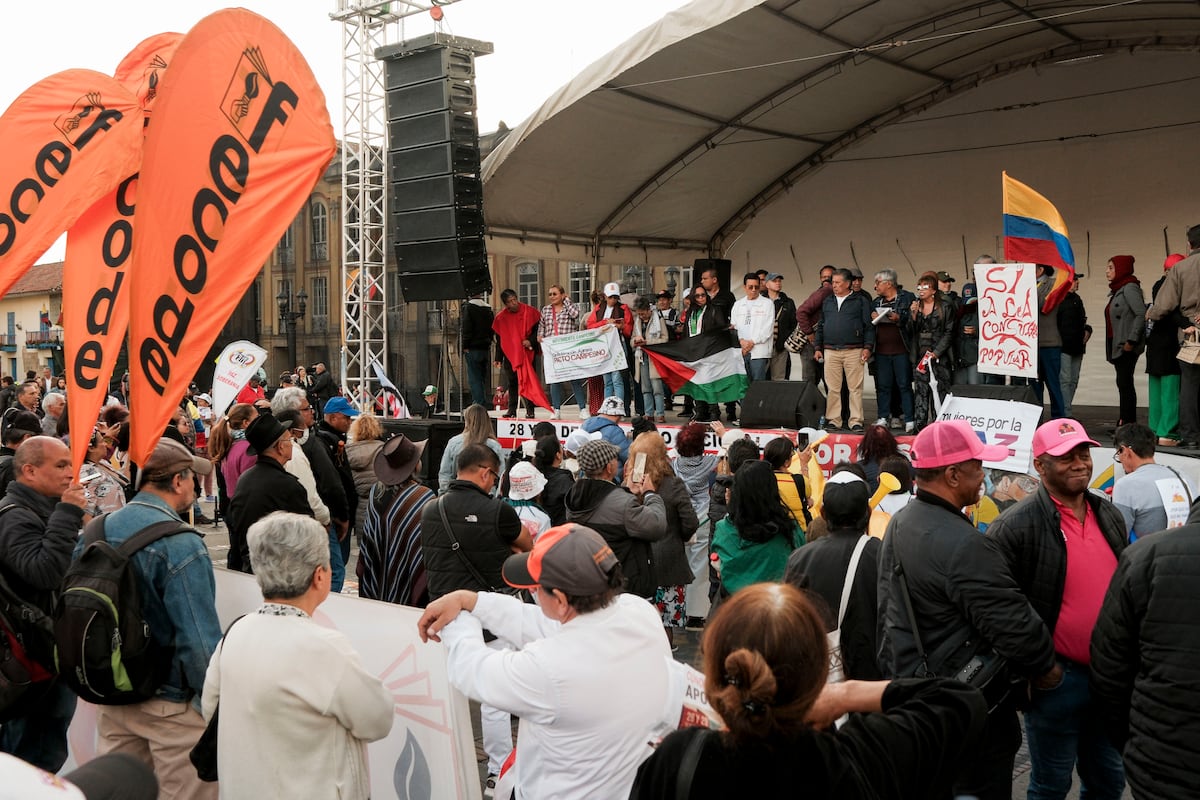
The recent two-day national strike in Colombia, endorsed by the national government, marks a historic moment in the country's social protest landscape. Unlike previous strikes aimed at pressuring the government for wage increases or political guarantees, this strike sought to influence the Congress to pass labor reforms proposed by the Executive or to sanction a public referendum ensuring workers' rights.
This protest emerged as a new manifestation of Colombia's political polarization, highlighting civil society's pushback against legislative gridlock and demonstrating President Petro's call to social organizations to mobilize for change. It also served as an invitation to business leaders to engage in dialogue over delayed reforms, expand democratic processes, and reinforce constitutional values.
The right-wing factions have dismissed the strike and the call for a referendum as political maneuvers by President Petro, aimed at maintaining leftist power in the upcoming 2026 elections. For the government, however, this event was a testament to its ability to drive the political agenda and connect with diverse social sectors, effectively uniting the democratic left, liberal party bases, traditional organizations, youth, women, farmers, and indigenous groups under the banner of defending labor rights.
Amidst a backdrop of fear stemming from Colombia's traumatic history, particularly the social upheaval of 2019-2021, the strike in May signaled a break from violence. This period tested the resilience of Colombian democracy, exposing deep societal fractures and the vulnerability of many citizens to inequality, extreme poverty, and corruption within the political class.
For over six decades, Colombia was marred by internal armed conflict and the "internal enemy" theory, which led to the demonization of strikes by the far-right, associating them with urban paralysis, infrastructure destruction, and chaos. Historically, strikes were linked to human rights violations, illegal detentions, and violence against protesters. They also became arenas for guerrilla infiltration, road closures, and economic disruption.
The stigmatization of social mobilizations by the state, often perceived as influenced by groups like the FARC and ELN, weakened civil society. Colombia endured over a century under martial law, with Article 120 of the 1886 Constitution justifying repression and leading to the rise of guerrillas in the 1960s.
The 1991 Constitution abolished this oppressive article, recognizing peaceful protest as a fundamental right. Yet, remnants of the "internal enemy" concept continued to taint social protest management, sidelining dialogue as a preventive measure. The social outburst of 2019-2021 left a lasting impact, with the innocent victims of those protests becoming a national scar.
A report by the Ombudsman's Office to the Inter-American Commission on Human Rights on June 7, 2021, highlighted extensive human rights abuses during protests from April 28 to June 3. During this period, 417 complaints of rights violations were lodged, with 306 implicating public force members, predominantly the National Police.
This social unrest affected 320 municipalities across Colombia, with 80 fatalities reported, involving various actors, including the now-disbanded Esmad. The Ombudsman's Office corroborated these figures, noting 466 disappearances. The Attorney General confirmed only 20 homicides in the protest's context.
Today, the specter of past violence seems to be fading. The recent strike, unlike its predecessors, was marked by peace, suggesting a halt to the barbarism once common in protests. As the presidential elections approach, some view the situation through a purely electoral lens. However, the key takeaway is Colombia's strengthened democracy, with civil society outshining armed actors now isolated by their lack of propositions for a war-weary nation.
Labeling the strike a failure due to its peaceful nature is premature. Instead, it reflects the maturity of Colombian democracy, the evolution of union leaders, workers' mobilization capacity, business leaders' calmness, and the isolation of illegal armed groups. The Congress must now respond to the workers' aspirations and revive labor reforms, aligning with the students, the government, and citizens who have demonstrated their power both in the legislature and the streets. This protest ensures no future government can order attacks on its people or allow illegal groups to usurp social leadership. Congress now recognizes a populace determined to assert its rights.
We are looking for an independent senior editor

LEAVE A COMMENT