We are looking for an independent senior editor
Apply Now





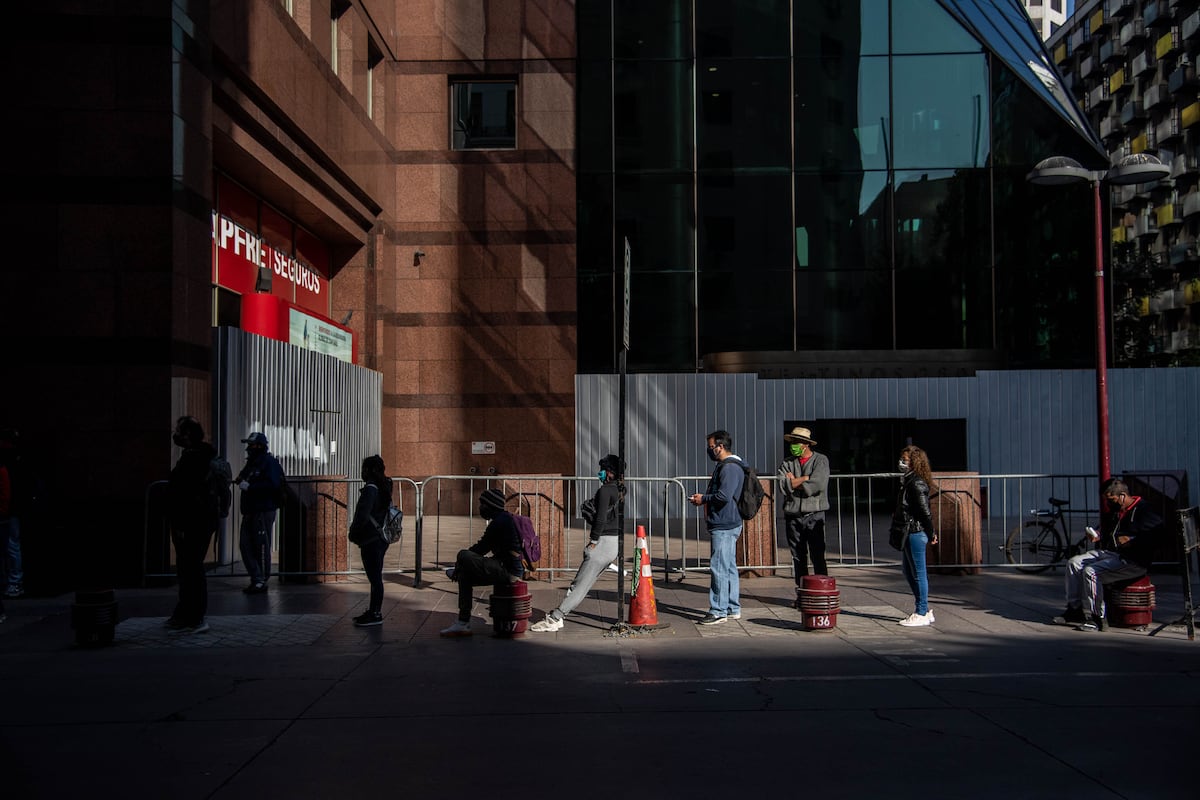
Fifteen years ago, during a time when an unemployment statistic was favorably received by the market and celebrated by former President Sebastián Piñera, the Fundación Sol published an article titled "The Real Unemployment Figures in Chile." The reported figure had reached a substantial 8.3% for the quarter ending in August 2010. However, it was celebrated as it indicated a positive direction with the creation of 200,000 jobs in five months—an impressive labor dynamic that eventually led national unemployment to drop to 5.7% by the end of 2013.
The foundation, however, insisted that to truly understand the state of the labor market, a more realistic approach was necessary. This approach included the recommendations of organizations like the ILO, which advocated for the inclusion of "hidden unemployment and equivalent unemployment due to underemployment" alongside the official figures. The outcome of Fundación Sol's analysis was striking: the number of unemployed individuals in the country was actually 74% higher than the official statistic suggested.
Recently, the National Institute of Statistics (INE) announced that the latest unemployment rate in the country rose to 8.8% for the moving quarter of February-April. This result, described as "weak" by Finance Minister Mario Marcel, is indisputable in its magnitude, yet fails to consider other factors. When analyzed through a "realistic approach," the term "weak" seems insufficient.
Indeed, to gain a "realistic" perspective on the labor market conditions, one must acknowledge the 25.8% rate of informal employment, a figure that has been stagnant for years. This high rate reflects a social tragedy affecting 2.4 million individuals enduring precarious employment conditions.
Beyond the snapshot of this moving quarter, the storyline of unemployment data is one of ongoing drama. Since December 2022, the national unemployment rate has consistently hovered above 8%, and many Chileans have endured prolonged periods of unemployment.
This chronic weakness in Chile's labor market has been termed a labor emergency by experts such as David Bravo. Despite projections from the Central Bank of Chile, there are few signs of significant change. Even as the current administration under President Boric approaches the end of its term, new investment projects have only just begun to emerge, as highlighted recently by Economy Minister Nicolás Grau.
Employment, alongside enabling conditions such as investment and growth, should be fundamental priorities for those with the power to foster conducive environments. This is widely acknowledged by experts and supported by common sense, as demonstrated by the latest CEP survey. The survey revealed that most Chileans see education and employment opportunities as key to economic progress, allowing them some control over their futures through responsible work.
However, the reality is starkly different. The growth in employment is primarily in the public sector, which has come under scrutiny following a massive fraud involving medical licenses. Growth-focused cabinets have failed to alter the macroeconomic equation, and the urgent need to dismantle bureaucratic and permit-related obstacles to investment progresses at a painfully slow pace, testing the patience of both investors and citizens.
Nearly three years ago, during a forum organized by El País, President Gabriel Boric captured the audience's attention by stating that "the deep-rooted causes of Chilean discontent remain." While this sentiment is likely shared by many, it remains unclear if the authorities have effectively addressed this discontent over the past three years.
We are looking for an independent senior editor

LEAVE A COMMENT