We are looking for an independent senior editor
Apply Now





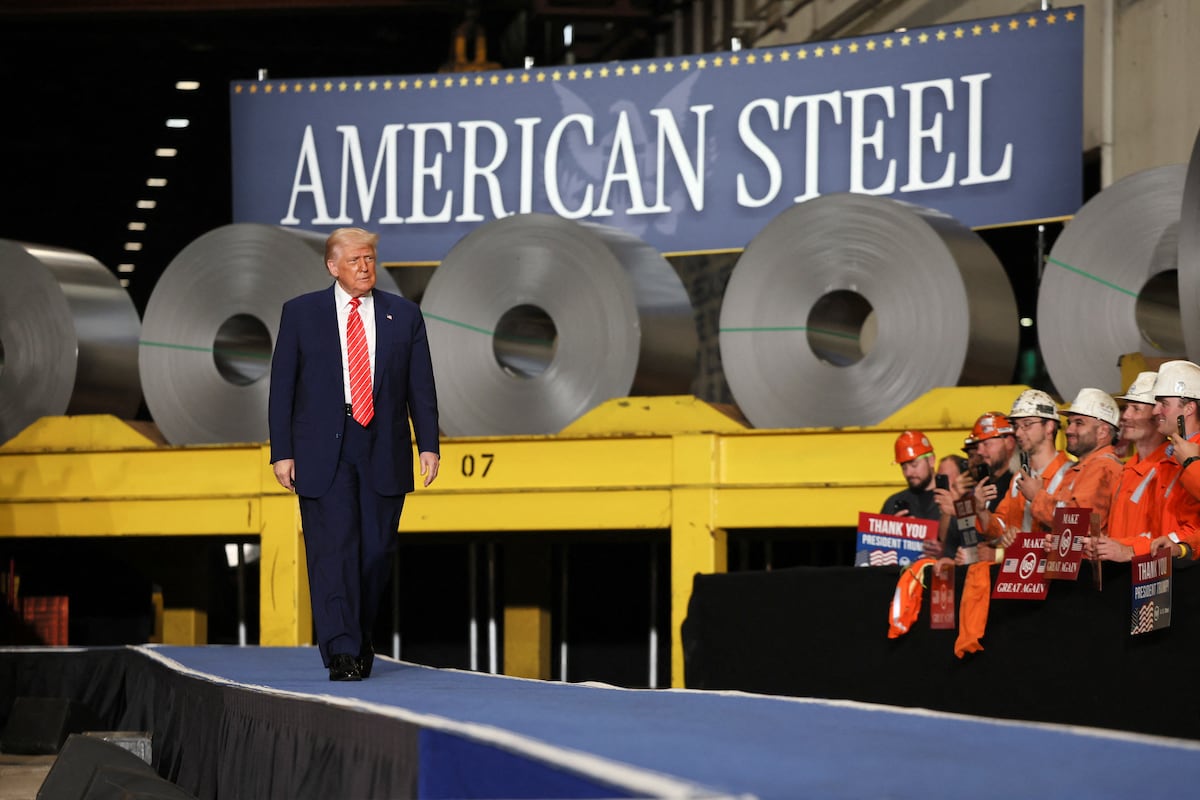
The tariff agenda of Donald Trump continues to be a focal point in his administration's economic strategy. In the wake of a challenging week marked by judicial scrutiny of his trade policies, the President of the United States concluded his workweek with a decisive announcement. During his visit to the U.S. Steel facility in Pennsylvania, Trump declared his intent to double tariffs on imported steel, raising them to a substantial 50%.
Simultaneously, Trump is on the verge of authorizing the sale of the venerable U.S. Steel to the Japanese conglomerate Nippon Steel. This move is being framed as a "partnership," although specific details remain undisclosed. Despite this transaction, Trump reassured the workers that their company would remain American. Republican officials have suggested that Trump will implement a measure to ensure U.S. control, although the extent of this authority is yet to be determined. Notably, during his campaign, Trump had asserted he would prevent the sale to Nippon Steel.
In his address to the workers, Trump emphasized, "Today we are here to celebrate a groundbreaking deal that will ensure this historic American company remains American." He underscored that the 50% tariffs on imported steel would further fortify the U.S. steel industry.
Trump's welcome gesture to Nippon Steel comes in the form of this tariff hike. He remarked, "I believe the investors who have just made these investments are very pleased, as it means no one can steal their industry." He continued, "At 25%, they could bypass that barrier, but at 50%, it becomes insurmountable," marking a significant escalation in his protectionist stance.
Previously, Trump had imposed a 25% tariff on steel and aluminum imports effective since March, and the newly announced measure effectively doubles these tariffs. Since Trump took office, the price of steel products has risen by approximately 16%, based on government producer price indices. The anticipated tariff increase is likely to drive prices even higher.
Trump's presence at the Mon Valley Works–Irvin plant of U.S. Steel in West Mifflin, Pennsylvania, was met with enthusiasm from the workers. During his visit, he chose not to wear the protective helmet and later ascended the stage, where he was briefly accompanied by some of the employees.
We are looking for an independent senior editor

LEAVE A COMMENT