We are looking for an independent senior editor
Apply Now





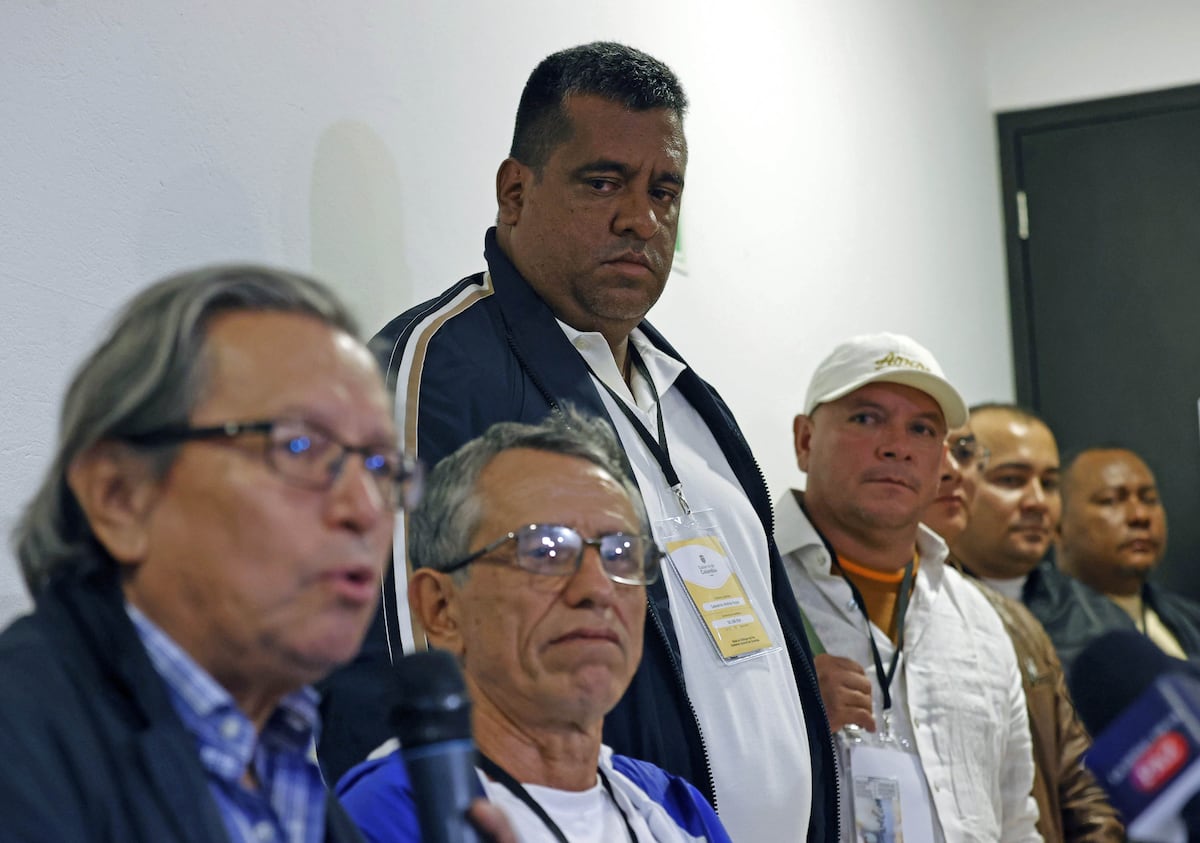
The Second Marquetalia, a dwindling faction of former FARC rebels led by Iván Márquez, fell apart at the end of 2024 amid negotiations with President Gustavo Petro's administration. Two of its branches, known as the Comandos de la Frontera and the Coordinadora Guerrillera del Pacífico, declared independence and formed the National Coordinator Bolivarian Army. "We disassociate from the Second Marquetalia name and will no longer use that acronym," they stated in a letter dated November 21, expressing their commitment to continue talks with the government. Iván Márquez, currently missing, denounced the negotiation table in another letter—whose authenticity is yet to be confirmed—which ultimately led to the group's split.
Walter Mendoza, chief negotiator for the National Coordinator Bolivarian Army, acknowledged the internal division spurred by Márquez. "Colombia can rest assured that the peace process continues with the Comandos de la Frontera, the Coordinadora Guerrillera, and all who wish to join. We will have to rethink the table, rethink the agenda, but that's a matter of time," he stated.
At the conclusion of the third round of renewed talks with the Coordinator on February 12, 2025, Colombian authorities arrested Andrés Rojas, known as Araña, the top commander of the Comandos de la Frontera and one of its delegates, in a Bogotá hotel. The arrest was based on an Interpol red notice for extradition, concerning drug trafficking charges in a U.S. court.
Despite this setback, during the fifth dialogue cycle in May this year, negotiators agreed to establish two temporary settlement zones, one in Nariño and another in neighboring Putumayo, to accommodate 120 combatants preparing for disarmament and reintegration into civilian life. They also pledged to conduct demining activities and surrender war materials.
The National Coordinator Bolivarian Army process is the third significant national negotiation with armed groups under the total peace policy, alongside suspended talks with the National Liberation Army (ELN) and the fragmented dissidents formerly grouped as the self-proclaimed Central General Staff (EMC).
After months of rapprochement, Iván Márquez and Peace Commissioner Otty Patiño, who met on June 3 and 4 in Caracas, announced the establishment of a peace dialogue table in Venezuela's capital on June 24, 2024. Armando Novoa, the government's chief negotiator, has said he has had no direct communication with Márquez since then or received any evidence of his survival.
The agreement to formally launch the dialogues praised the Second Marquetalia's statements opposing economically motivated detentions (referring to kidnappings) and prioritizing dialogue with entrepreneurs, ranchers, and merchants, as well as environmental protection. In response, the document asserts that the government will "implement measures to strengthen conflict de-escalation" in areas where the Second Marquetalia—then known as the Bolivarian Army—was present.
Without Márquez, the government resumed political negotiations initiated in Caracas exclusively with the newly named National Coordinator Bolivarian Army, representing dissident factions mainly operating in Putumayo and Nariño. The parties confirmed this on November 26, 2024, following a meeting in Bogotá.
What is the agenda and location for negotiation?
According to the agreement for the formal dialogue start signed in Caracas, the agenda would cover the following key points: 1. Conflict de-escalation and peace territory readiness; 2. Peace territory construction; 3. Victims as transformative social subjects; 4. Conditions for peaceful coexistence; 5. Implementation and verification.
After Iván Márquez's departure, the government and the National Coordinator Bolivarian Army set a new agenda around four points: 1. Territorial transformations; 2. Security in territories and for communities; 3. Legal security measures and routes for guerrilla structure members; and 4. Political participation. They also agreed that negotiation cycles would occur in Colombia, following a rotating scheme that brings the table to Tumaco (Nariño), Puerto Asís (Putumayo), Bogotá, and Popayán (Cauca). It was in Tumaco, during the fifth cycle, where delegates agreed to create two temporary settlement zones.
Who are the negotiators?
The head of the government delegation is jurist Armando Novoa García, who advised the Democratic Alliance M-19 in the National Constituent Assembly that drafted the 1991 political charter. Initially, he was accompanied by former Congressman Parmenio Cuéllar, who also served as Minister of Justice and Governor of Nariño; retired Colonel Jaime Joaquín Ariza, representing the Association of Retired Colombian Military Officers (Acore); and Gloria Arias Nieto from the Defendamos la Paz movement, among others.
The delegation of the National Coordinator Bolivarian Army is led by José Vicente Lesmes, the true name of Walter Mendoza, a former guerrilla commander of the extinct FARC in western Colombia who, like Iván Márquez, signed the peace agreement and later returned to arms. Andrés Rojas, Araña, the top commander of the Comandos de la Frontera, was another delegate at the table until his capture due to an extradition request.
Who are the Comandos de la Frontera and the Coordinadora Guerrillera del Pacífico?
These are two of the most powerful armed structures that were grouped under the Second Marquetalia umbrella. The Comandos de la Frontera operate in the southern departments of Putumayo and Caquetá, near the Ecuadorian border, while the Coordinadora Guerrillera del Pacífico operates in the neighboring departments of Nariño and Cauca, more to the west. They have now become part of the National Coordinator Bolivarian Army.
Who is Iván Márquez?
Luciano Marín, better known as Iván Márquez, his war name, never became the top commander of the former Revolutionary Armed Forces of Colombia (FARC), but since the 1990s, he was one of seven members of the guerrilla leadership known as the Secretariat. He also led the FARC's negotiating team in the Havana dialogues that culminated in the agreement signed at the end of 2016. Márquez became the FARC's most prominent public figure alongside Rodrigo Londoño, Timochenko, with whom he had several disagreements. After signing the peace agreement, he resigned from the Senate seat granted by the accords and immersed himself in the Miravalle reincorporation space in Caquetá. He returned to hiding and remained in an undisclosed location until August 29, 2019, when he appeared in a video with about twenty armed men, announcing "a new phase in the armed struggle."
His key lieutenants in the Second Marquetalia—Jesús Santrich, Henry Castellanos, Romaña, and Hernán Darío Velásquez, El Paisa—were killed in ambushes under unclear circumstances near the Venezuelan border, without any government on either side providing an explanation, amid a territorial war with other dissident factions that had deviated from the peace agreement.
Iván Márquez was reported dead multiple times, and doubts about his survival persist to this day. After an attack he suffered in July 2022, it was believed he had lost an eye, an arm, and mobility on the right side of his body, but he reappeared on May 11 in a video shown in a small coliseum in Puerto Carreño, Vichada's capital, where he appeared hesitant and with speech difficulties. This message preceded the meeting with Otty Patiño in Caracas and the formal announcement of peace talks with the government.
When did FARC dissidence begin?
The dissidence phenomenon emerged in the final stages of the Havana negotiations when one of FARC's most representative structures, the First Front, operating in the country's southeast, published a statement in mid-2016 distancing itself from the process, which it labeled a "betrayal." This announcement led FARC's leadership to expel five commanders who challenged the insurgency's hierarchy. Since then, other factions have emerged in various regions, and the issue gained another dimension when Iván Márquez and other commanders announced they were rearming.
What was the beginning of the Second Marquetalia?
It dates back to August 2019, when Iván Márquez declared, dressed in military green and with a pistol at his waist, that he was taking up arms again with other FARC leaders who had renounced their commitments to the Special Jurisdiction for Peace (JEP), the transitional justice system. That was the baptism of the Second Marquetalia, named after the place where the FARC was born over half a century ago. Hence, some experts and analysts prefer to refer to Iván Márquez and his followers as deserters rather than dissidents.
Márquez's attempts to ally with Gentil Duarte and Iván Mordisco, leaders of other dissident groups, failed due to resistance from those structures, which already had significant influence in southeastern Colombia and across the Venezuelan border. Although there was never a mass desertion of peace signatories, as initially feared, the dissidents' fire has been fueled by new dynamics of forced recruitment, often involving minors.
Dissidents are difficult to fit into a single category, as they are an amalgamation of diverse structures composed of dissidents who abandoned the peace process, recidivists who took up arms again after signing the agreement, and new recruits.
What distinguishes the Central General Staff from the Second Marquetalia?
The classification of dissidents has been one of the greatest challenges from the outset of total peace efforts. In plural, as several structures have deviated from the peace process at different stages. Colombia remains embroiled in eight non-international armed conflicts, five of which involve factions of the former FARC, according to the International Committee of the Red Cross's annual report. While the government used to categorize the Comandos de la Frontera operating in Putumayo as part of the Second Marquetalia, the Red Cross always regarded them as an independent group. They are now part of the National Coordinator Bolivarian Army.
Iván Mordisco's Central General Staff and Iván Márquez's Second Marquetalia emerged as the most prominent factions, akin to major umbrellas. Both were designated by the United States as terrorist organizations when the FARC, now disarmed and transformed into a political party, were removed from that blacklist. Both factions also engaged in a deadly war against each other, resulting in several commanders falling in ambiguous confrontations—often across the Venezuelan border.
While the fragmented EMC leadership comprises some visible leaders who deviated from the negotiations, the Second Marquetalia was led by signatories who took up arms again. "The percentage of recidivists and dissidents varies significantly within each group, but the bulk of rank-and-file combatants in these structures are new recruits," highlights an analysis by the Ideas for Peace Foundation (FIP).
The government's initial uncertainties revolved around whether the groups that deserted or never joined the previous peace process with the FARC should be considered criminal organizations with submission to the law as their only option or deserve a political approach, like the ELN, the last armed guerrilla. Legal uncertainties persist regarding the Second Marquetalia—and now the National Coordinator Bolivarian Army—as the peace agreement signed by Iván Márquez stipulates that no peace negotiations can be re-engaged with deserters from that pact.
We are looking for an independent senior editor

LEAVE A COMMENT