We are looking for an independent senior editor
Apply Now





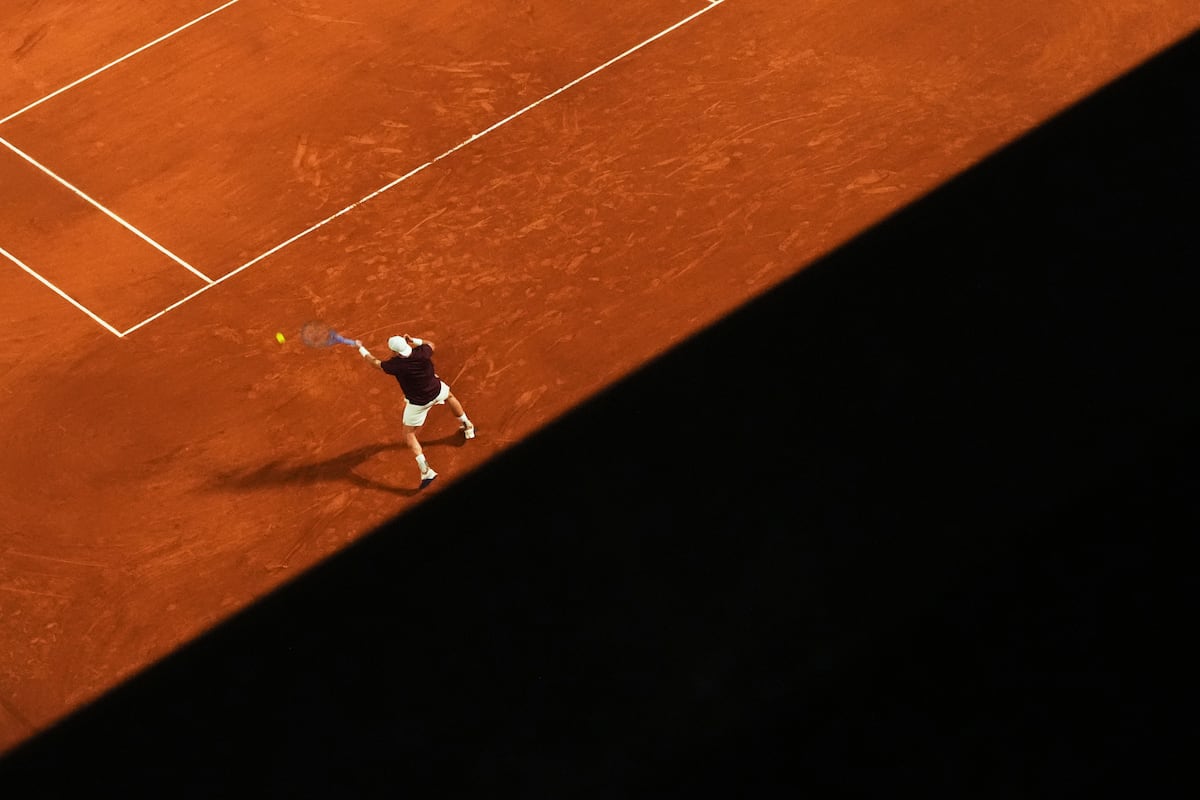
On Friday morning, Amélie Mauresmo, the director of Roland Garros, found herself frowning at a persistent American reporter's questions. The topic? The glaring gender disparity in the night sessions since they began four years ago, with only four women's matches compared to 43 men's. This back-and-forth exchange seemed all too familiar: "Year after year, the same questions..." to which the journalist quipped, "And the same answers..." Despite the evident imbalance, the prime evening slots at the French Open remain largely male-dominated.
Mauresmo, a former world number one and now 45, argues that the issue is not sexism but logistics. Balancing schedules, match durations, and French customs is a delicate task. The current setup, with a single men's match at 8:15 PM since the night sessions' inception in 2021, remains the most feasible solution, she insists. Changing it all over again would be too complicated, she emphasizes.
The Frenchwoman further explains that matches need to start after work hours and last long enough to justify ticket prices—men's matches typically run longer with five sets compared to women's three. Plus, late finishes could disrupt the tranquil district of Boulogne-Billancourt. Mauresmo, who took over in 2021 from former player Guy Forget, has steered the tournament's course, not without debate.
The director is also criticized for limiting journalist access to players and maintaining the prime-time inequality. The question arises: why can Australia and the US Open accommodate both genders in night sessions, but not Roland Garros? Wimbledon doesn't count due to its lack of night slots. Mauresmo returns to the balance argument, pointing out that Paris isn't New York or Melbourne, and late endings here would cause issues. Her stance is supported by Gilles Moretton, president of the French Tennis Federation, who asserts, "It's best for the spectators."
The players, however, aren't convinced, even though most prefer daytime matches for their predictability. This week, Tunisian player Ons Jabeur voiced her dissent. Ironically, she supports tennis in Saudi Arabia, claiming misperceptions about the country's progress. Nevertheless, she finds the perception of women's sports in Europe "unfortunate" and questions the decision-makers' motivations.
Jabeur criticizes the contract between the FFT and Prime Video, the tournament's French broadcaster, as "shameful," questioning why a high-profile match like Badosa-Osaka wasn't scheduled for the night. Mauresmo counters that she isn't the sole decision-maker and rejects the notion that they're signaling women's tennis as unworthy of nighttime play. "We're not saying that," she insists. "The message is never that women aren't worthy of playing at night."
The director focuses on reaching a compromise and warns that changing the schedule could lead to empty seats as people wouldn't arrive on time, causing delays and dissatisfaction. "It's not about the players' level," she clarifies. "It's very high." She cites the exciting rivalries among players like Iga Swiatek, Coco Gauff, Aryna Sabalenka, and Madison Keys as proof of this high standard, while Jabeur laments the double standards: "If a man wins 6-0, 6-0, it's impressive; if a woman does, it's boring."
This Saturday, the area around Roland Garros in the 16th arrondissement will be bustling. The tennis complex is a mere 500 meters from the Parc des Princes, where over 40,000 are expected for the Champions League final between PSG and Inter Milan. The football club will open the stadium for fans to watch on giant screens, leading to an estimated 70,000 people in the vicinity. Past events have seen disturbances caused by Paris ultras.
"We're happy for PSG," Mauresmo comments. "The metro line 9 will stay open, which will help. There will be police and security measures in place," she confirms.
We are looking for an independent senior editor

LEAVE A COMMENT