We are looking for an independent senior editor
Apply Now





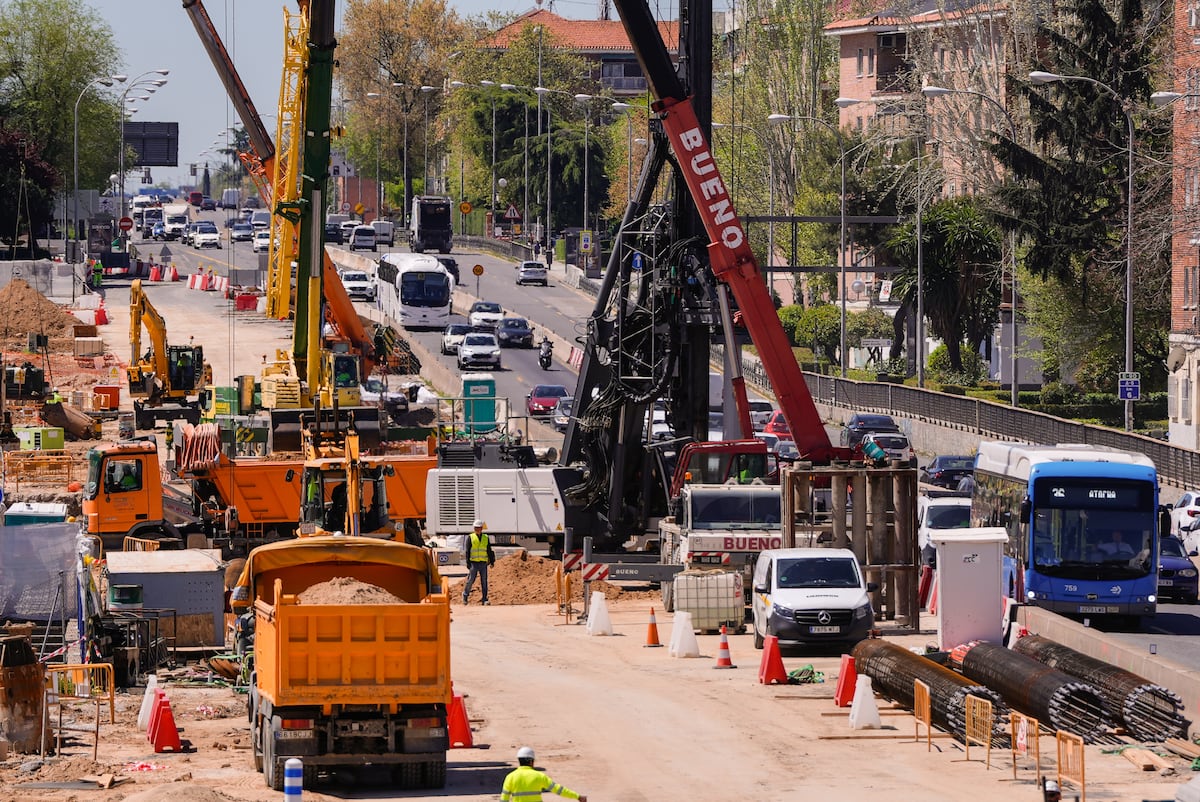
Hidden beneath the surface lies a source of clean and renewable energy known as geothermal energy, which maintains a constant temperature and stores heat for various applications. While high-temperature geothermal activity is common in places like Iceland and the Canary Islands, Madrid is venturing into geothermal utilization even at temperatures below 25°C—a typically overlooked threshold. The City Council of Madrid has initiated two groundbreaking projects to integrate geothermal energy into the A-5 tunnel and the Conde de Casal metro station, transforming residual earth heat into heating, air conditioning, and hot water for public buildings.
Armando Uriarte, manager of Madrid Subterra, emphasizes the untapped potential of this renewable and efficient energy. He believes these projects will demonstrate reduced energy consumption and mitigate the city's heat island effect. Madrid Subterra is a coalition of public entities, including the City Council, universities, and companies, committed to promoting geothermal research.
Rafael Riquelme, an energy expert from the General Council of Industrial Engineers (CGCOII), explains that effective heat utilization depends on enthalpy, the energy exchanged between a system and its surroundings. The Canary Islands are investigating areas where temperatures reach 100 degrees at just 10 meters below ground, allowing for electricity generation from steam. Though lower temperatures mean less enthalpy, this geothermal heat remains largely untapped.
Recently, Madrid Subterra hosted an event discussing the A-5 project, featuring insights from Ignacio González Tejada, a professor at the Polytechnic University of Madrid (UPM). The tunnel will incorporate thermoactive foundations with structural roles, equipped with tubes that capture soil heat and transfer it to a heat exchanger. Municipal data indicates the use of dual slab sections, 250 meters long and 16 meters deep, where the temperature remains stable at 18°C. Geothermal heat pumps, each with a capacity of 110 kilowatts (kW), will maintain an 18°C water ring, channeling energy to the nearby public library Ángel González for conversion into heating, hot water, and air conditioning.
Similarly, the Conde de Casal metro station is undergoing renovations, including the extension of line 11. In just over two years, it will harness geothermal thermoactivation to provide heating for its facilities. González Tejada notes that while some international buildings, like Zurich Airport's Terminal E, already utilize geothermal energy, few projects employ tunnel thermoactivation. Madrid's efforts represent Europe's most ambitious initiative in this area, promising energy savings, decarbonization, and heat island effect reduction.
Lola Ortiz, Director of Mobility Planning and Infrastructure at the Madrid City Council, highlights the significance of this venture as the first large-scale urban underground project featuring geothermal technology. The project will yield 30 watts per square meter from the slab, facilitating a 25-degree tempered water circuit. The Council aims to extend this energy to additional municipal buildings in the future.
Environmental organizations are supportive of these advancements. Jeannette Bain from Ecodes praises the use of technologies that harness ambient heat, such as underground currents, to foster sustainable urban environments. This approach offers a more efficient and sustainable way to heat spaces and generate thermal energy, effectively repurposing otherwise lost energy. Bain emphasizes that investing in such solutions is crucial for cleaner cities and reduced dependence on fossil fuels.
Although the Ministry for Ecological Transition has not yet incorporated thermoactivation, it acknowledges its potential for future efficiency development. Meanwhile, the Integrated Energy and Climate Plan (PNIEC) advocates for the integration of renewable and/or residual energy sources, which are efficient and flexible, in residential building climate control and other industrial applications within similar temperature ranges—a concept aligned with this technology.
Uriarte from Madrid Subterra notes that the organization is exploring additional energy sources related to underground infrastructure. The metro system, with its 300 kilometers of tunnels, generates significant heat from train friction, braking, escalators, elevators, climate control systems, and passengers. The public company faces challenges evacuating this heat, even in winter. By investing in heat exchangers, it could convert subterranean heat into hot water or heating for nearby buildings.
Another potential energy resource lies in wastewater, which maintains a stable temperature year-round. This water can be utilized to generate heating and hot water through heat exchangers and pumps.
We are looking for an independent senior editor

LEAVE A COMMENT