We are looking for an independent senior editor
Apply Now





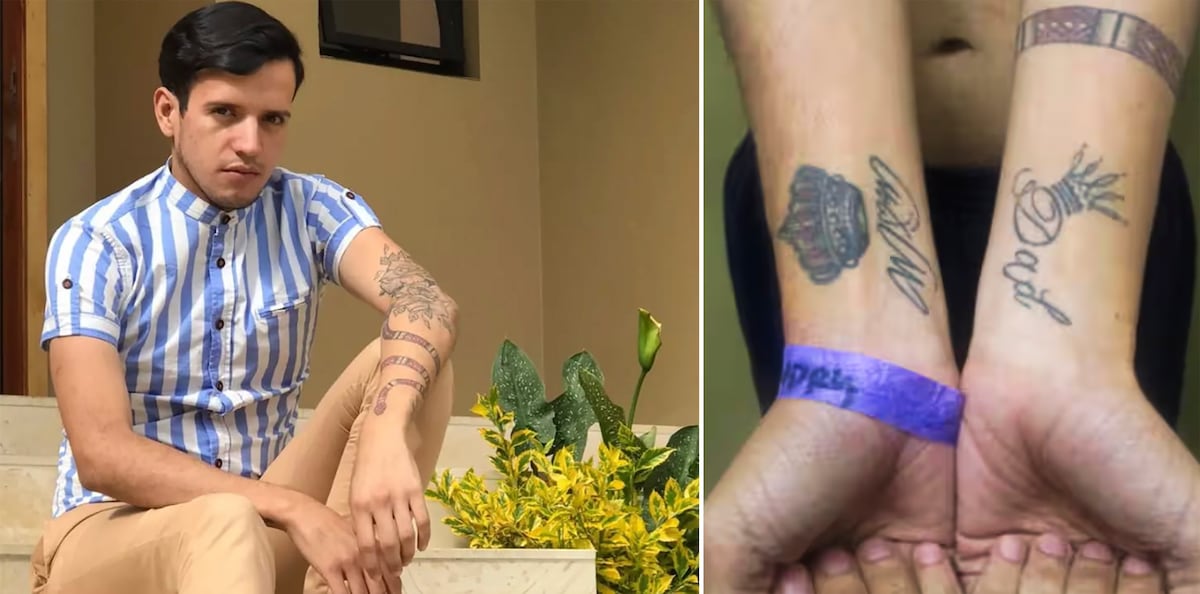
On Tuesday, Judge Paula Dixon in San Diego, California, denied the asylum request of Andry Hernández Romero, a Venezuelan immigrant who arrived in the United States last year seeking refuge due to persecution based on his sexual orientation and political beliefs. He has been held for over 75 days in a high-security Salvadoran prison (CECOT) after being deported under the Trump administration's Foreign Enemies Act and accused of ties to the Tren de Aragua gang. His lawyers and family have repeatedly refuted these claims, arguing he has no criminal record and is being unfairly targeted because of his tattoos.
This ruling is part of a series of 13 recent decisions, as reported by the organization Together and Free, that have dismissed asylum cases of deported foreigners. Immigration attorneys have voiced concerns that these judicial decisions are aiding governmental actions that undermine due process and eliminate the possibility of deportees returning.
"The Department of Homeland Security is striving to erase the fact that Andry arrived in the United States seeking asylum and was denied due process as required by our Constitution (...) The notion that the government can disappear you due to your tattoos without even granting a day in court should alarm all Americans," stated Lindsay Toczylowski, executive director of the Center for Immigration Defenders (ImmDef), a nonprofit representing Hernández Romero and seven other deportees to El Salvador.
The 32-year-old Venezuelan is also a lead plaintiff in a lawsuit filed by the American Civil Liberties Union (ACLU) against the current administration for deporting more than 200 immigrants to Central America, which analysts suggest is pushing the country towards a constitutional crisis.
"I'm not part of a gang. I'm gay. I'm a stylist."
Philip Holsinger, photographer for Time magazine, documented the arrival of Venezuelan deportees at the Center for Terrorism Confinement in El Salvador. He witnessed Andry Hernández Romero's pleas as he was slapped and his head shaved. "I'm not part of a gang. I'm gay. I'm a stylist," said the stylist, who never imagined he'd end up in a maximum-security prison.
None of the lawyers representing the detained Venezuelans have been able to contact their clients, even in cases where federal judges explicitly ordered the government to facilitate such contact. Hernández Romero's attorney learned of her client's arrest and deportation to El Salvador through media photos and videos. "It's horrifying to see someone we know as a sweet and funny artist in the most dreadful conditions imaginable (...) We're worried about his survival," she told CNN. Last year, the Salvadoran organization Humanitarian Legal Relief reported that 303 prisoners have died in Salvadoran state custody, with the aggravating factor being that 94% of detainees were not profiled as gang members.
Having worked in styling and makeup for several years (his resume includes work in beauty pageants like Miss Venezuela), Hernández Romero undertook a long journey to the United States through the Darién Gap. At a border crossing near San Diego, he obtained an appointment to apply for asylum. Following a credible fear interview, immigration authorities determined that threats against him were significant enough to proceed with his case, allowing him entry into the country. However, just months later, the tattoos on his wrists (two crowns with his parents' names) became sufficient evidence for the Immigration and Customs Enforcement (ICE) to accuse him of being a criminal.
"Members of Tren de Aragua are not easy to detect. They have a fluid nature that allows them to adapt to each environment. They are so stealthy that their very existence has been questioned for years. Unlike Mexican cartels, they don't publish videos of beheading their enemies. Some arrests in Chile and Peru show their leaders as discreet individuals who don't have tattoos or adopt a narco aesthetic," stated journalist Ronna Rízquez, author of the first book on the gang, to EL PAÍS. In this vein, the ACLU filed a lawsuit to prevent the Department of Homeland Security from labeling foreigners as gang members solely due to tattoos or clothing through a point system that, upon reaching a score of eight, marks them as criminals: tattoos of crowns or trains add four points, and wearing sportswear, another four. As experts have noted, these criteria are highly subjective and deviate from due process.
Without evidence of criminal charges or gang affiliations
A CBS investigation reveals that the Trump administration lied about the criminal records of over 200 men deported to El Salvador, bypassing judicial control thanks to the invocation of the 1798 Foreign Enemies Act, claiming they were members of the Tren de Aragua criminal gang. The report cross-referenced government internal documents with national and international judicial records, press reports, and arrest records that confirm the overwhelming majority of deportees had no judicial convictions or even criminal charges.
Border czar Tom Homan stated regarding the investigations that immigration agents conducted "rigorous checks" to confirm the expelled were members of Tren de Aragua, but the investigation found that only 22% of Venezuelans on the list had criminal records in the United States or abroad for non-violent crimes like theft, shoplifting, and house breaking; and only a dozen were accused of serious crimes like murder, rape, assault, and kidnapping. In Hernández Romero's case, his tattoos were the sole evidence for accusation. "These tattoos have an explanation as they belong to someone who worked in the beauty contest industry," denounced Toczylowski.
A Department of Homeland Security spokesperson also mentioned that Hernández Romero's social media suggested his connection to the criminal group, but a review of his Instagram account shows he has only posted content related to makeup and styling for a decade. The Trump administration has claimed to possess evidence against the deported that cannot be disclosed due to "state secrets," but Hernández Romero's lawyer denied the government knowing anything about her client that she was unaware of. "And if they did, they should abide by the Constitution, present that information, and give us a chance to respond to it," she told CBS.
This is the first instance of the United States deporting a group of immigrants accused of being foreign enemies to a foreign prison. Lee Gelernt, ACLU lawyer leading the legal battle against sending migrants to CECOT, indicates the operation is entirely "illegal." Meanwhile, the Supreme Court has ordered the government to halt the deportation of foreigners under the Foreign Enemies Act, but the chance for expelled Venezuelans to return is increasingly uncertain, and their ability to reopen asylum cases hinges on it.
For now, Hernández Romero's legal representation has launched a strong campaign for his release with the hashtag #FreeAndry, and will appeal the recent judge's decision. "The fight for justice for Andry, our other seven ImmDef clients imprisoned in CECOT, and all men unjustly disappeared continues today with renewed determination. We will keep fighting until Andry is safe and free," concluded Toczylowski.
We are looking for an independent senior editor

LEAVE A COMMENT