We are looking for an independent senior editor
Apply Now





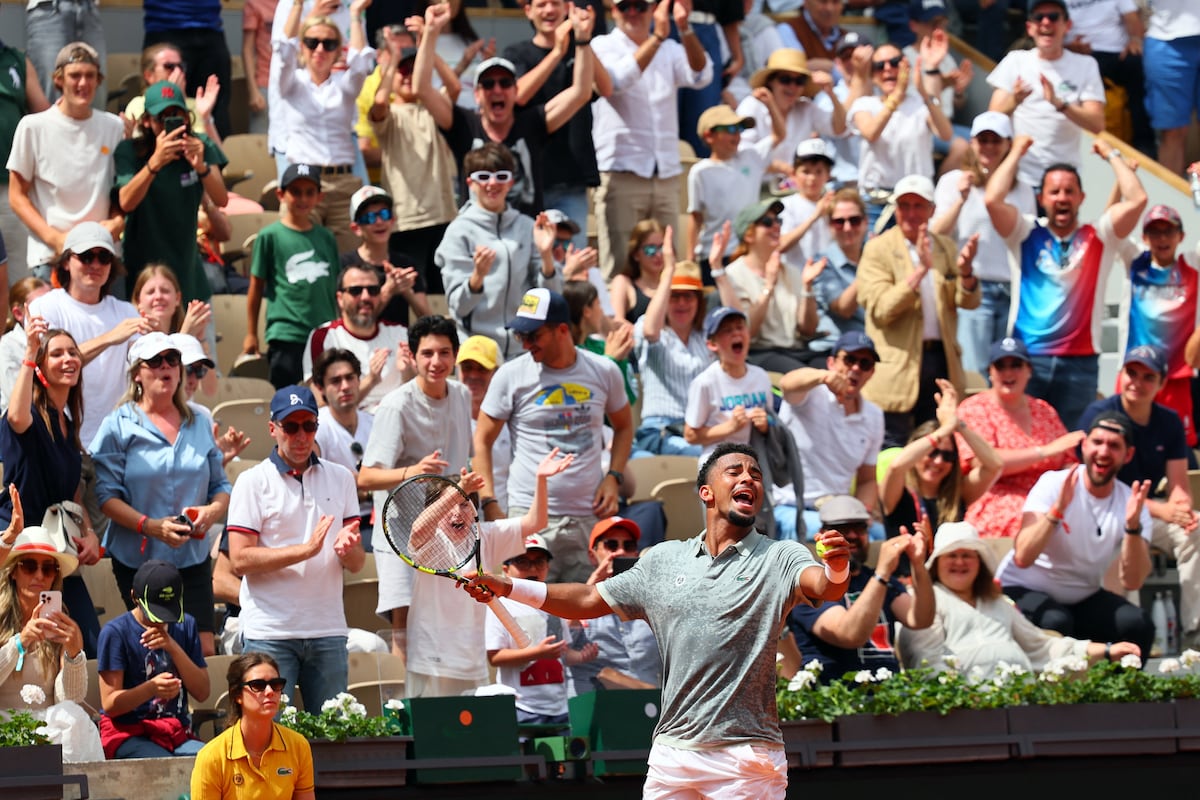
Though the skies are clear over Paris, there's a storm brewing at Roland Garros. Arthur Fils, a local favorite, showcased his determination and ferocity after a victory over Jaume Munar, with scores of 7-6(3), 7-6(4), 2-6, 0-6, and 6-4. Munar endured the hostility, facing both the fervent Parisian crowd and his opponent's tenacity. Wearing the weight of defeat after 4 hours and 25 minutes, Munar admitted, “I was lacking in physical endurance.” However, he was less accepting of certain behaviors exhibited when the Suzanne Lenglen crowd burst into La Marseillaise as he prepared to serve, hoping to revive their player while undermining the Spaniard.
Amidst a lengthy booing session aimed at Munar, he openly expressed his frustration: “I have no reason to hold back. Whether they cheer for the other or shout... I've dealt with this before; South America is just as intense. But it's a total disrespect. This happens frequently. They keep singing and interrupting, hindering the game's progress. It might seem like a spectacle for the fans, but they should remember we're here to do our jobs. This shouldn't turn into a circus; it feels theatrical,” Munar declared, adding his complaints to a series of incidents from earlier this week.
Three days prior, young Jakub Mensik noted the challenge after facing Frenchman Alexandre Muller: “I was told it was tough, but not this intense.” Novak Djokovic, having advanced to the third round after defeating Corentin Moutet 6-3, 6-2, 7-6(1), commented, “It's not the ideal atmosphere, but you must be prepared.” Few tennis environments match the fervor of Roland Garros when a hometown player is on the court. Parisian crowd dynamics, as described by L'Équipe, reflect the city's vibrant character: “Sometimes fun, sometimes stimulating, sometimes annoying.” Gilles Moretton, president of the French Tennis Federation, downplays the intensity, stating, “The same occurs in Australia.”
Moretton acknowledges the French crowd's tennis knowledge and their penchant for noise, offering apologies while recognizing the positive impact such an atmosphere can have on the spectacle. Fils roars while Munar, a sensible player difficult to unsettle, counters, “They keep doing silly things to annoy.” Responding decisively to the paper's inquiry, Munar affirmed: “Yes, without a doubt. The most bothersome crowd, clearly. At the US Open, where constant murmurs and movement during play are allowed, it's all about the show, but they experience it from a spectator's viewpoint, not fanaticism. There, it's all showtime.”
At 28, the seasoned Balearic player recounted playing a remarkable match in Miami against veteran Gael Monfils, “They cheered him on like there was no tomorrow.” “I lost 7-6 in the third set and left feeling sad, but I enjoyed it. They didn't bother me for a second,” he continued. In contrast, at Bois de Boulogne, he feels “the flag's influence can be overwhelming” and suggests “calming things down” to let the game proceed smoothly, irrespective of fan support for their players. When a French player is on the clay, there's always a buzz: waves, chants, even instructions—a Davis Cup-like atmosphere.
“It's a chatty crowd,” admitted another Frenchman, Quentin Halys, to L'Équipe, hailing from Bondy, like Kylian Mbappé. Every court has its spice, from the Chatrier (15,000 spectators) to the Lenglen (8,000), the Mathieu (5,000), and other supplementary courts. Boredom is impossible. Roland Garros, an environmental dynamite. Even Nadal, the tournament's reigning king, clashed with the audience. A shower of whistles accompanied him during his 2005 encounter with Sébastian Grosjean. “I kept telling myself: ‘don't be dumb, focus on your task and ignore everything.’ But it wasn't easy. Whenever I missed the first serve, hit the net, or the umpire spoke, chaos ensued. I lost focus. It wasn't pleasant, things got out of hand. I didn't manage it. But I recovered and resumed the match with a better approach,” he reflected.
Also memorable is Garbiñe Muguruza's 2017 episode, a year after her triumph. The Spaniard exited Suzanne Lenglen, finger raised, signaling to the fans: this isn't right. “At times, they should have been more respectful, even towards the game, as we had to pause. The umpire constantly calmed the crowd. I'm not here to make enemies because I love playing here, but the vibe wasn't good...” she stated.
Parisian fans are passionate, sophisticated—tennis culture aligns with the sport's historical roots in France and the federation's economic strength—and simultaneously soccer-like; Melbourne's crowd ignites occasionally but not as persistently; Wimbledon offers a distinct ambiance, with action unfolding in meticulous silence, and eruptions only occurring post-point, always respecting the players; the US Open is a separate case, prioritizing spectacle and noise as an unnegotiable starting point.
“I've played two matches against Frenchmen [against Rinkdernech and this one versus Richard Gasquet, marking Gasquet's farewell], and they've been very, very respectful to me,” noted Jannik Sinner. “But it's clear the atmosphere changes when facing a French player, similar to playing in Italy, right? It's normal. We're in Paris, in France,” he softened. “Of course, there are some shouts, but I think it happens more in Lenglen, where things are slightly more chaotic. The key is people want to watch tennis. I actually enjoy playing here,” he concluded. Munar and other players, however, might not share the same sentiment, feeling the pressure cooker environment.
Roland Garros, where emotions run high. Sometimes a hell for outsiders. Even for locals. Moutet, embodying the visceral duality, stated: “When you lose, you stink. When you win, you're the king of the world.”
Paula Badosa shouted with determination. She secured a hard-fought victory over Elena-Gabriela Ruse (3-6, 6-4, 6-4, after 2 hours and 22 minutes), advancing to the third round. The Catalan celebrated and appreciated: “It was tough, I had a slight fever. I felt drained, but the crowd helped me,” expressed the Spaniard, set to face Australian Daria Kasatkina.
She won't be alone. Two for two. In the morning, Jessica Bouzas also advanced, facing a strong challenge from Robin Montgomery (6-4, 4-6, 7-5, over 2 hours and 9 minutes). Awaiting her on Saturday is an encounter with American Hailey Baptiste (ranked 70th). Progressing would exceed her limits in major tournaments.
In the afternoon, the tournament witnessed its most emotional moment, with Richard Gasquet's fall and farewell. The same player who once bested Nadal as he rose. He closes a 23-year professional journey, two decades at the elite level. He finishes against world number one Jannik Sinner (6-3, 6-0, 6-4).
The Italian will face Czech Jiri Lehecka, who overcame Alejandro Davidovich (6-3, 3-6, 6-1, 6-2, over 2 hours and 19 minutes).
We are looking for an independent senior editor

LEAVE A COMMENT